Blockstream announced a new institutional digital-asset custody system developed with Thales on November 13, 2026. The offering moves distributed transaction-signing computations into hardware security modules (HSMs), rather than relying on ordinary servers to perform those sensitive operations. The announcement addresses an infrastructure challenge for banks and asset managers: protecting the authority to spend Bitcoin, not simply storing records of ownership. Recent research into Bitcoin signing failures illustrates why implementation security matters.

Why the hardware boundary matters
A Bitcoin private key authorizes spending under the conditions associated with a transaction output. A custody platform consequently needs to secure its signing capability throughout the transaction process, including the moment a withdrawal is approved. A hardware security module is a dedicated cryptographic device designed to restrict access to sensitive key material and perform approved operations within a controlled environment. Its security properties depend on the particular device, firmware, configuration and operating procedures.
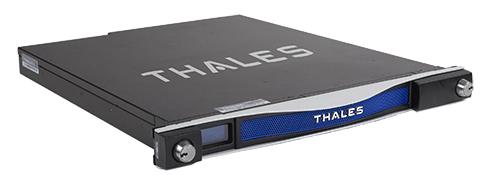
A conventional distributed signing deployment can separate authority among machines while still relying on general-purpose processors and their operating systems to execute sensitive calculations. Blockstream says its Secure-MPC implementation performs the signing protocol within Thales HSMs. The design aims to combine distributed authority with hardware isolation. Our coverage of dedicated cryptographic silicon explores a separate approach to hardware-rooted security; it is not the device used in the announced system.
How threshold signatures distribute authority
The announcement identifies FROST, a threshold Schnorr signing protocol. The published RFC 9591 specification describes a two-round process: participants first supply commitments and subsequently produce signature shares that can be combined into a group signature. An authorized threshold of participants can cooperate without reconstructing the original private key. The specific Bitcoin-compatible implementation and its security assumptions require separate evaluation; RFC publication alone does not certify a commercial product.
For a custodian, distributed signing can reduce dependence on a single machine or key holder. It does not eliminate the need for independent approval policies, secure enrollment, recovery procedures, audit records and protection against malicious withdrawal instructions. A correctly functioning signer may still authorize an unwanted transaction if the surrounding approval process is compromised.
For the company announcement and accompanying media, see Blockstream’s November 13 announcement in its community. Third-party playback could not be independently verified, so the source is linked rather than embedded as a player.
Custody is not a Bitcoin consensus upgrade
Blockstream delivers the service through its Enterprise platform. The announcement concerns how institutional systems authorize transactions, not a change to Bitcoin’s consensus rules. The company’s Simplicity signet research illustrates the separate category of experimental changes to spending conditions. Likewise, its Core Lightning development addresses payment-channel software rather than institutional key governance.
What institutions should verify
The release does not disclose the HSM model, exact signing threshold, throughput benchmark, customer deployment count or a product-specific certification identifier. Buyers should request independent security assessments, evidence of hardware and firmware validation, documented disaster recovery, separation of administrative roles and testing under realistic failure conditions. Hardware protection may reduce some attack surfaces, but it cannot establish that every component of a custody service is secure.
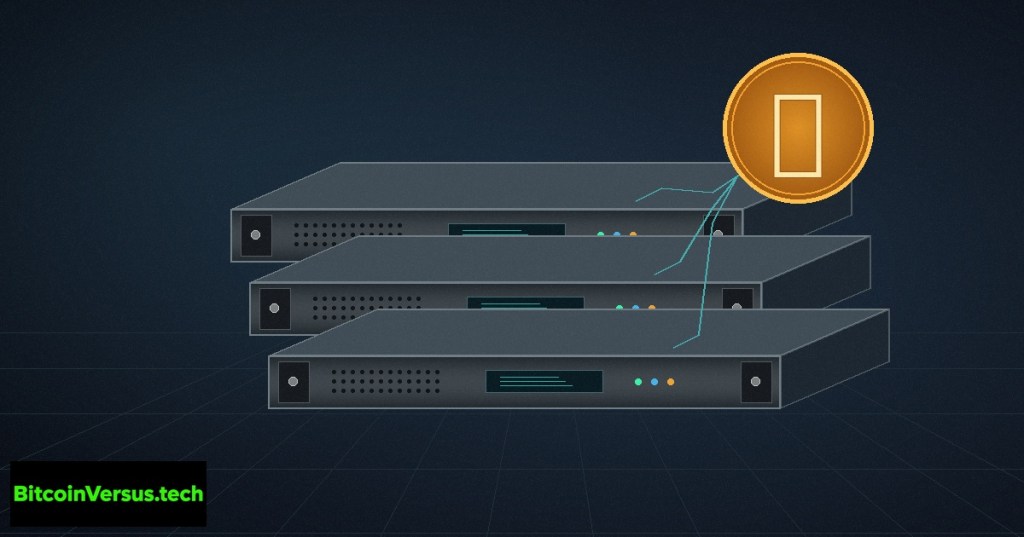
The launch addresses institutional Bitcoin signing infrastructure. Its effectiveness depends on demonstrable security and operational reliability, not specialized hardware alone. The featured image is a conceptual editorial illustration, not an image of the announced deployment.
Sources: Blockstream, November 13, 2026; RFC 9591, June 2024; Blockstream custody platform.
We volunteer daily to ensure the credibility of the information on our platform is Verifiably True. If you would like to support to help further secure the integrity of our research initiative, please scan the QR code below.



Leave a Reply