linux
-

Setting up an Ubuntu Virtual Machine (VM) using Oracle VirtualBox begins with downloading the latest ISO file from Ubuntu’s official site. For Ubuntu 24.04, users typically select the desktop version compatible with their hardware architecture, commonly “amd64.” After downloading, users open Oracle VirtualBox, create a new VM, name it, select the Linux operating system type,…
-

LDAP (Lightweight Directory Access Protocol) is an open, vendor-neutral protocol used to access and maintain distributed directory information services over an Internet Protocol (IP) network. LDAP is widely used for storing and managing information about users, groups, computers, and other resources in a centralized database, known as a directory. The protocol allows clients to connect…
-
When a Linux machine starts feeling slower than normal, it’s often a sign that system resources are strained. In this case, the user decided to troubleshoot by checking memory usage and cleaning up unused files. After running the free command to get a snapshot of RAM and swap usage, they used find to delete all…
-
To set up logical volume management in Linux, the first step is creating a physical volume (PV). A physical volume is typically a disk partition (like /dev/sdb1) that is initialized for use by the Logical Volume Manager. This is done using the pvcreate command, which prepares the partition to be added into a volume group.…
-
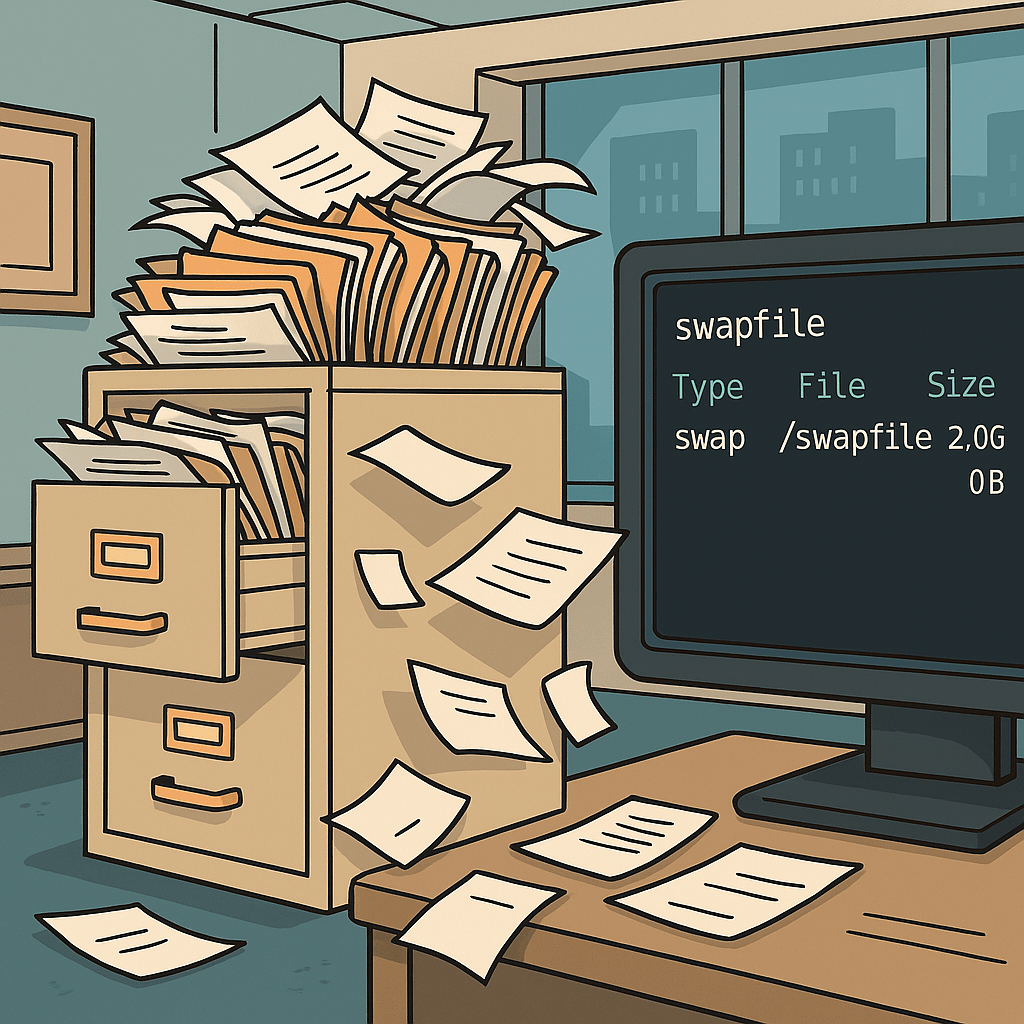
A swap file in Linux is a special file on the disk that acts as virtual memory when the system’s physical RAM becomes full. Instead of immediately failing or killing processes when memory runs low, the kernel moves less-used data from RAM into the swap file to free up space for active applications. This ensures…
-
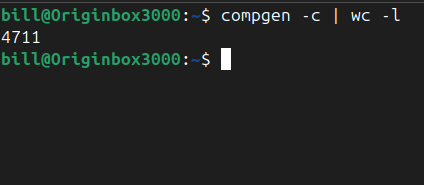
The compgen command in Linux is a built-in feature of the Bash shell used to display a list of available commands, functions, aliases, and reserved words. It’s part of the programmable completion system and is mainly used to introspect what the shell knows. For example, running compgen -c outputs all executable commands that the shell…
-
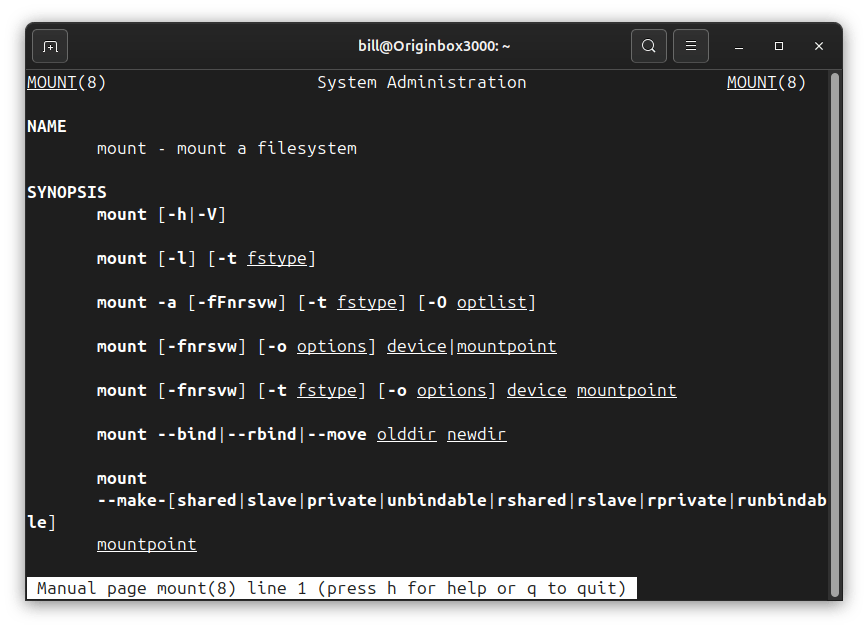
In Linux, mount refers to the process of attaching a storage device or partition—such as a hard drive, USB stick, or network share—to the system’s directory tree so that its contents become accessible. Unlike operating systems that assign drive letters, Linux integrates storage into a single hierarchical file system. When a device is mounted, it…
-

Creating a filesystem means formatting a partition or volume with a specific structure that the operating system can understand—such as ext2, ext3, ext4, xfs, or fat32. This is often done on a new partition using the mkfs (make filesystem) family of commands. For example, formatting a device with ext4 can be done with: sudo mkfs.ext4…
-

The file command in Linux is used to determine the true type of a file by inspecting its contents, not just its name or extension. Unlike many operating systems that rely on file extensions (like .jpg, .txt, or .mp3), Linux doesn’t depend on naming alone. The file command reads the internal binary signatures of the…
-
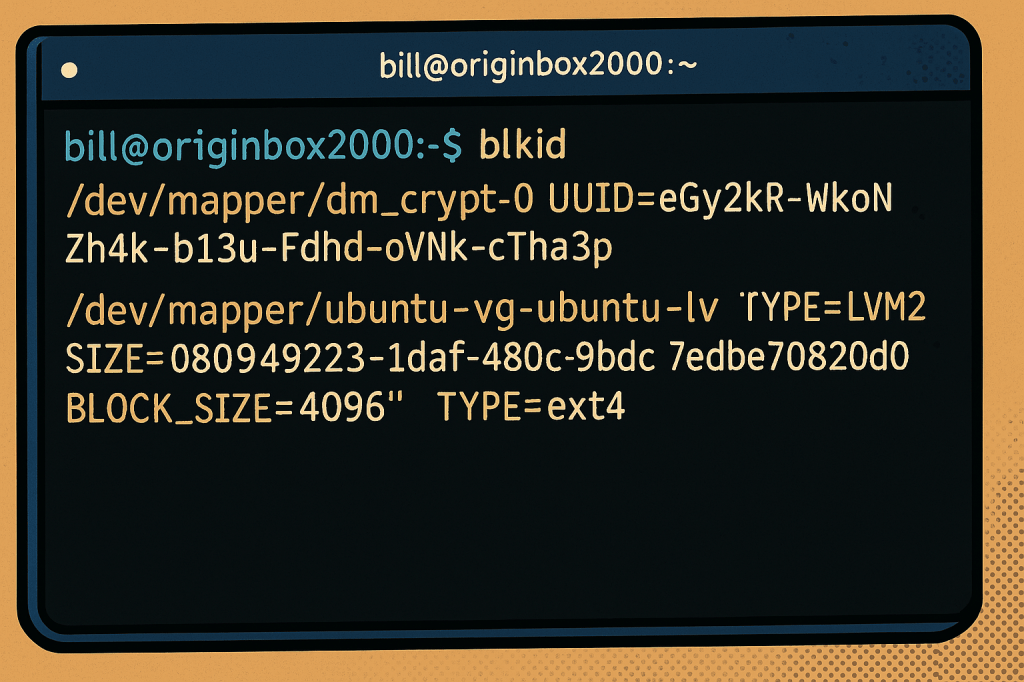
The blkid command in Linux identifies block devices and displays metadata like UUIDs, device paths, filesystem types, encryption layers, and block sizes. It’s an essential tool for system administrators who need to manage storage devices, mount points, or encrypted volumes. In the output shown, /dev/mapper/dm_crypt-0 represents an encrypted volume managed by dm-crypt and tagged as…
-
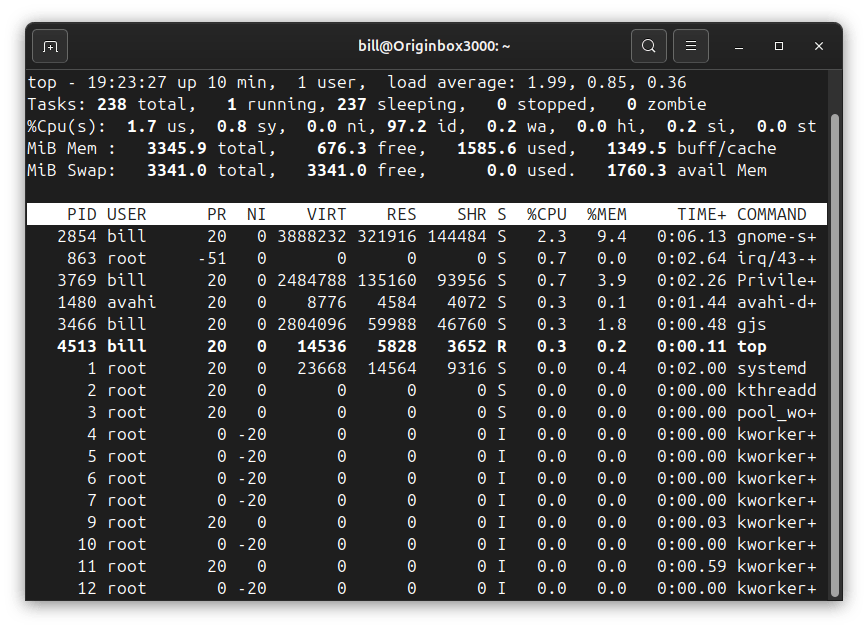
The top command in Linux provides real-time monitoring of system processes, resource usage, and performance metrics directly from the terminal. It dynamically displays essential information, including CPU utilization, memory consumption, swap usage, and running tasks. The interactive output updates automatically, offering an immediate overview of the system’s operational state, making it invaluable for troubleshooting, performance…
-

The Linux kernel serves as the core component of the Linux operating system, acting as a bridge between software applications and the physical hardware of the machine. Originally created by Linus Torvalds in 1991, it manages critical system resources such as CPU, memory, input/output devices, and networking. By providing a secure, stable, and efficient environment…

