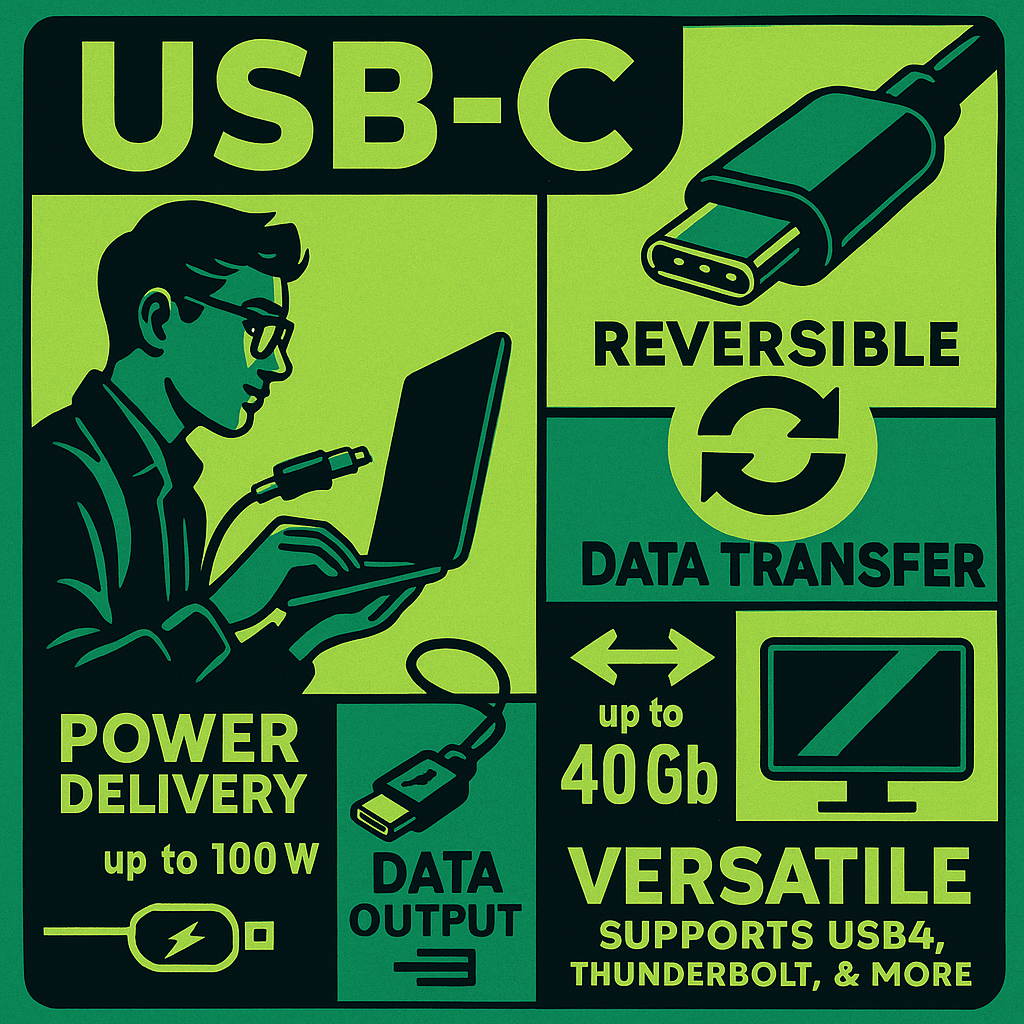
USB-C (Universal Serial Bus Type-C) is a modern, reversible 24-pin connector designed to replace earlier USB types (USB-A, USB-B, Micro-USB) with a more compact, versatile, and powerful solution.
Unlike previous versions, USB-C can transmit data, video, and power through a single cable, making it ideal for charging laptops, connecting external displays, and transferring high-speed data.
USB-C supports multiple standards including USB 3.2, USB4, and Thunderbolt 3/4, offering bandwidths up to 40 Gbps and power delivery up to 100W, enough to charge and operate high-performance devices. It is widely adopted in smartphones, tablets, laptops, docking stations, and monitors.
What makes USB-C unique is its support for alternate modes, allowing the same port to function as HDMI, DisplayPort, or even Ethernet, depending on the device and cable. Its small, symmetrical design eliminates orientation errors, and its role in Power Delivery (PD) enables rapid charging and dynamic power negotiation between devices.
USB-C’s broad compatibility and functionality are transforming how users interact with their devices—simplifying ports and reducing the need for separate cables. It’s increasingly becoming the global standard for both mobile and desktop computing environments.
BitcoinVersus.Tech Editor’s Note:
We volunteer daily to ensure the credibility of the information on this platform is Verifiably True. If you would like to support to help further secure the integrity of our research initiatives, please donate here
BitcoinVersus.tech is not a financial advisor. This media platform reports on financial subjects purely for informational purposes.


Leave a Reply