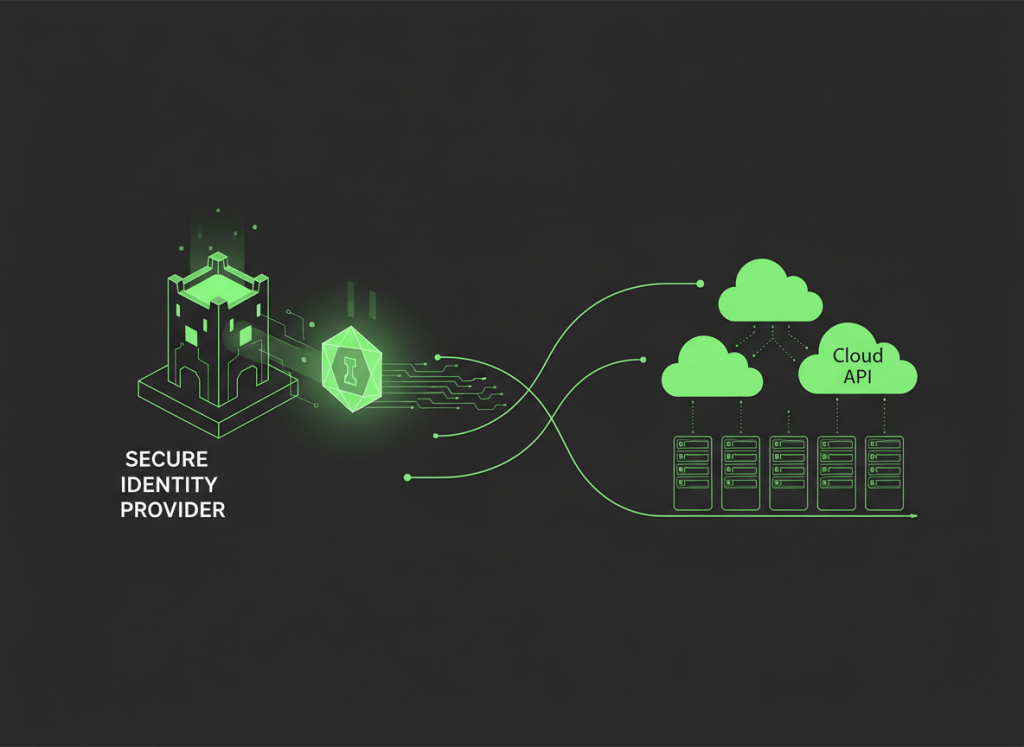
Signing into a cloud service often creates something more valuable to an attacker than the password itself: an identity or access token.
Tokens allow applications to prove that a user has authenticated and determine which resources that user can access. They are fundamental to single sign-on, cloud applications, APIs and federated identity systems.
New guidance from the National Institute of Standards and Technology (NIST) focuses on reducing the risk of stolen, forged, replayed and misused identity and access tokens. For system administrators, the practical lesson is straightforward: protecting the password is not enough once a valid token has been issued.
Why a Stolen Token Is Dangerous
A password normally goes through an authentication process. A valid token may represent the result of that process.
If an attacker steals an active token, the target application may accept it because the token appears to prove that authentication already occurred. Depending on its permissions and lifetime, an attacker could potentially access applications or APIs without knowing the user’s password.
This is one reason multifactor authentication cannot eliminate every account-takeover path by itself. MFA can make obtaining the original session harder, while administrators still need to protect the credentials and tokens created after authentication succeeds.
Step 1: Inventory Where Tokens Exist
Administrators should identify systems that issue, receive, validate or store authentication tokens. That includes identity providers, SSO systems, cloud applications, APIs, CI/CD systems, administrative portals and service-to-service authentication.
This follows the same operational principle covered across BitcoinVersus.tech’s Tech Docs and Information Technology sections: security teams cannot adequately protect infrastructure they have not identified.
Step 2: Reduce Token Exposure
Tokens should not casually appear in logs, URLs, source repositories, shell history or debugging output. Development and operations teams should review whether applications accidentally expose bearer tokens through telemetry or error reporting.
Secrets and authentication artifacts should also be separated from application source whenever possible. A Git repository is not a credential vault.
Step 3: Limit What Each Token Can Do
Tokens should receive only the permissions necessary for their intended task. A service that only needs read access should not receive an administrative token.
Shorter token lifetimes can also reduce the useful window available to an attacker after theft, although administrators need to balance expiration policies with application reliability and user experience.
Step 4: Validate Tokens Correctly
Applications consuming tokens need to verify that they are legitimate. Depending on the protocol, validation can include checking the cryptographic signature, issuer, intended audience, expiration and other claims.
Accepting a correctly formatted token without validating who issued it defeats much of the security model.
Step 5: Watch for Replay and Unusual Use
Logging remains important. Organizations should monitor authentication and API activity for behavior inconsistent with normal use, including unusual locations, unexpected applications, abnormal privilege use or rapid reuse of credentials across systems.
A stolen token that technically passes validation may still produce behavior worth investigating. The Linux archive similarly emphasizes that secure infrastructure requires both system maintenance and operational visibility.
Identity Security Is Infrastructure Security
Modern infrastructure increasingly depends on software-defined identity. Servers authenticate to APIs. CI systems authenticate to repositories. Applications authenticate to cloud services. Administrators move between systems through federated SSO.
That means an identity token can effectively become a temporary digital key to infrastructure.
The practical security model is: authenticate strongly → issue narrowly scoped credentials → expose them as little as possible → validate them correctly → monitor their use → revoke them quickly when necessary.
NIST’s guidance gives organizations a formal framework for implementing those principles across cloud and federated environments.
Sources
BitcoinVersus.Tech Editor’s Note:
We volunteer daily to ensure the credibility of the information on this platform is Verifiably True. If you would like to support to help further secure the integrity of our research initiatives, please donate here: 3C9o19EH5HSiwEPyCTmEKzxhNCbo2X6TTb
https://x.com/1BitcoinVersus/status/1937006164555993338
BitcoinVersus.tech is not a financial advisor. This media platform reports on financial subjects purely for informational purposes.


Leave a Reply