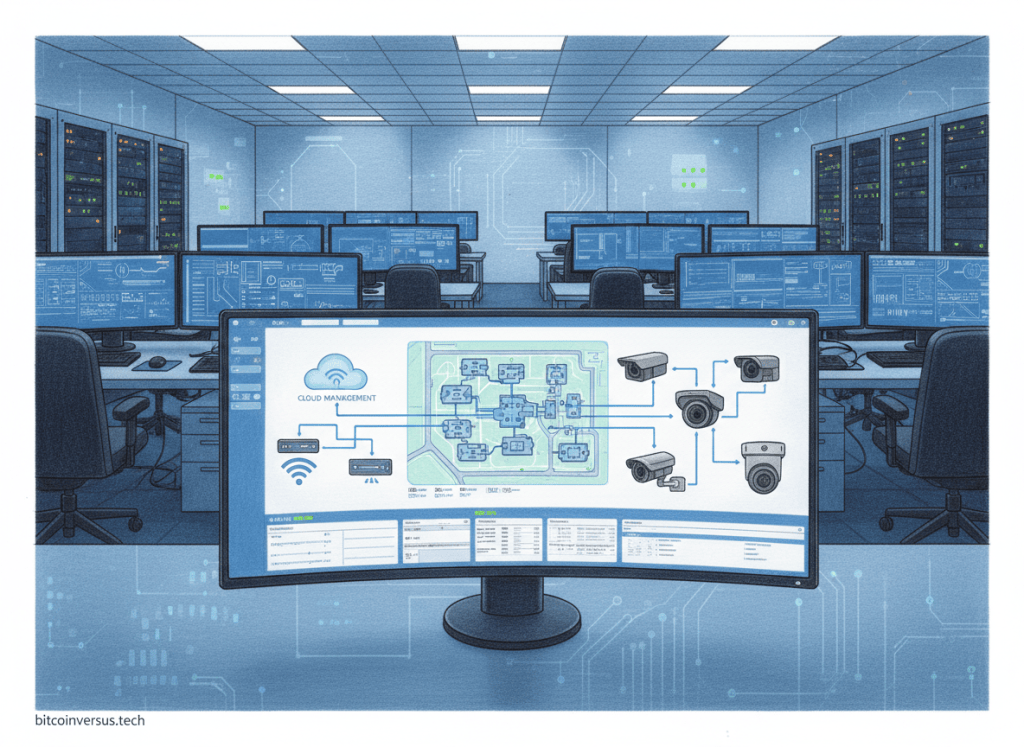
Cisco and Axis Communications are pulling physical-security hardware into the same cloud operating model used for enterprise networking. The integration lets supported Axis cameras and devices appear inside the Cisco Meraki dashboard within Cisco Cloud Control, giving IT and security teams a shared view of connectivity, device health, configuration and video operations.
The companies detailed the integration in Cisco’s September 16 technical announcement and Axis Communications’ collaboration overview. Cisco Enterprise Networking also showed the converged approach on X, describing supported Axis devices moving directly into the Meraki dashboard rather than living in a separate management silo.
The camera is becoming another managed network endpoint
Network cameras already depend on IP connectivity, firmware, authentication, certificates and monitoring. The new integration makes that relationship operationally explicit: administrators can claim supported Axis devices, monitor connectivity and health, configure devices and manage them alongside Cisco access points and switches.
That matters for distributed environments where separate consoles can turn a camera outage into a multi-team troubleshooting exercise. The same basic logic behind segmenting enterprise networks with VLANs now extends further into physical-security operations: the device, network path and management plane increasingly need to be understood together.
Cloud-to-cloud onboarding instead of a rip-and-replace
Cisco says the setup establishes an OAuth 2.0 connection between its cloud-managed environment and Axis Cloud Connect. Existing supported Axis hardware can then be registered for cloud management, allowing organizations to phase in centralized operations instead of replacing an entire camera fleet at once.
The model fits a broader infrastructure trend: management is moving above individual appliances. BitcoinVersus.Tech has also examined how FortiGate security appliances depend on a software operating layer and how network-security platforms require continuous patching. Cameras are increasingly part of that same lifecycle-management problem.
Vision Portal adds the incident layer
For physical-security teams, Cisco’s Vision portal provides live and historical video workflows, footage export and incident-management capabilities. The Advantage tier adds historical video, analytics and 30-day cloud storage, while the Essentials tier focuses on centralized device management and operational visibility.
Why this is an IT story
The important change is not simply that one camera brand works with one networking dashboard. It is that physical-security endpoints are being managed more like the rest of enterprise IT: centrally inventoried, remotely monitored, continuously updated and tied directly to network telemetry. As cameras add edge analytics and AI, that convergence makes the network administrator and physical-security operator increasingly dependent on the same infrastructure view.
BitcoinVersus.Tech
Advertisement
Editor’s Note:
We volunteer daily to ensure the credibility of the information on this platform is Verifiably True. If you would like to support our research initiatives, please donate here: 3C9o19EH5HSiwEPyCTmEKzxhNCbo2X6TTb
BitcoinVersus.tech is not a financial advisor. This media platform reports on financial subjects purely for informational purposes.


Leave a Reply