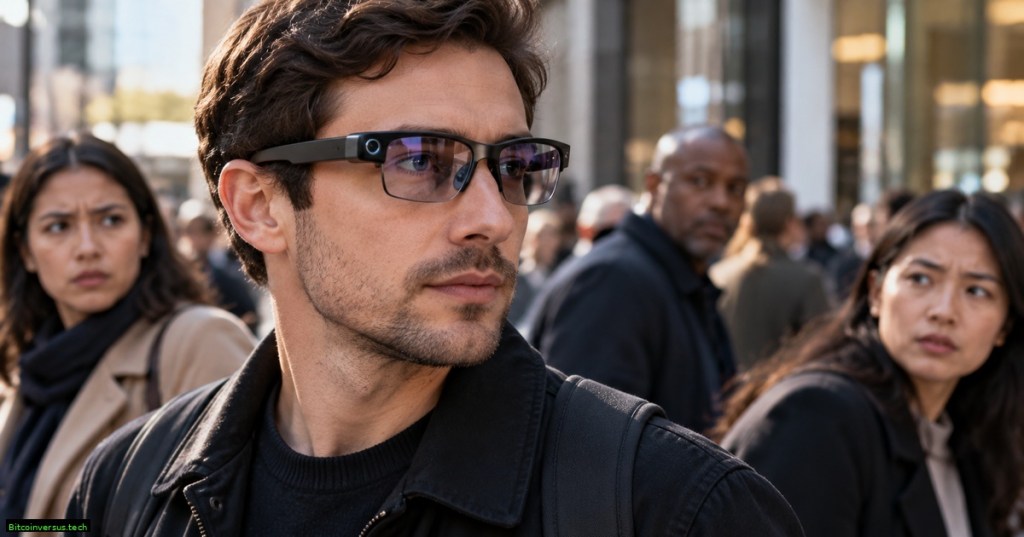
Camera-equipped smart glasses are moving from gadget novelty into a serious privacy fight. Reuters reported on October 6 that governments, courts, schools and companies are increasingly examining restrictions because smart glasses can photograph, film or record audio around people who may not realize they are being captured.
The tension is simple: smart glasses are useful precisely because cameras, microphones and wearable AI hardware disappear into something that looks much closer to ordinary eyewear. That same convenience makes traditional social cues around recording much weaker.
Norway Is Moving Toward a Temporary Ban
Norway’s government said on October 5 that it plans to propose a temporary ban on AI glasses in selected public places while an expert group studies permanent rules. The official government announcement says possible locations include parks, beaches, museums, shopping centers, public events, schools and health facilities.
The proposal is not yet a blanket national ban. Norway still has to define exactly which devices and capabilities would be covered before legislation goes to parliament.
New York Courts Already Draw a Hard Line
New York’s Unified Court System already prohibits smart glasses from court facilities. Its policy covers prescription and non-prescription eyewear or headwear containing cameras, microphones, computers or other technology capable of recording audio or video. The court policy reflects a simple reality: recording hardware no longer has to look like a phone or conventional camera.
Meta Says the Recording Light Is the Social Signal
Meta, whose Ray-Ban smart glasses helped push the category toward the mainstream, says capture LEDs activate when users take photos, record video or stream. Meta’s privacy guidance also tells users to ask permission before capturing people and avoid sensitive locations where privacy is expected.
The policy debate is therefore moving beyond what the hardware can do to whether its notice mechanisms are strong enough. A tiny indicator light may be technically visible without being socially obvious to everyone nearby.
Privacy Is Bigger Than the Camera
Smart glasses can combine cameras, microphones, voice assistants, cloud services and AI models in one always-available interface. That means the privacy question is not only whether an image was captured, but what information can be extracted from the scene after capture.
That mirrors a broader hardware-security lesson BitcoinVersus covered with a recent hardware-wallet privacy prototype: protecting one layer of a device does not automatically protect the full information path.
Why This Is Becoming a Culture Problem
Phones trained people to recognize when someone is obviously pointing a camera. Smart glasses weaken that convention because looking and recording can happen through the same wearable. That is why restrictions are appearing first in places where confidentiality, consent or vulnerability matter most.
Watch whether Norway’s proposal becomes law, whether other European countries copy device-specific restrictions, and whether manufacturers add stronger bystander signals or software controls.
BitcoinVersus.Tech
Advertisement
Editor’s Note
Norway has announced an intention to propose temporary restrictions; it has not yet enacted a blanket national ban.
We volunteer daily to ensure the credibility of the information on this platform is Verifiably True. If you would like to support our research initiatives, please donate here: 3C9o19EH5HSiwEPyCTmEKzxhNCbo2X6TTb
BitcoinVersus.tech is not a financial advisor. Content is provided for informational purposes.


Leave a Reply