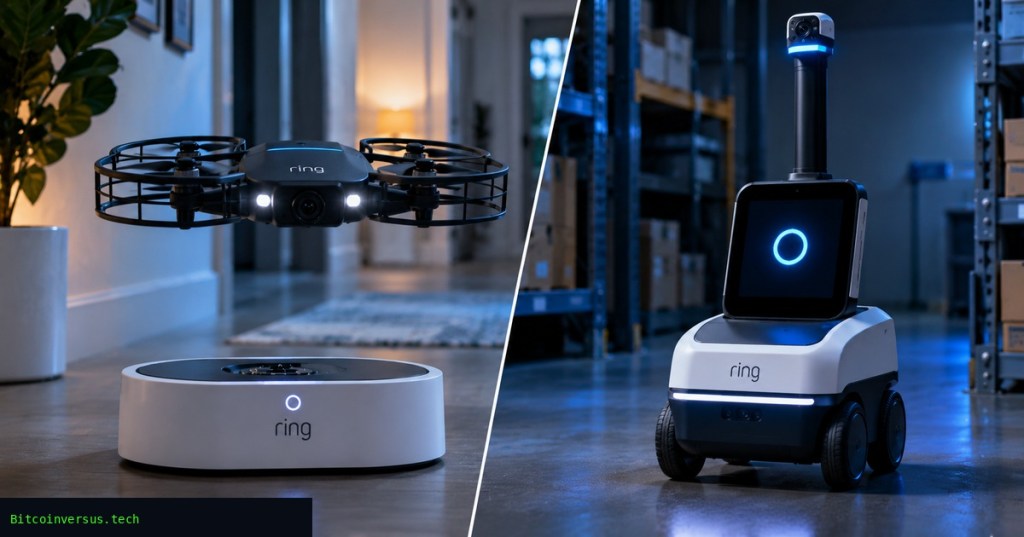
Amazon-owned Ring announced two mobile security devices on November 10, 2026: a Drone Cam priced at $249.99 for homes and a Rover Cam priced at $999.99 for businesses. Both use Ring’s AI Pilot navigation system, combining cameras, onboard sensors, vision models and cloud processing to travel toward selected viewpoints. Neither product had begun shipping at announcement. Ring forecasts a December 16 U.S. shipping start for Rover and January 27, 2027 for Drone, subject to remaining requirements.
Archival video: Ring’s official October 8, 2021 Always Home Cam demonstration. The device shown is an earlier prototype, not the 2026 Drone Cam production design. Credit: Ring / YouTube.
Current announcement: Ring’s November 10, 2026 Drone Cam post on X. WordPress cannot currently render its social player; the verified historical YouTube demonstration above shows the earlier product concept, not the newly announced hardware.
A camera that flies between rooms
The 165-gram Drone Cam uses guarded rotors to fly preset indoor routes or investigate alerts from compatible Ring sensors. Its camera records at 1920 × 1920 pixels, marketed as 2K, with a 148-degree horizontal and vertical field of view. Two LED spotlights illuminate dark rooms. Ring rates flight endurance at up to eight minutes with a new battery under controlled conditions; real routes may be shorter. The device has neither a microphone nor two-way talk, and it cannot patrol outdoors.
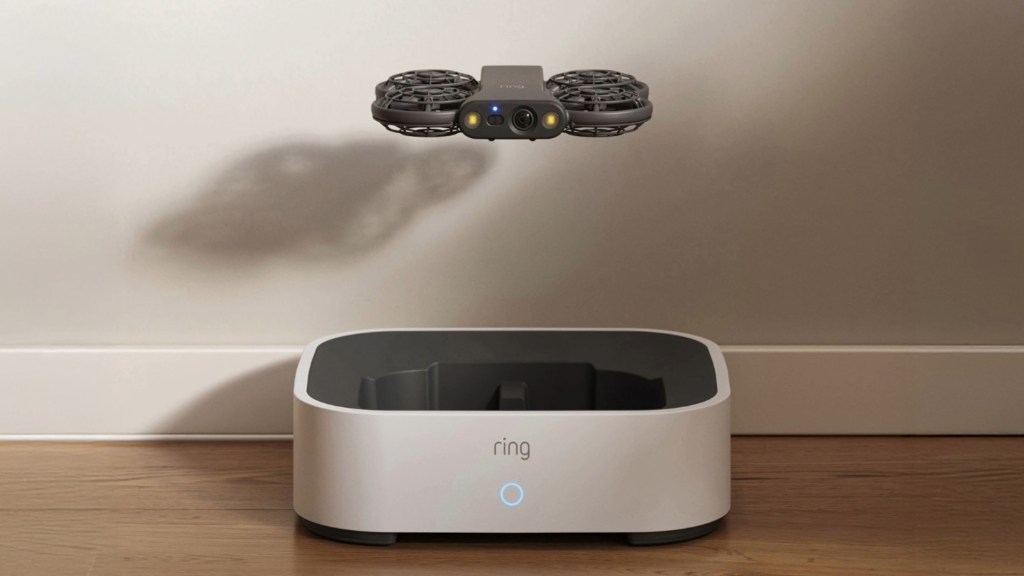
During setup, owners carry the drone through the home so AI Pilot can build a floor plan, identify rooms and suggest points to check. A compatible Ring Protect subscription is needed for scheduled patrols and stored-video features. Ring recommends at least 5 Mbps upload bandwidth for optimal video performance. Polished reflective floors, featureless walls, transparent glass and mirrors can interfere with navigation according to its own product notes.
Rover is designed for warehouses and shops
Rover Cam is a wheeled robot intended for indoor, single-floor workplaces covering up to 5,000 square feet (about 465 square meters). A rising periscope camera provides higher viewpoints, while Ring advertises up to 4K recording, 360-degree scans at stops, a siren, light tower and two-way audio. The robot weighs 20.6 pounds (9.35 kilograms) and requires suitable Wi-Fi; Ring recommends 15 Mbps upload for optimal video quality.
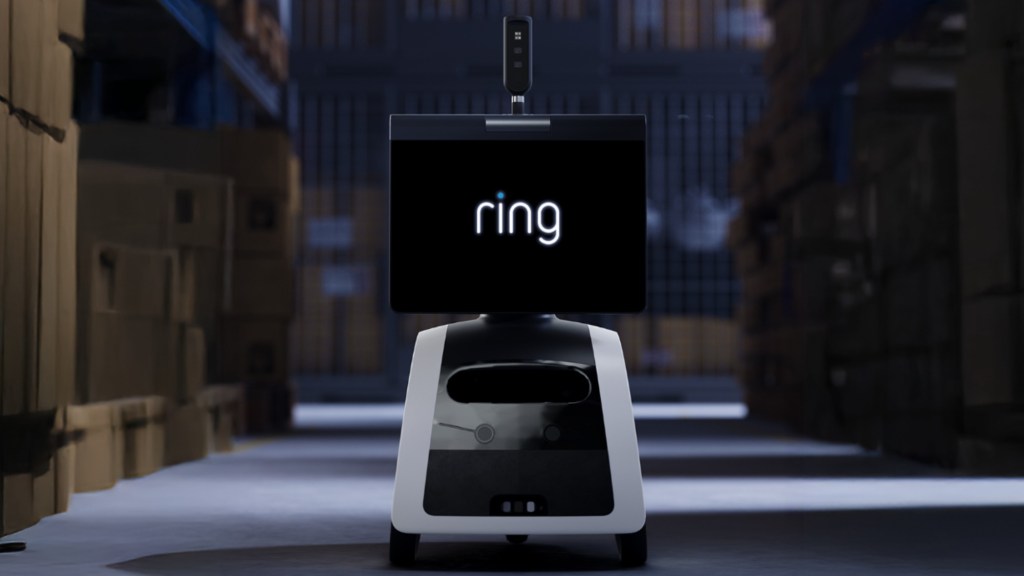
Rover cannot climb stairs and may struggle with glossy black flooring or transitions exceeding 1.375 inches (3.5 centimeters). Ring also says the unit is unsuitable around children younger than three or small pets. The manufacturer lists roughly 45 minutes to recharge, but has not established dependable all-day patrol coverage. Its detection while docked and active recording during travel differ from Drone Cam’s flight-only recording.
A second attempt after Astro and Always Home Cam
Ring’s earlier Always Home Cam was unveiled in 2020 and offered to limited customers rather than achieving the previously anticipated mass rollout. Amazon also discontinued Astro for Business, an earlier mobile security robot. Ring says Rover draws on lessons from Astro customers. The original Ring video shown below depicts the 2021 prototype, not the newly announced 2026 Drone Cam. Similar autonomy problems feature in BitcoinVersus.Tech’s reporting on autonomous drone computing and emergency-response drones, although those operate in different settings.
Privacy, autonomy and launch limits
Ring says cameras stop recording when the drone docks and provides a Rover privacy mode that retracts the mast and disables the microphone. Its announced encryption system, called Throw Away the Key, cannot by itself establish how cloud-based navigation data will be accessed, retained or audited. Related coverage of AI surveillance and privacy and wearable-camera restrictions shows how mobile sensors generate policy questions beyond optical resolution.
The Drone Cam has not received the required Federal Communications Commission authorization; Ring says it cannot be offered for sale until approval. Its January date is a target, not confirmed delivery. Rover is available for preorder, but wider deployment reliability remains untested in customers’ working environments. A successful product must navigate reliably in cluttered rooms, manage network interruptions, secure stored video and remain maintainable after years of service. Cybersecurity concerns extend beyond cameras, as industrial robotics controller reporting demonstrates. The hardware launch establishes a commercial plan—not verified reductions in break-ins or staffing costs.
Reporting sources: Amazon/Ring announcement, November 10, 2026; Drone Cam specifications and regulatory notice; Rover Cam specifications; Reuters, November 10; The Verge hands-on report.
BitcoinVersus.Tech Editor’s Note: We volunteer daily to ensure the credibility of the information on this platform is Verifiably True. If you would like to support to help further secure the integrity of our research initiatives, please donate using the QR code provided.

Optional contribution: 5,000 satoshis (0.00005 BTC). On mobile, open the original QR code on a second screen to scan it using your Bitcoin wallet, or use a wallet offering scanning from saved images. Verify the recipient address and amount before sending.
BitcoinVersus.Tech is maintained by volunteers. BitcoinVersus.Tech is not a financial advisor. Financial reporting is informational and is not investment advice.


Leave a Reply