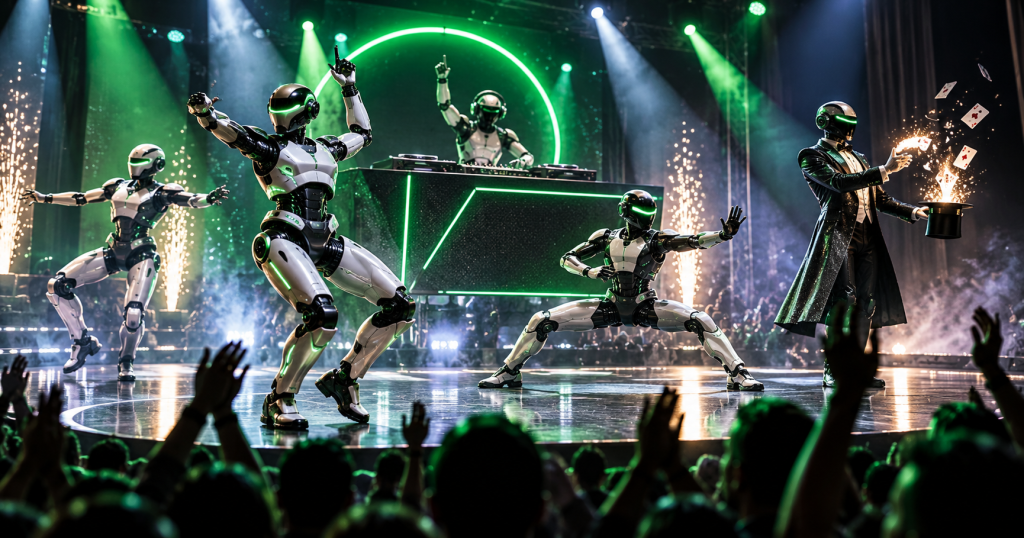
Humanoid robots have moved from factory demonstrations to the theater stage. Lumos Robotics recently staged a 45-minute variety performance at Shenzhen’s Bao’an District Youth Palace, combining robot dancing, comedy, martial arts, DJ sets and magic in one show. The company described it as the world’s first humanoid robot theater performance, a claim that has not been independently established.
A Robot Variety Show, Not Just a Dance Demo
The event at the Dream Theater featured a robot host and six performance formats. A group dance opened the show, followed by a cross-talk comedy routine involving Lumos’ smaller NIX robot and a child. Other segments included a futuristic Monkey King, martial-arts choreography, electronic music blended with traditional Chinese music and stage magic. Several robots shared the stage with human performers, turning timing and coordination into part of the engineering challenge. Robotics & Automation News reported the production October 8.
https://platform.twitter.com/widgets.jsLumos Robotics presents its humanoid robot theater performance in Shenzhen.
— Lumos Robotics September 2026
Why a 45-Minute Show Is Technically Interesting
A humanoid completing one polished move is very different from participating in a long sequence of coordinated acts. Engineers must manage software timing, motion trajectories, joint control, balance, battery limits and transitions between routines. Sharing a stage with people also raises practical questions about spacing, collision avoidance and reliable stop behavior. The report describes the show as designed to run autonomously from opening to curtain call, but does not provide enough technical evidence to establish how much backstage intervention or supervision was involved.
Robots Are Becoming Entertainers
The production sits within a broader wave of playful humanoid demonstrations, from traditional folk dancing to sports and theatrical performance. At a Turkish technology festival earlier in October, another humanoid drew spectators by performing the halay folk dance to local music. Those events show how robotics can reach audiences outside laboratories while giving developers a public demonstration of motion control and expressive interaction. See Daily Sabah’s October 3 report.
What Comes Next
The next challenge is not simply giving robots more dance moves. It is making them flexible enough to adapt when a human misses a cue, a prop shifts or the stage changes. Live entertainment could become an entertaining test environment for synchronization, safe human-robot collaboration and increasingly expressive machine movement. For now, a robot comedy act and a robotic DJ are already a pretty memorable demonstration of how far humanoid performances have come.
Sources
Reporting: Robotics & Automation News, October 8, 2026; related context: Daily Sabah, October 3, 2026. Featured artwork is an illustration, not a photograph of the Shenzhen performance.


Leave a comment