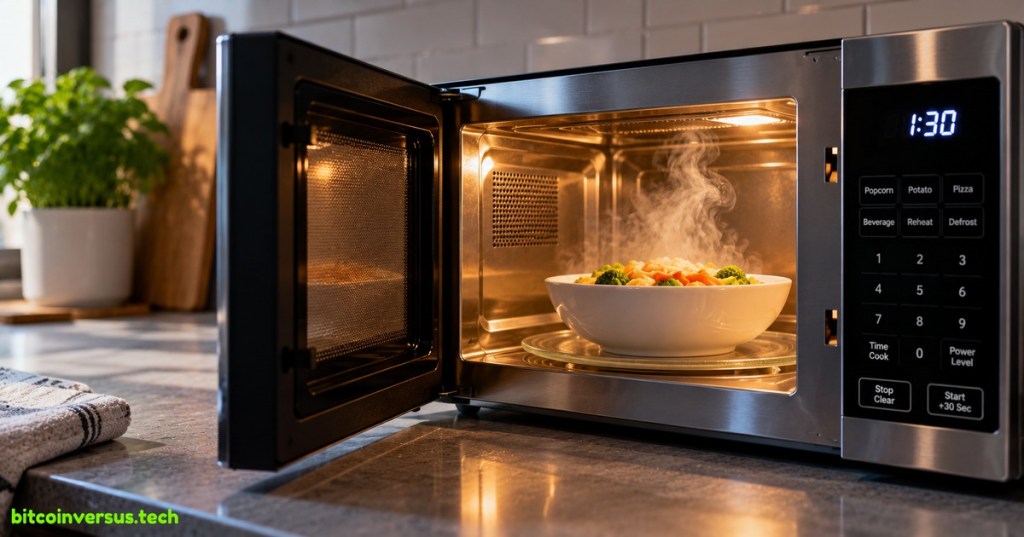
A microwave oven heats food using microwave energy.
Instead of heating a large oven cavity first, it sends microwave energy into the food inside a small metal box. That is why reheating leftovers can take a couple of minutes instead of much longer.
What Are Microwaves?
Microwaves are a type of electromagnetic wave. Radio, Wi-Fi, visible light, and microwaves all belong to the larger electromagnetic spectrum, but they use different frequencies.
A microwave oven is designed to keep its microwave energy inside the cooking chamber while food is being heated. The U.S. Food and Drug Administration regulates microwave ovens as radiation-emitting electronic products and sets limits on how much microwave energy may leak from them.
How Does the Food Get Hot?
Inside the oven, a device called a magnetron creates microwave energy.
That energy travels into the cooking chamber and interacts with the food. Water and other molecules in the food respond to the changing electric field, and that movement helps produce heat.
The simple idea is that the microwave energy is turned into heat inside the food.
Why Does the Plate Spin?
Microwave energy does not spread perfectly evenly inside the oven. Some places can receive more energy than others.
The turntable moves your food through different parts of the microwave field so it heats more evenly.
Even with a turntable, thick or oddly shaped food may still have hot and cold spots. That is why stirring or letting food rest can help.
Technology Connections points out a familiar microwave quirk: higher household outlet power does not always mean a higher-wattage microwave, and microwave power varies widely by model and market.
Why Is There a Metal Screen in the Door?
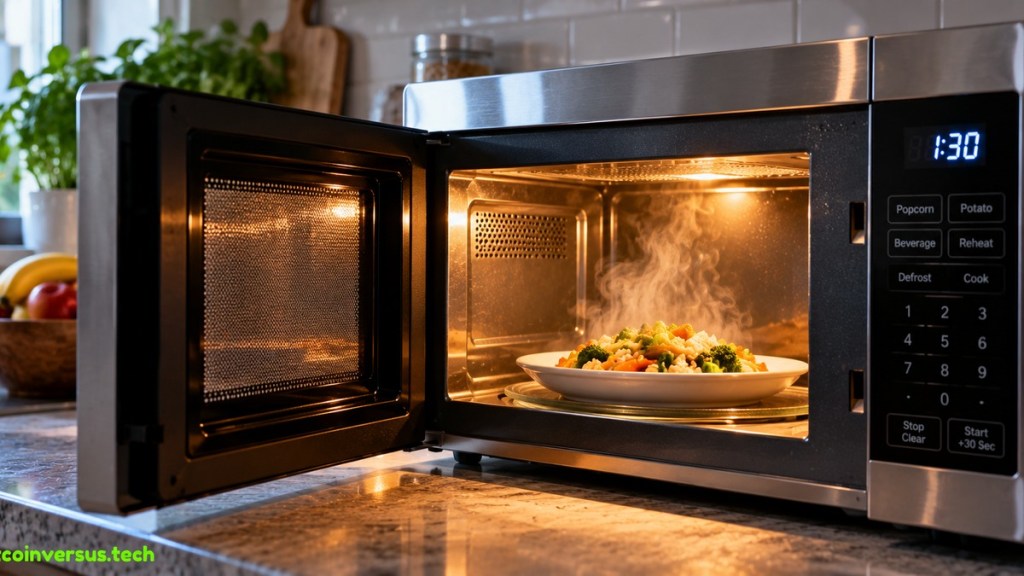
The little holes in the door let you see inside, but the metal screen helps keep microwave energy inside the oven.
The holes are much smaller than the wavelength used by the microwave oven, so visible light can pass through while the microwave energy is largely contained.
Why Does Metal Spark?
Some metal objects can concentrate electrical energy at sharp edges or points. That can create sparks, sometimes called arcing.
That is why you should follow the oven and food-package instructions instead of putting random metal objects inside.
Is Microwave Food Radioactive?
No. A microwave oven does not make food radioactive.
The microwave energy heats the food while the oven is running. When the microwave stops, the food does not keep producing microwave radiation.
Why Are Microwaves So Fast?
A conventional oven usually has to heat the air, metal walls, racks, and cookware around the food.
A microwave oven can deliver energy directly into the food, which makes it especially useful for reheating, defrosting, and cooking smaller portions quickly.
Microwaves are another everyday use of radio-frequency energy, just like the signals behind Wi-Fi and Bluetooth—although the equipment and purpose are very different.
The Easy Way to Remember It
A microwave oven turns microwave energy into heat inside your food.
The magnetron creates the microwaves, the metal cooking chamber keeps the energy contained, and the turntable helps the food heat more evenly.
That is the basic idea.
References
BitcoinVersus.Tech
BitcoinVersus.Tech explains everyday technology in plain language.
BitcoinVersus.tech is not a financial advisor. Content is provided for informational purposes.


Leave a comment