
Artificial intelligence could change video games in two different places at once: inside the game and behind the scenes. For players, that could mean smarter characters, more reactive worlds, personalized help and better graphics. For developers, it could mean faster prototyping, more efficient testing, easier localization and new ways to create content without manually building every variation.
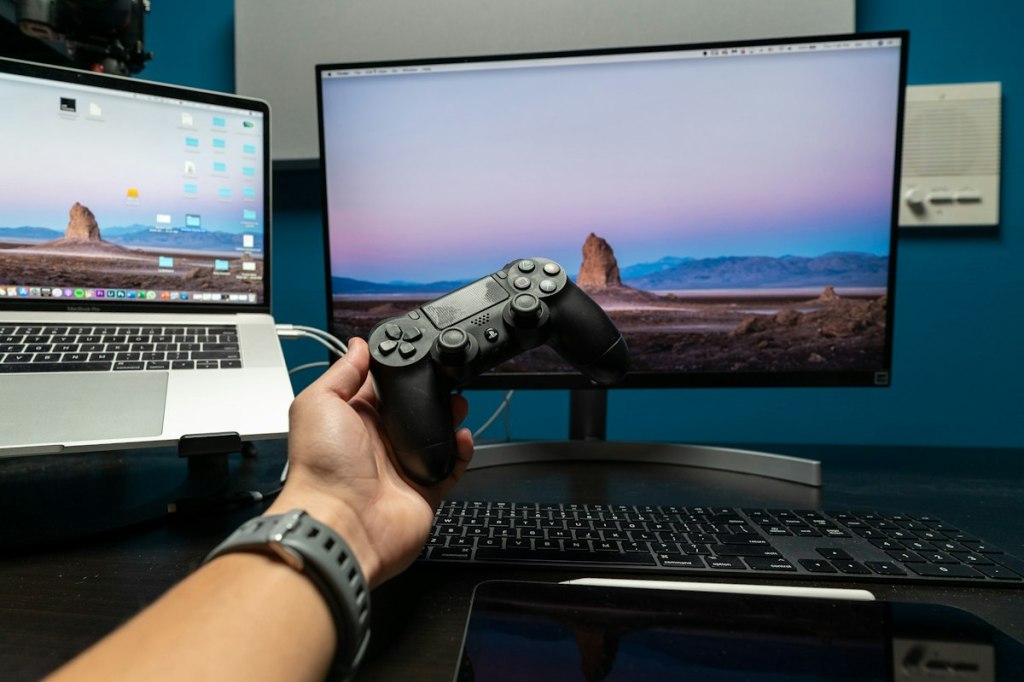
It is also useful to separate traditional game AI from newer generative AI. Games have used AI-like systems for decades to control enemies, pathfinding, tactics and non-player characters. Newer generative systems add capabilities such as natural-language conversation, content generation, world modeling and AI-assisted creation. Those newer tools are where many of the biggest potential changes are now appearing.
1. NPCs Could Become More Reactive
Most game characters today operate inside carefully authored rules. They may have excellent writing and believable behavior, but eventually the player finds the edge of the script. Generative AI can potentially give an NPC more room to react to what the player actually says or does while still remaining inside a developer-controlled personality, backstory and set of rules.
NVIDIA ACE for Games, for example, is designed around conversational and autonomous in-game characters using AI for speech, intelligence and animation. The interesting part is not merely that an NPC can talk more. It is that the character could potentially remember context, react to the environment and make decisions that feel less like selecting from a fixed dialogue tree.
2. Stories Could React More Deeply to the Player
Branching stories are expensive because writers and designers have to author, test and maintain every meaningful branch. AI systems could help create more connective tissue between major hand-authored story moments: different reactions, optional conversations, side events, rumors, character memories and smaller consequences that respond to how a player has behaved.
The important word is help. The strongest version of this idea is not a game replacing its writers with an unlimited text generator. It is a human-authored world where AI fills some of the spaces between major authored scenes while obeying the rules of the setting. That could make role-playing games feel more personal without requiring writers to manually prewrite every possible sentence a player might provoke.
3. Games Could Become More Replayable
Procedural generation already gives games large amounts of variation. BitcoinVersus.Tech recently looked at how No Man’s Sky uses procedural generation to create an enormous explorable universe. Generative AI could extend the same general idea into quests, dialogue, encounters, character relationships, puzzles or world events.
That does not automatically mean “infinite game.” Generated content can still become repetitive or incoherent. But if AI systems are tied to well-designed rules, authored assets and a persistent world state, they could increase the number of meaningful combinations a game can produce. Two players might enter the same town and leave with very different stories.
4. AI Could Help Players Learn a Game
A built-in AI assistant could observe what a player is struggling with and explain the game at the right level. Instead of opening a wiki or watching a ten-minute tutorial, a player could ask why a weapon is ineffective, where a resource comes from, how a mechanic works or what changed after a patch.
This could be especially useful in strategy games, simulators, MMOs and competitive games with complex systems. NVIDIA now describes AI assistants that can analyze gameplay and provide guidance as one of the emerging uses for its game-focused AI stack. The benefit would be less friction between “I do not understand this system” and “I am having fun with this system.”
5. Difficulty Could Become More Personal
Traditional difficulty settings are usually broad: easy, normal, hard. A more adaptive system could look at how a player actually behaves. It might notice that the player understands combat but struggles with navigation, or that a racing player brakes too late but already understands cornering lines.
The goal would not have to be making every game easier. A good adaptive system could keep a challenge near the player’s skill level, reduce repetitive frustration and offer help without immediately revealing the solution. For accessibility, that could be even more valuable because assistance could target the specific barrier instead of applying one giant global setting.
6. Accessibility and Localization Could Improve
AI-powered speech recognition, text-to-speech, translation and captioning can make games easier to use across languages and ability levels. The same underlying technologies that let an NPC understand spoken language can also help a game produce captions, voice interfaces or translated dialogue more quickly.
Human review still matters, particularly for tone, cultural context, humor and accessibility quality. But AI can potentially reduce the amount of repetitive work required to support more players in more languages.
7. Developers Could Prototype Ideas Faster
One of the most practical benefits may happen before the player ever sees the game. Microsoft Research created Muse, a World and Human Action Model designed to explore gameplay ideation. Microsoft says the research focuses on helping human creatives explore possible gameplay sequences rather than replacing the creative process.
That matters because game development involves enormous amounts of iteration. Designers test movement, combat, pacing, environments, encounters and interaction rules repeatedly. A tool that can help visualize or simulate an idea earlier could let a team reject weak concepts faster and spend more time polishing strong ones.
That same development trend is already showing up across the industry. BitcoinVersus.Tech has covered Google Playground turning prompts into playable games, Genex adding AI agents and visual checks to game development, and Unity engine workflows being connected to AI-assisted tools.
8. AI Could Help Test Huge Games
Modern games can contain thousands of interactions across quests, physics, menus, maps, items, network states and hardware combinations. Human QA remains essential, but automated agents could help repeatedly explore the same systems, look for unexpected behavior and reproduce specific sequences.
That could free human testers to spend more time on subtle problems: whether something feels fair, whether an animation communicates the right information, whether a quest makes sense, or whether a bug is merely technical versus genuinely damaging to the player experience.
9. AI Can Improve Graphics Without Generating the Art
Not every AI feature in gaming is a chatbot or image generator. Neural rendering is already a major use of AI. Technologies such as NVIDIA DLSS and other upscalers use trained models to reconstruct or generate image information so games can deliver higher frame rates, higher apparent resolution or improved image quality under demanding rendering workloads.
BitcoinVersus.Tech recently covered Sony bringing QSSR AI upscaling to the standard PS5 and AMD expanding FSR 4 toward APUs and handheld gaming PCs. These are examples of AI improving the rendering pipeline rather than writing dialogue or replacing game assets.
10. Smaller Teams Could Attempt Bigger Ideas
Independent developers often have more ideas than time. AI-assisted coding, placeholder dialogue, temporary voice work, rapid concepting, test generation and production automation can help a small team get a playable version of an idea on screen sooner. That does not eliminate the need for programming, art direction, writing, design or testing. It can reduce some of the repetitive work surrounding those disciplines.
The best-case outcome is not a flood of automatically generated games. It is more people being able to build strange, specific or experimental games that would previously have required a much larger budget.
The Benefits Depend on Human Direction
AI can also create new problems: inconsistent characters, incorrect dialogue, repetitive generated content, latency, extra compute cost, moderation challenges, copyright questions and pressure on creative jobs. A system that can generate more content is not automatically a system that generates better content.
The strongest use of AI in games will probably be selective. Developers can keep the parts that benefit from authorship and precision tightly controlled, while using AI where adaptability, variation, assistance or automation genuinely improves the experience. In other words, the real advantage is not “AI makes the game.” It is AI gives designers another layer of systems they can deliberately design with.
Bottom Line
The potential benefits of AI in video games are broad: smarter NPCs, more reactive stories, greater replayability, personalized tutorials, adaptive difficulty, better accessibility, faster development, stronger automated testing and AI-assisted graphics. Some of those benefits already exist. Others are still experimental.
The technology becomes most interesting when it does something traditional tools could not do well—not when it simply produces more content. If developers use AI to make games more responsive, understandable, expressive and technically ambitious while humans remain responsible for the creative direction, video games could become one of the clearest places where AI produces benefits players can actually feel.
Editor’s Note
The featured image and body image are separate realistic editorial photographs. This article uses standard responsive Gutenberg headings, paragraphs, lists, images and embeds. There are no decorative text boxes, cards, callouts, shaded panels or fixed-width prose containers.
BitcoinVersus.Tech is not a financial advisor. Content is provided for informational and educational purposes.


Leave a comment