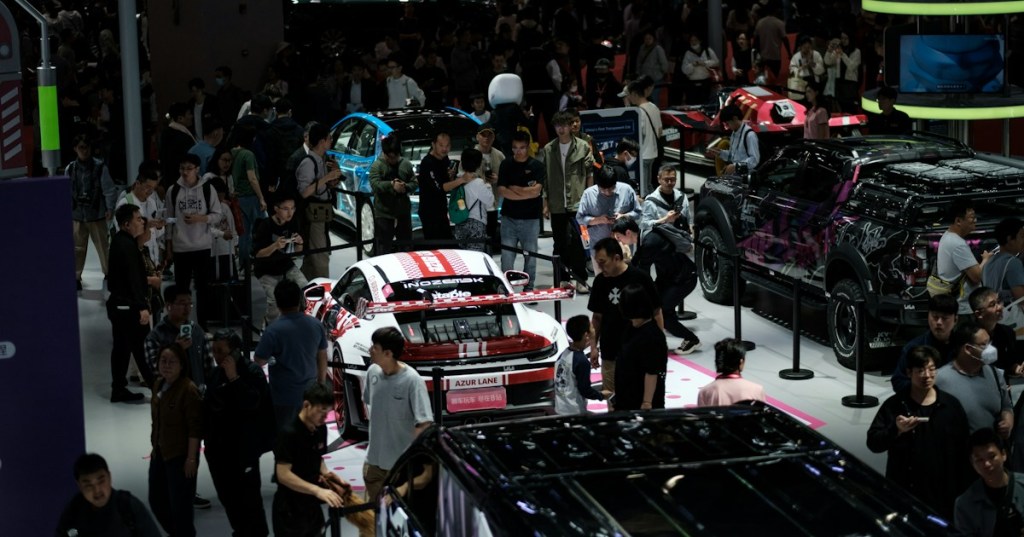
A record 20 Chinese car brands are heading to the 2026 Paris Motor Show, twice the number that appeared at the 2024 event, turning one of Europe’s most important auto shows into a direct test of how quickly the global car industry is shifting.
The Paris show runs October 12–18 at Paris Expo Porte de Versailles. Reuters reports that established Chinese names such as BYD and Chery will be joined by newer European entrants including Aito and Avatr as European manufacturers answer with their own wave of new electric vehicles and lower-cost models.
The backdrop is no longer hypothetical competition. According to data cited by Reuters from Schmidt Automotive Research, Chinese brands reached 10.7% of the European car market in the second quarter of 2026, up from 5.7% a year earlier. That puts the Chinese presence in Paris in the context of a market-share battle already underway.
The Chinese turnout has doubled in two years
Reuters says the 20-brand Chinese contingent is twice the size of the one at the 2024 Paris Motor Show. The official Mondial de l’Auto exhibitor list includes BYD, Changan, Chery, Denza, Forthing, GAC, Geely, Leapmotor, Li Auto, XPENG and other Chinese-linked brands alongside long-established European, Japanese, Korean and American manufacturers.
That matters because Europe has become one of the main overseas battlegrounds for Chinese automakers. U.S. market access remains heavily restricted, while weak domestic demand in China has increased the incentive for manufacturers to expand internationally.
Europe has tried to slow that expansion with tariffs on Chinese-made battery-electric cars. BitcoinVersus.Tech previously covered EU-China negotiations over electric-vehicle tariffs, but the competitive response has already moved beyond pure EVs.
Plug-in hybrids became an obvious tariff workaround
Chinese manufacturers have expanded aggressively into combustion models and plug-in hybrids, which do not face the same tariff structure as Chinese-made battery-electric cars. Reuters reports that Chinese brands captured more than 26% of the Western European plug-in-hybrid market in the second quarter, up from just 2.2% two years earlier.
That helps explain why the Paris booths will not simply be rows of inexpensive electric hatchbacks. Chinese companies are arriving with compact EVs, premium SUVs, plug-in hybrids, range-extended vehicles, autonomous-driving demonstrations and increasingly complete product families.
XPENG is bringing a European-built flagship
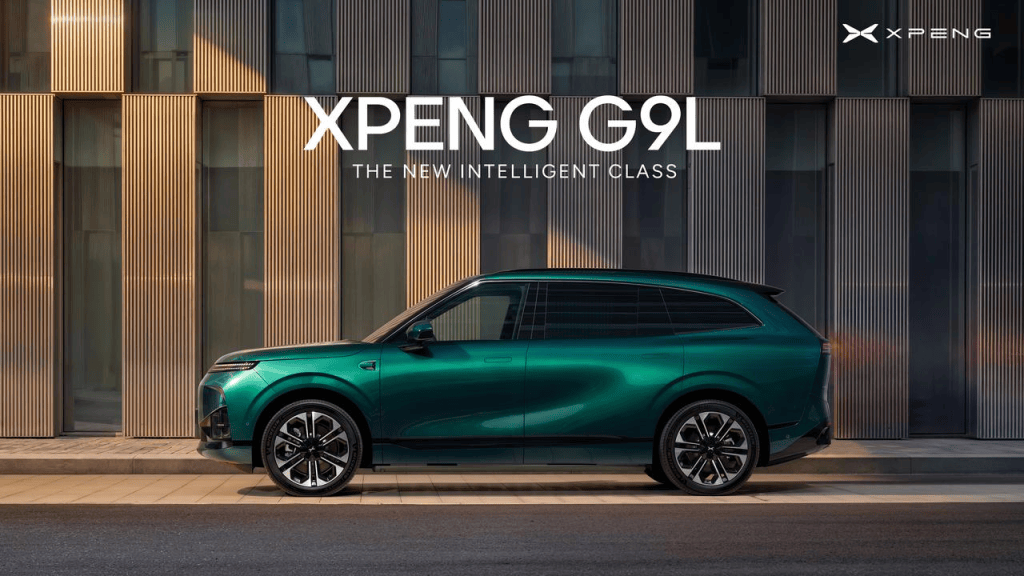
XPENG provides a useful example of how the strategy is changing. The company says its new G9L flagship SUV will make its European launch in Paris, with local order books and pricing opening at the show.
More importantly, XPENG says the G9L will become its fourth model produced in Europe, following the G6, G9 and P7+. Production is tied to Magna’s plant in Graz, Austria, showing how Chinese automakers are pairing exports with local manufacturing instead of relying only on vehicles shipped from China.
XPENG says it has delivered more than 100,000 vehicles outside China, including more than 60,000 in Europe, and over 6,000 vehicles in France since entering that market two years ago. Its Paris stand will exceed 1,000 square meters.
Leapmotor is bringing two models outside China for the first time
Leapmotor, which is backed internationally through its partnership with Stellantis, says it will bring the B03 compact hatchback and D19 flagship SUV to Paris for their first appearances outside China. Its full display will also include the B03X, B05, B10, C10 and T03.
The breadth is important. A few years ago, Chinese automakers entering Europe were often discussed mainly as a source of lower-cost battery-electric cars. The 2026 lineup increasingly spans inexpensive urban cars, family crossovers, premium SUVs and mixed powertrains.
European automakers are fighting back on price
Europe’s incumbents are not standing still. Reuters reports that European manufacturers will use Paris to launch a new generation of more affordable EVs, including a revived Citroën 2CV concept developed around rules intended to let manufacturers simplify vehicles and reduce costs.
Stellantis says it alone will show more than 60 vehicles and nine concept cars from eight brands at the event. Its presence includes Alfa Romeo, Citroën, DS, Fiat, Lancia, Opel, Peugeot and Leapmotor, illustrating the unusual reality of the current market: European groups are competing with Chinese automakers while also partnering with them.
The technology contest is bigger than battery range
Consumers will naturally compare battery range, charging speed and price, but the competition is expanding into software, driver assistance, manufacturing efficiency, cabin electronics and powertrain flexibility. Even basic features such as regenerative braking now sit inside much larger integrated vehicle platforms built around software-defined control systems.
XPENG and Tesla will be the only two automakers in the show’s official Autonomous Lab, according to XPENG, while other Chinese brands are using Paris to demonstrate fast charging, plug-in-hybrid systems, connected cabins and premium features traditionally associated with more expensive European marques.
Paris is becoming a snapshot of the new global auto industry
The headline number—20 Chinese brands—is important because it reflects more than one successful manufacturer. It shows an industrial ecosystem now producing enough competitive brands and product lines to occupy a major European auto show at unprecedented scale.
Europe still has enormous strengths in engineering, safety, performance, luxury brands and manufacturing. But the Paris Motor Show will make the competitive problem unusually visible: Chinese automakers are no longer testing Europe with a handful of models. They are arriving with enough brands, powertrains and price points to compete across much of the market at once.
Editor’s note: Market-share figures in this story are based on Reuters reporting citing Schmidt Automotive Research. Vehicle plans and launch details are based on company and Paris Motor Show announcements available before the show opens.
Disclaimer: BitcoinVersus.Tech publishes technology and industry news for informational and educational purposes.


Leave a Reply