A fast-growing open-source project called REA — Reverse Engineer Anything is pushing coding agents into territory that used to require a specialist sitting inside a disassembler for hours. Instead of starting from a source repository, REA lets an AI agent inspect shipped software, follow evidence through compiled binaries and application layers, explain how a feature works, and then help build a compatible implementation.
The project, maintained at morluto/rea on GitHub, describes itself as one MCP server for reverse engineering across binaries, applications and runtime behavior. As of October 9, 2026, the repository had climbed past 34,000 GitHub stars and more than 4,600 forks, an unusually fast rise for a developer tool created earlier this year.
The important idea is not a new decompiler
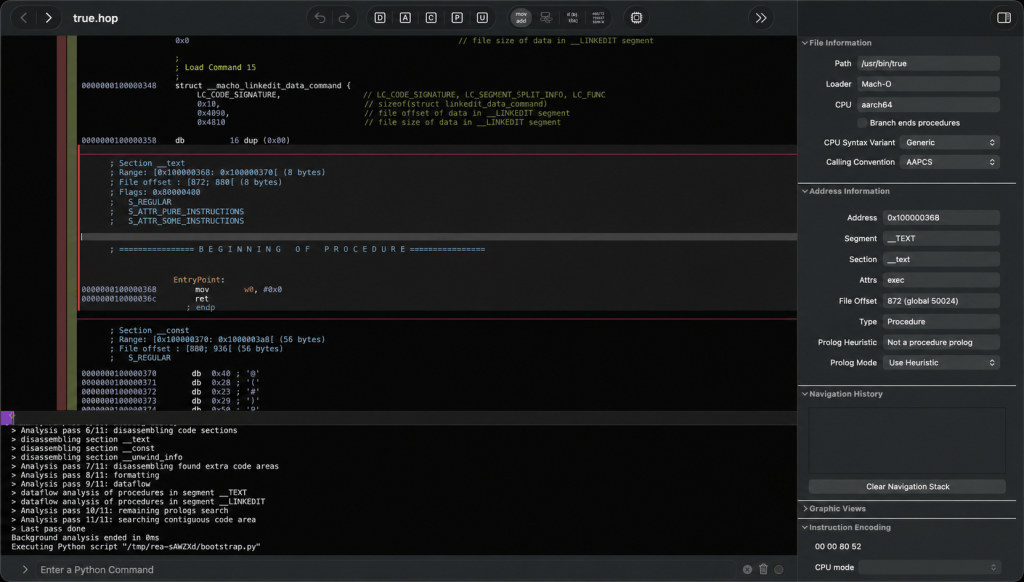
REA is not trying to replace mature reverse-engineering software. It acts as an agent-facing orchestration layer around existing analysis engines and inspection workflows. Native binaries can be handed to tools such as Hopper, Ghidra or IDA, while REA exposes the resulting pseudocode, assembly, strings, symbols, calls, references and other evidence through a consistent CLI and Model Context Protocol interface.
That distinction matters. A conventional reverse engineer normally decides which tool to open, searches strings, identifies interesting functions, follows cross-references, compares call graphs, reads decompiler output and repeatedly forms new hypotheses. REA gives a coding agent access to many of those same steps so the agent can decide what to inspect next.
This extends the same trend already visible in agent harness engineering: the model is only one component. The surrounding tool layer determines whether the agent can gather evidence, act on a real system and verify its own conclusions.
REA can inspect far more than native executables
The current project documentation lists support for native binaries, JavaScript and Electron applications, websites, .NET assemblies, Android APKs, firmware, saved network captures, EVM bytecode, application resources, process behavior, recorded Linux crashes and ELF binary layouts.
Different targets expose different evidence. A native program may yield pseudocode, assembly, function relationships, symbols and strings. An Electron application can expose modules, imports, routes, IPC boundaries, source maps and native add-on relationships. A website investigation can include page structure, scripts, network observations and screenshots. Firmware can be unpacked into regions and extracted artifacts before interesting binaries are handed to deeper analysis tools.
For software engineers already comfortable with Git and GitHub, the shift is significant: source code no longer has to be the first artifact an agent understands. The starting point can be a shipped application or compiled binary.
A prompt can become an investigation plan
REA’s documentation gives a simple example: ask an agent to understand how offline search works in an application and build a similar capability for another project. The agent can identify the target, search for likely clues, connect strings or symbols to executable code, follow callers and callees, build a call graph, decompile relevant routines and then use its normal coding tools to implement a new version.
That does not mean the original source code magically reappears. Decompiled pseudocode is a reconstruction. Compiler optimizations remove or transform information, symbols may be stripped, names can disappear and dynamic behavior can remain ambiguous. REA’s own documentation explicitly says it does not claim to recover original source code or automatically clone an application.
The more interesting capability is evidence-guided reconstruction: use static and runtime observations to understand what the software appears to do, preserve uncertainty where evidence is incomplete, then create and test an implementation based on that understanding.
Ghidra gives the agent serious binary-analysis machinery
One reason REA is consequential is that it can place mature reverse-engineering capabilities behind an agent interface. Ghidra, created and maintained by the U.S. National Security Agency Research Directorate, already provides disassembly, decompilation, graphing, scripting and broad executable-format support. REA turns those capabilities into operations an AI agent can call while pursuing an investigation.
That is similar to what happened when coding agents gained shell access, browser tools and documentation retrieval. The underlying tools were not new; what changed was that the model could invoke them, interpret results and decide what to do next. REA applies that pattern to reverse engineering.
It also fits the wider agentic AI production stack, where specialized tools increasingly become callable building blocks instead of separate applications a human must operate manually.
The evidence model may matter as much as the decompiler
Reverse engineering is unusually dangerous territory for an overconfident language model. Decompiled code can be incomplete. Dynamic dispatch can hide targets. Compiler transformations can make intent difficult to reconstruct. A convincing explanation can still be wrong.
REA therefore emphasizes evidence, provenance and limitations. Its roadmap says investigations should preserve the distinction between observations, inferences and unknowns. That is a stronger design than simply dumping pseudocode into an LLM and asking it to guess what the program does.
The project’s showcases demonstrate the idea. One reconstruction of a sound-position calculation from the classic game DX-Ball reportedly passed 3,205 original x86 test cases and reproduced all 63 compiled function bytes. Another case study traces an Electron clipboard bridge through Notion, while a PC-98 example reconstructs a bullet-angle calculation from 16-bit code.
Local analysis reduces one major privacy problem
REA says analysis runs locally rather than uploading the target application to a hosted REA service. That makes sense for large binaries, proprietary internal tools and security work. The model provider can still receive tool results depending on the agent configuration, so local analysis does not automatically make the entire workflow private.
Installation is deliberately simple: the project currently recommends npx rea-agents setup. REA can register itself with supported coding agents and connect to available analysis providers. Its current package identifies itself as version 6.1.0, and development is moving rapidly.
“Reverse engineer anything” still has boundaries
The name is intentionally ambitious, but coverage is not universal. Platform support varies by analysis provider. Windows support is still narrower than Linux and macOS in parts of the native workflow. Obfuscated software, packed binaries, hostile anti-analysis techniques, dynamic behavior and unusual architectures can all make reconstruction harder.
REA’s roadmap still calls out deeper native type recovery, indirect-call verification, improved .NET analysis, broader runtime observation, more Windows-native workflows, mobile targets, firmware work and possible integrations with additional reverse-engineering ecosystems.
The bigger change is that agents can inspect software before rewriting it
For years, AI coding tools were strongest when developers supplied source code, documentation and tests. REA points toward a different workflow: an agent receives the artifact that actually shipped, investigates it with professional analysis tools, builds an evidence-backed model of the feature, and only then writes new code.
That could matter for interoperability, security research, software preservation, legacy migration, debugging abandoned systems, malware analysis and understanding undocumented behavior. It could also make closed-source client software less opaque than developers have historically assumed.
The legal and ethical boundary remains important. The ability to inspect software does not automatically create permission to copy protected implementation details, circumvent access controls or violate a software license. Developers should reverse engineer software they own, open-source targets, or systems they are authorized to analyze, and should treat compatible reimplementation and direct copying as very different things.
The interesting technical shift is simpler: source code is no longer the only useful starting point for an autonomous coding agent. With tools like REA, the executable itself can become evidence.
Editor’s note: GitHub star and fork counts are a snapshot from October 9, 2026 and will change over time.
Disclaimer: BitcoinVersus.Tech publishes technology news and analysis for informational and educational purposes. Reverse engineering may be restricted by software licenses, access-control laws or other rules depending on the target and jurisdiction.


Leave a Reply