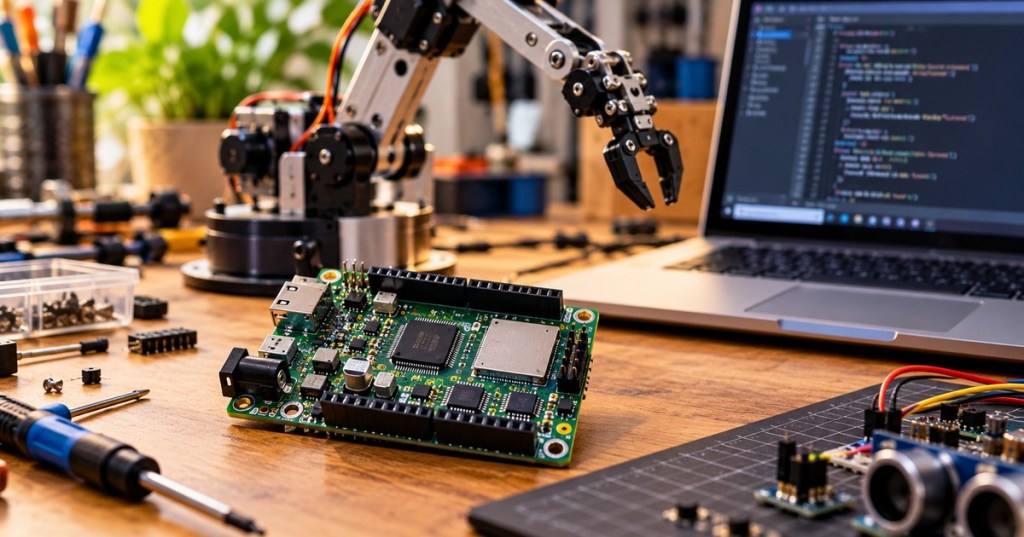
A year after Arduino introduced a tiny board that combines Linux computing with familiar microcontroller controls, the company says makers have shipped it around the world in remarkable numbers.
On October 8, Arduino reported that more than 270,000 UNO Q boards had shipped worldwide. It also counted more than 400 community events, over 4,000 contest participants and more than 250 official contest builds. The figures are Arduino’s own totals, measured through September 29, 2026—not independently audited retail sales.
Why this Arduino is different
The UNO Q has two kinds of processing on one board. A Qualcomm Dragonwing QRB2210 chip runs Linux and more demanding programs, including Python and AI applications. A separate STM32U585 microcontroller handles precise sensor readings and motor commands. Developers can combine the two using Arduino App Lab.
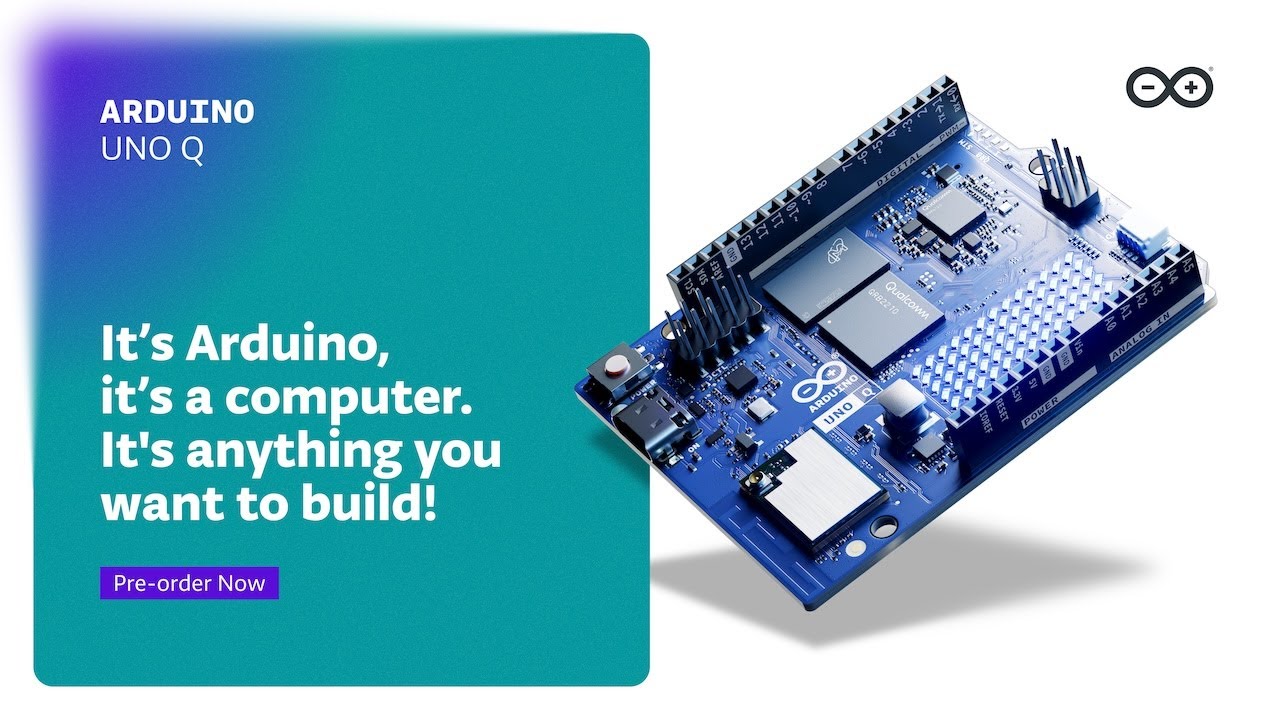
In plain English, the Linux side can make decisions while the microcontroller side keeps hardware responding on time. That combination is useful for small robots, camera-based projects, connected instruments, and interactive devices.
What people built
Arduino highlighted a community ranging from retro game consoles to robot prototypes and AI experiments. The company also said Arduino library downloads rose to more than 244 million over the past 12 months, compared with 165 million in the previous period. Those downloads cover the broader Arduino ecosystem, not just UNO Q.
The board’s hybrid design also connects with ideas covered in our open-source software guide and Git and GitHub explainer. Arduino says it continues to publish hardware schematics and software under open licenses, including tools for UNO Q development.
What comes next
Arduino is looking toward more physical AI projects—devices that do something in the real world rather than simply generate answers on a screen. The anniversary numbers show how quickly a familiar electronics platform can grow when Linux and real-time hardware control meet.
SmartNews takeaway: UNO Q is not just another tiny computer. It is an attempt to make robots, sensors, and AI-powered hardware easier to build on one board.
Sources: Arduino’s anniversary report and official hardware documentation.


Leave a Reply