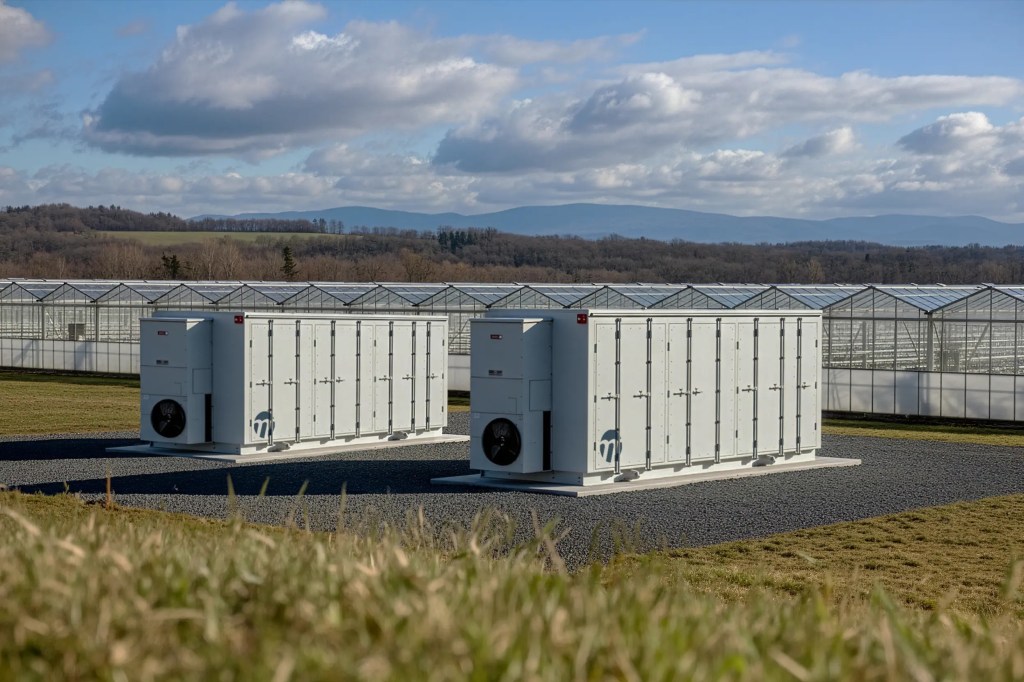
Four-hour battery storage has crossed a major cost line. Wood Mackenzie says it is now cheaper than open-cycle natural-gas turbines in all 43 markets where the firm modeled both technologies.
That matters far beyond renewable energy. AI data centers have been buying gas turbines so aggressively that turbine shortages are helping push the cost of new gas generation higher. The same data-center boom that created demand for fast new power is now strengthening the economics of batteries.
Four hours is enough to attack the daily peak
An open-cycle gas turbine is basically a fast-starting power plant built for the hours when electricity demand spikes. It can sit idle much of the year, then start when the grid needs extra megawatts.
A four-hour battery attacks much of the same problem differently. It charges when power is cheaper or more abundant, then discharges during the expensive peak. It can also react far faster than a combustion turbine for short grid-balancing events.
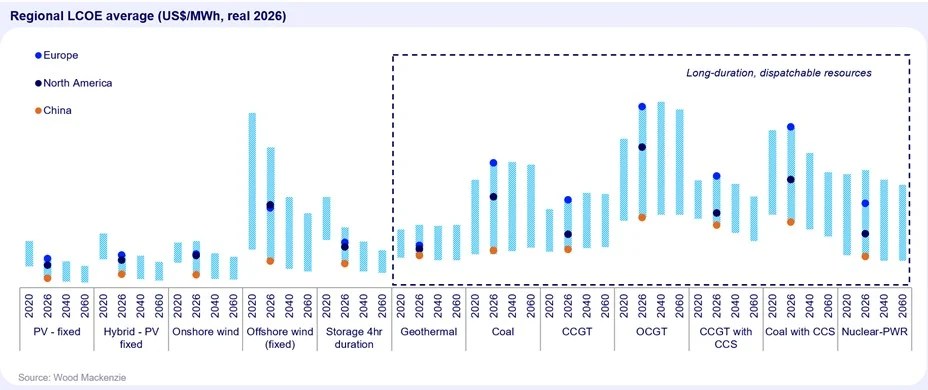
Wood Mackenzie says the crossover is being driven from both directions. Battery manufacturing continues to scale, while gas-turbine shortages and fuel volatility are lifting peaker costs. In North America, the firm expects gas-generation investment to remain in a supply-deficit cycle through the late 2030s as data-center demand keeps pressure on the equipment market.
AI is making the gas option harder to buy
This is the unusual part of the story: data centers are not just consuming more electricity. They are changing the price of the equipment used to make electricity.
BitcoinVersus recently looked at whether a data center can run entirely off-grid. The answer depends on having enough generation, storage and redundancy to survive long periods when one resource is unavailable. Batteries improve that equation, but they do not erase it.
Data centers already use batteries in a different role through the UPS power path, where storage bridges the gap between a grid failure and backup generation. Newer battery systems are starting to reach much further into facility-level and grid-level power management.
Cheaper does not mean batteries replace every gas turbine
The comparison is important, but it has limits. A four-hour battery is designed around a four-hour discharge window. A gas turbine can keep running as long as fuel is available. That means the two technologies are not perfect substitutes during a multi-day outage, a long renewable shortfall or a severe grid emergency.
That distinction is especially important for data centers, where downtime can cost far more than the electricity itself. The likely near-term architecture is not “battery or gas” everywhere. It is a more complicated mix of grid power, batteries, generators, renewables, nuclear and other firm generation depending on the site.
That is also why technologies such as the solid-state battery systems being pitched for megawatt AI racks are worth watching. The real competition is increasingly about how much power can be delivered, for how long, with what response time, at what total system cost.
The ratepayer question is getting bigger
A recent Pacific Northwest National Laboratory report examined batteries specifically as a way to accommodate large data-center loads without shifting as much infrastructure cost onto existing electricity customers. The report notes that data centers have not been the main cause of residential electricity-price increases so far, but they have raised wholesale energy and capacity prices in several markets.
That turns storage into more than a clean-energy story. A battery that charges when the grid has spare capacity and discharges during the data center’s highest-demand hours can reduce peak load, defer some infrastructure upgrades and change who pays for the next megawatt of capacity.
The power race is becoming a storage race too
Wood Mackenzie’s headline number is simple: in the markets it modeled, four-hour batteries now beat open-cycle gas turbines on levelized cost. The engineering conclusion is more nuanced.
Batteries are becoming the cheaper tool for more short-duration peaks. Gas still offers longer-duration energy when fuel is available. Data centers need both speed and endurance, so the winners will be the power architectures that combine those strengths at the lowest reliable cost.
Editor’s Note: Cost comparisons depend on location, financing, fuel prices, tax policy, battery duration and the reliability service being provided. A lower LCOE does not mean a four-hour battery can perform every function of a fuel-based generator.


Leave a Reply