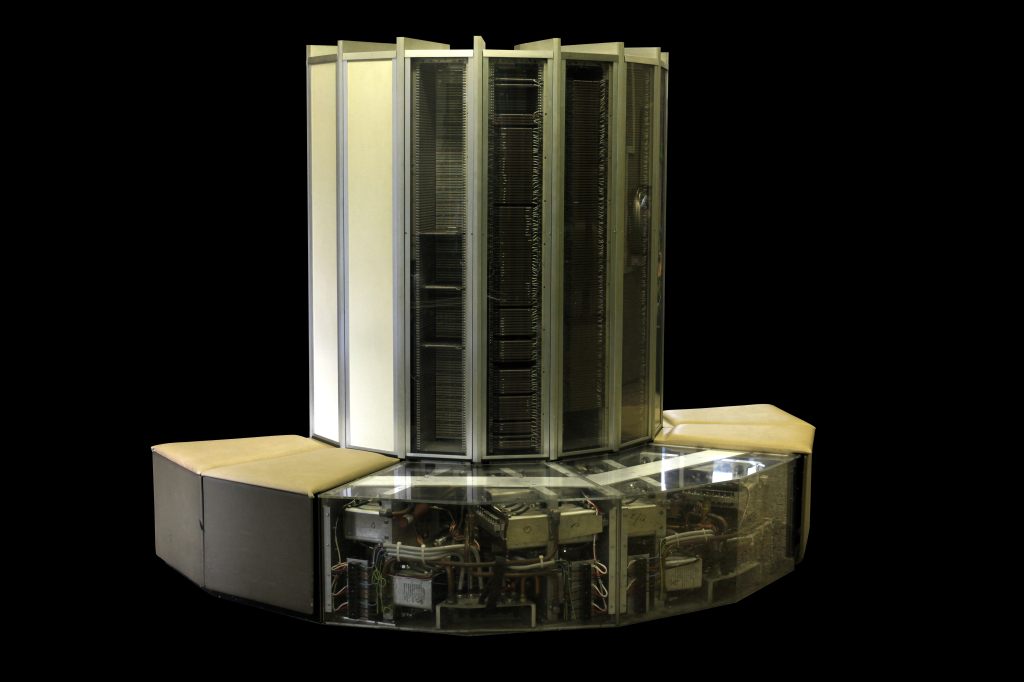
A Spanish computer museum rebuilt the look of one of computing’s most famous supercomputers—and filled it with 30 old Mac Minis.
The Museo de Historia de la Computación in Majadas de Tiétar created a full-scale visual replica of the 1976 Cray-1. Instead of recreating the original Cray hardware, the museum hid a distributed UNIX cluster of mostly 2012-era Mac Minis inside the famous C-shaped cabinet.
Ars Technica reports that the cluster currently has 64 active CPU cores and reaches about 1.3 TFLOPS in the museum’s recent matrix-multiplication tests. An earlier configuration reached roughly 1.5 TFLOPS before one node went offline.
Thirty little computers become one big exhibit
The Mac Minis work as separate nodes rather than pretending to be original Cray-1 processors. One machine acts as the master while the others cooperate on parallel workloads across the network.
That makes the exhibit a useful lesson in how computing changed. The original Cray-1 was an exotic, purpose-built vector supercomputer. The replica gets its compute by coordinating a pile of ordinary personal computers.
BitcoinVersus has been following the same basic idea at the modern end of the spectrum. Four Mac Studios were recently linked over Thunderbolt 5 to run a trillion-parameter AI model, while Apple’s newer M6 Mac Mini pushes far more local compute into the same tiny desktop format.
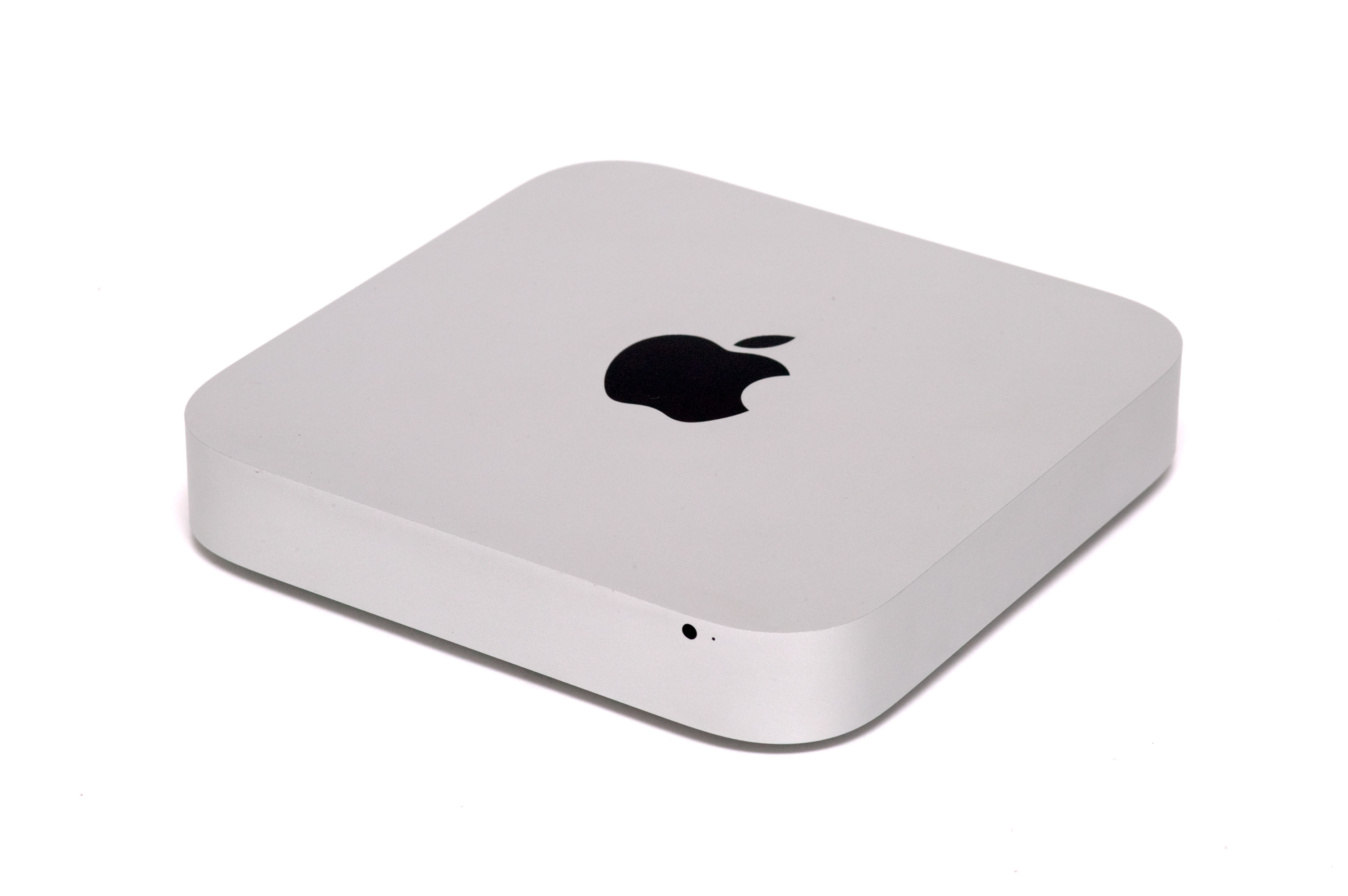
It is also nearly silent
The museum mounted the Mac Minis vertically on aluminum trays inside a steel chassis. Hot air rises through the structure naturally, turning the replica into a large thermal chimney instead of relying on a wall of additional fans.
Ars says the loudest parts are currently two gigabit Ethernet switches near the bottom, measured around 30–33 dB. The museum wants to replace those with quieter hardware too.
The original Cray-1 was built for speed
The Computer History Museum notes that the Cray-1 became the fastest computer of its day in 1976. Its curved cabinet was not just visual flair: shortening the wire paths helped reduce signal travel time, while dense packaging and an advanced cooling system supported its performance.
The Spanish replica keeps the recognizable shape and padded seating, but turns the interior into a lesson about distributed computing, reuse, and how quickly “obsolete” hardware changes meaning.
SmartNews takeaway
Thirty 2012 Mac Minis were headed toward irrelevance. Put them in a network, wrap them in one of computing history’s best-looking cabinets, and suddenly they are a working museum supercomputer exhibit.
The museum is even considering filling the empty half of the replica with newer M4 Mac Minis and chasing far more performance. Old computer outside, cluster lab inside.
BitcoinVersus.Tech Editor’s Note: This is a full-scale working replica and distributed-computing exhibit, not a hardware recreation or emulator of the original Cray-1 architecture.
Support independent BitcoinVersus.Tech reporting with Bitcoin: 3C9o19EH5HSiwEPyCTmEKzxhNCbo2X6TTb
BitcoinVersus.Tech is not a financial advisor. This article is for informational and educational purposes.


Leave a Reply