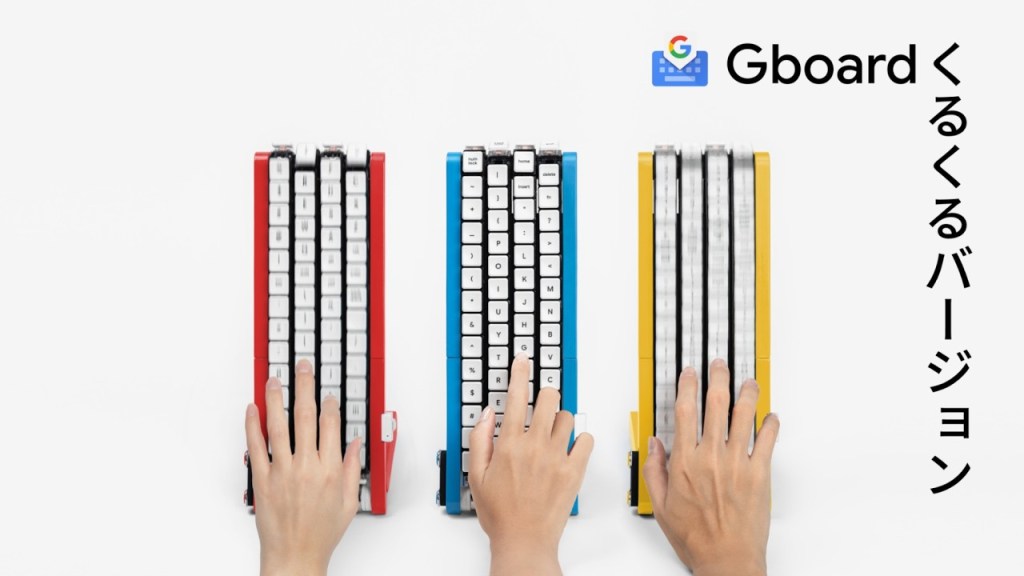
Google Japan made a keyboard where the keys come to you.
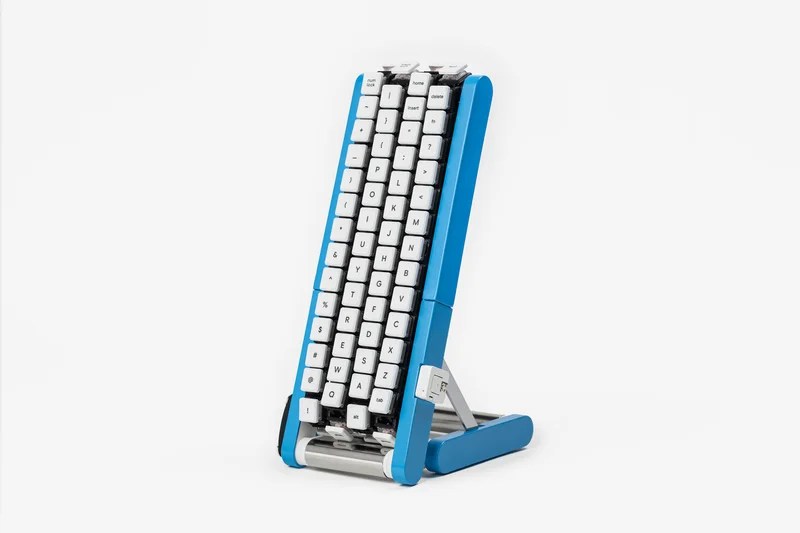
The new Gboard Conveyor Belt Version stands upright and puts its keys on four moving belts. Instead of moving your hand across a normal keyboard, you wait for the letter you want to roll past your finger and press it.
Yes, it is intentionally ridiculous. It is also real hardware.
Tom’s Hardware highlighted the project this week, while Google’s own mozc-devices repository publishes the build files for anyone who wants to try making one.
Four belts, 116 keys
Each conveyor carries 29 keys, for 116 moving keys in total. The belts continuously cycle, so one stationary hand can theoretically reach every character without stretching across a keyboard.
Google even jokes about a high-speed mode for improving hand-eye coordination. If you miss a letter, you may have to wait for it to come around again.
The joke is open source
This is the best part. Google is not planning to sell the keyboard, but the project is not just concept art. Its GitHub repository includes hardware resources for the DIY Gboard family, including firmware, circuit information, and 3D-printable parts.
That makes it a weird example of the same open-building culture BitcoinVersus recently explained in What Is Open-Source Software? and What Is Git and GitHub?.
If you actually fabricate the case and moving parts, our 3D-printing evergreen explains the model → slicer → printer workflow behind projects like this.
Why October 1?
Google Japan has been making deliberately strange keyboards for years. Earlier designs included a one-row Gboard Bar, a wearable keyboard cap, a double-sided keyboard, and last year’s rotary-dial version.
The team moved the tradition from April Fools’ Day to October 1—10/1—a joke referencing the classic 101-key keyboard layout.
SmartNews takeaway
Google built a keyboard that turns typing into a timing game.
You cannot buy it. But because Google published the hardware project openly, you can potentially build the absurd thing yourself.
That may be the most open-source punchline possible.
BitcoinVersus.Tech Editor’s Note: The Gboard Conveyor Belt Version is an experimental DIY project, not a commercial keyboard or a supported Google product.
Support independent BitcoinVersus.Tech reporting with Bitcoin: 3C9o19EH5HSiwEPyCTmEKzxhNCbo2X6TTb
BitcoinVersus.Tech is not a financial advisor. This article is for informational and educational purposes.


Leave a Reply