
Nous Research has raised $90 million to push its open-source Hermes Agent deeper into business use, turning one of the year’s fastest-growing agent projects into a much bigger enterprise bet.
In its fundraising note, Nous said the round includes investors such as NVIDIA, Microsoft’s M12, Samsung, Robot Ventures, Union Square Ventures, Y Combinator, and Menlo Ventures. TechCrunch reports the Series B values the company at about $1.5 billion.
The news matters because Hermes is built around a different idea from many closed AI assistants: users can choose where it runs, which model powers it, and what it remembers. That fits directly with the open-agent architecture BitcoinVersus.Tech has been tracking through model routing, modular agent skills, and the growing token demand from AI agents.
Hermes Has Become a Real Open-Source Platform
Nous says Hermes Agent has been cloned more than 24 million times since its February release and estimates that it now drives about 2.5% of global AI token usage. Those figures come from the company itself, but they show why investors are paying attention.
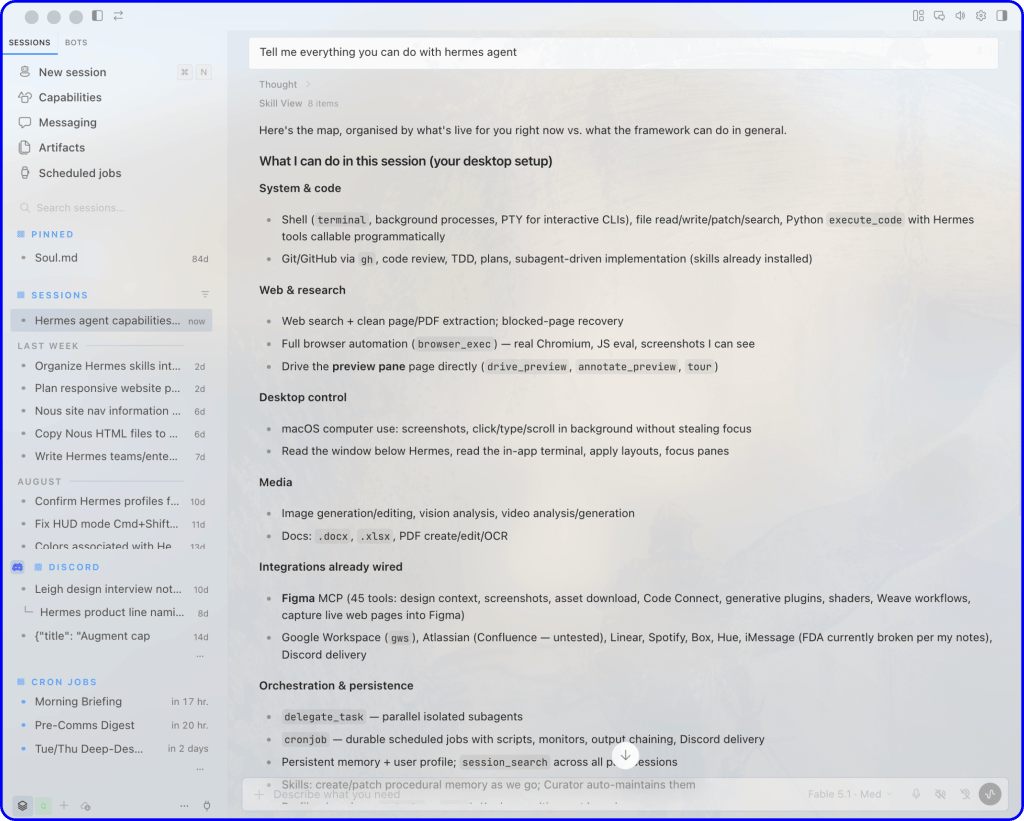
The product is more than a chatbot. According to the official Hermes documentation, the agent can use persistent memory, tools, web search, files, delegation, browser automation, and reusable skills across Windows, macOS, Linux, and other environments.
That architecture also lines up with BitcoinVersus.Tech’s earlier coverage of the shift toward agents that can swap models and tools instead of being permanently tied to one vendor. The rise of open-weight models gives systems like Hermes more options underneath the agent layer.
The Enterprise Push Is the Bigger Story
Nous says the new capital will help bring Hermes into business environments where companies want agents that can handle multi-step work without surrendering every workflow, memory, or model decision to a single closed platform.
That is the same tension showing up across the broader agent market: companies want stronger automation, but they also want control over data, deployment, models, and security. BitcoinVersus.Tech has already seen that pressure in stories about agent safety boundaries and open-source security workflows under AI pressure.
Hermes Is Spreading Beyond the Terminal
The funding announcement landed just as Hermes is becoming easier to install. Nous also announced that the agent is now available through the Microsoft Store, giving Windows users a much simpler path into the platform.
That distribution step matters because open-source software often wins developers before it wins ordinary users. A one-click desktop install, business packaging, local-model support, and enterprise deployment options could move Hermes from an enthusiast tool into a broader AI platform.
Why It Matters
The $90 million round is another signal that investors do not see open-source AI as merely a hobbyist counterweight to closed systems. They increasingly see open agents as a commercial platform of their own.
Hermes now has money, distribution, hardware partnerships, and a large developer base. The next test is whether Nous can preserve the openness that made Hermes attractive while building the security, support, reliability, and management tools enterprises expect.


Leave a Reply