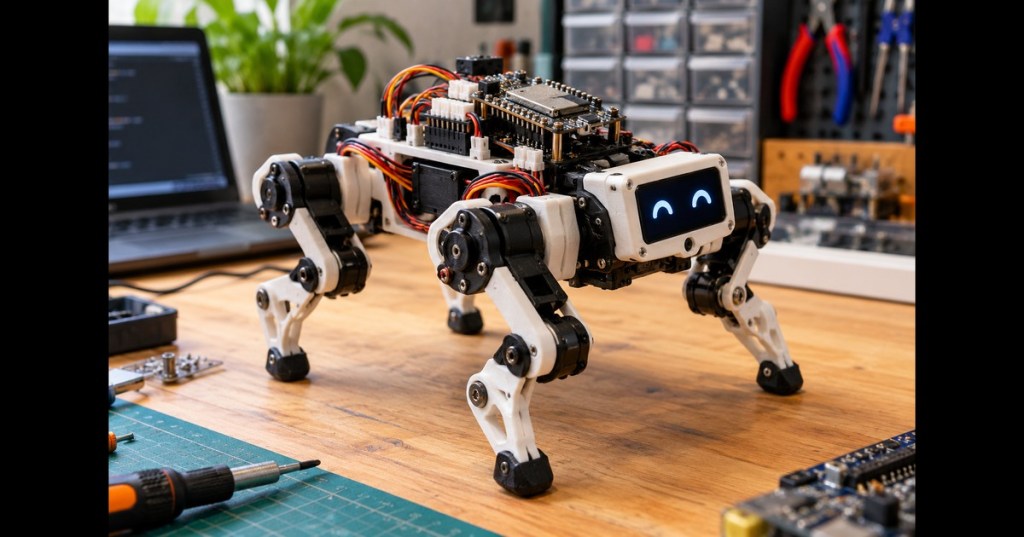
Robot dogs can cost thousands of dollars, and building one from scratch can mean wrestling with wires, motors and code. One independent developer thinks there is a better way.
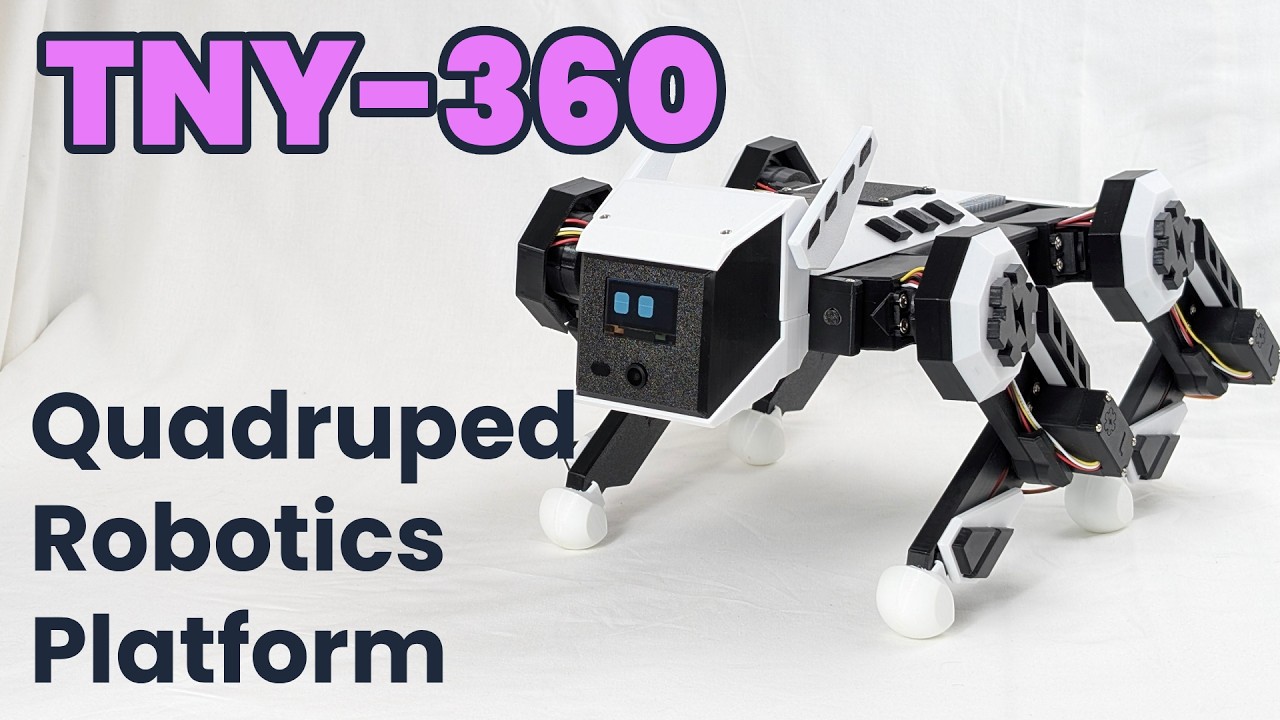
After nearly three years of development, Paul Loisil is introducing the second generation of his TNY-360, a small four-legged robot built around the ESP32-S3 microcontroller. The goal is a machine people can assemble, program, repair and actually understand.
A robot with a brain and reflexes
The TNY-360 uses the ESP32-S3’s two processing cores for different jobs. One runs a 200 Hz control loop for leg motion and feedback; the other handles connectivity, interfaces and higher-level commands. That division helps the robot respond quickly without needing a Raspberry Pi or expensive AI computer.
Its 12 leg servos are modified to report their positions. Loisil designed a tiny amplifier board to make that feedback more reliable after electrical noise and voltage changes caused early prototypes to shake. He also replaced a tangle of jumper wires with custom circuit boards and keyed connectors.
Open hardware, with a catch
The earlier TNY-360 design has public hardware files, firmware and documentation on GitHub. The updated V2 design files are still being finalized, according to the developer. Its published license also restricts commercial reuse, so “open source” does not automatically mean unrestricted commercial rights.
Loisil says the robot can be controlled over Wi-Fi and WebSockets, with Bluetooth controller support still under development. A top-mounted expansion connection also allows additional sensors and hardware experiments.
Why this matters
Robotics education often jumps from simple toys to complex research machines. A repairable, programmable middle ground could help students learn motor control, feedback, circuit design and embedded software on one platform.
That fits the hands-on ideas in our open-source software guide, GitHub explainer and 3D-printing overview.
SmartNews takeaway: The clever part isn’t simply making a robot dog walk. It’s making the electronics understandable enough that someone else can build and improve it.
Sources: Developer’s original post, Hackster’s reporting, and TNY Robotics.


Leave a Reply