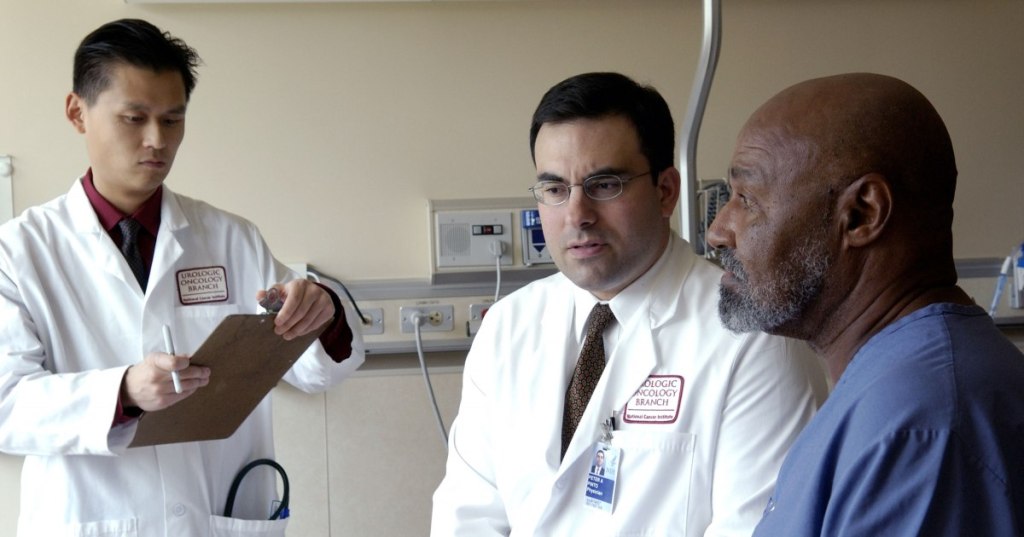
A peer-reviewed BMC Urology study published October 10, 2026, found that two early-career urologists outperformed GPT-5.2 Instant, Claude Sonnet 4.5 and Gemini 3 Pro Preview on the same 100 synthetic urological-cancer cases.
Humans led the comparison
The open-access study reported primary composite success of 89% and 85% for the two urologists, compared with 70% for GPT-5.2, 64% for Claude and 60% for Gemini. The cases covered five urological cancers and five decision categories, and all five answer sources were scored against the same 2025 European Association of Urology-based framework.
The safety gap was larger
Safety-critical errors appeared in 25% of GPT-5.2 responses, 25% of Claude responses and 26% of Gemini responses, versus 2% and 1% for the two doctors. Exact three-run stability among the LLMs was also limited: only 28.3% of tested vignette-model combinations reproduced the same full four-domain score profile across all three runs.
The result does not establish that doctors will always outperform AI. The study used synthetic vignettes, only two early-career clinician comparators and no external resources. It also did not test real patient outcomes. The authors reported no competing interests and no financial support.
BitcoinVersus.Tech recently covered a three-model pharmacology comparison, Arm’s CPU comparison for agentic AI, and Google Cloud’s Gemini Agent launch.
BitcoinVersus.Tech is not a financial advisor. This media platform reports on financial subjects purely for informational purposes.
BitcoinVersus.Tech Editor’s Note:
We volunteer daily to ensure the credibility of the information on this platform is Verifiably True. If you would like to support to help further secure the integrity of our research initiatives, please donate using the QR code provided
For best QR-code scanning results, please scan this donation code from a desktop or larger screen. Mobile screens may prevent camera recognition.


Leave a Reply