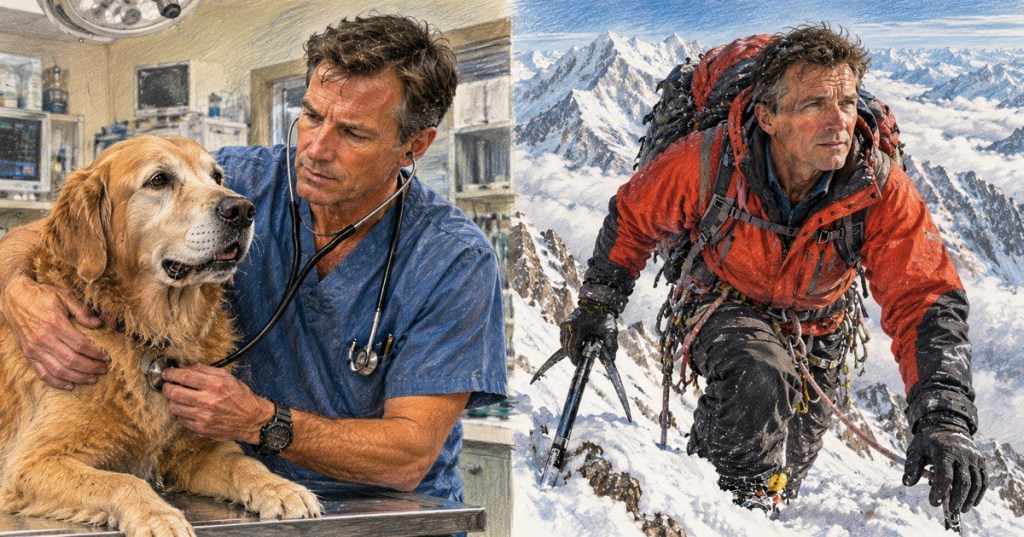
Ed Viesturs built two careers that demand very different kinds of discipline: veterinary medicine and high-altitude mountaineering.
That makes him exactly the kind of profile we are looking for in Career Journalist. Our Top 10 Toughest Jobs in the World in 2026 ranked high-altitude mountain guiding among the hardest professions because judgment, endurance and technical skill all matter when mistakes can become fatal.
Viesturs also followed through on an entirely separate professional path. The University of Washington documents that he earned a zoology degree, went on to veterinary school at Washington State University and began working as a veterinarian in 1987. For several years, he balanced veterinary practice with climbing expeditions before leaving clinical work to pursue mountaineering full-time.
National Geographic’s Ed Viesturs: The Will to Climb explores the risk, preparation and decision-making behind his high-altitude career.
His climbing résumé became extraordinary even by Himalayan standards. According to Viesturs’ official biography, he completed an 18-year project to climb all 14 mountains above 8,000 meters without supplemental oxygen, finishing with Annapurna on May 12, 2005. He also summited Mount Everest seven times and participated in 31 Himalayan expeditions to 8,000-meter peaks.
The remarkable part is not simply the number of summits. Viesturs built his reputation around conservative decision-making in an environment that rewards ambition but punishes bad judgment. His well-known approach is that reaching the summit is optional; getting back down is mandatory.
In a 2025 Uphill Athlete interview, Viesturs discusses the apprenticeship, patience and risk discipline behind a lifetime in the mountains.
That combination is what separates this story from a simple adventure résumé. Veterinary medicine requires years of formal education, clinical judgment and professional responsibility. High-altitude mountaineering requires another long apprenticeship in weather, snow, ice, rope systems, physiology and decision-making under extreme conditions.
His path belongs beside Alan Oram, who combined emergency medicine with professional mountain guiding, and Chris Lemons, whose career developed inside one of the most unforgiving workplaces on Earth.
Viesturs chose mountaineering over veterinary practice, but the first career was real. He completed the degree, worked in the profession and then carried a scientific and medical foundation into one of the hardest environments in the world.
That is the Career Journalist standard: not simply an impressive job title, but evidence that one person mastered more than one demanding discipline.
BitcoinVersus.Tech Editor’s Note:
We volunteer daily to ensure the credibility of the information on this platform is Verifiably True. If you would like to support to help further secure the integrity of our research initiatives, please donate using the QR code provided

For best QR-code scanning results, please scan this donation code from a desktop or larger screen. Mobile screens may prevent camera recognition.


Leave a Reply