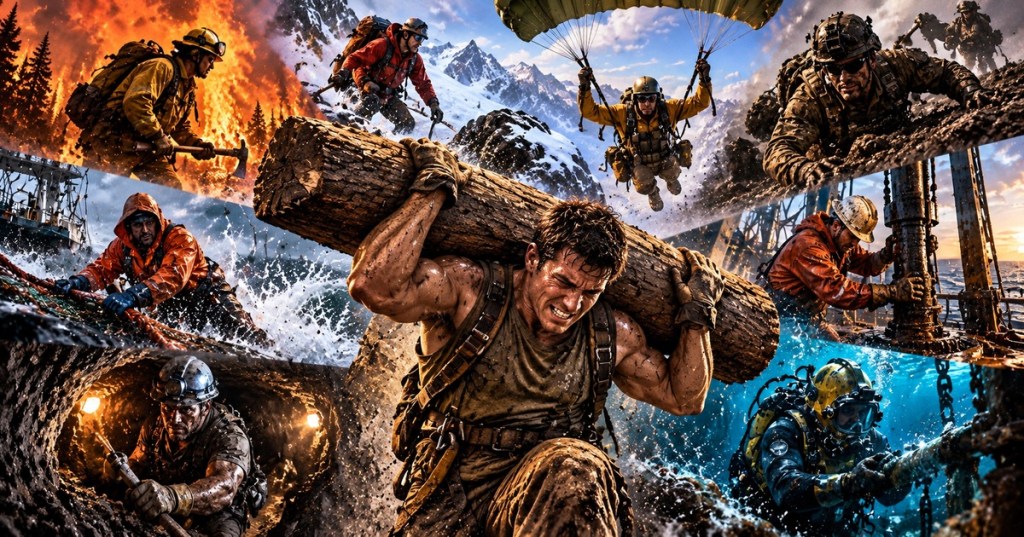
Some jobs are difficult because of pressure, responsibility or technical complexity. This list is about something narrower: what the work demands from the human body.
This is an editorial ranking, not an official worldwide government list. We scored jobs by sustained exertion, strength and endurance, heavy or awkward loads, environmental exposure, sleep disruption, injury risk and the amount of recovery the work demands. It follows our broader Top 10 Toughest Jobs in the World in 2026.
Recent U.S. labor data illustrate why physical occupations deserve separate treatment. The Bureau of Labor Statistics recorded 59 fatal injuries in logging and 23 in fishing during 2024, while construction and extraction occupations collectively recorded more than 1,000 fatal work injuries.
10. Ironworker
Ironworkers routinely climb, balance, carry steel, position heavy components and work in wind, heat and cold while wearing fall-protection equipment. The job combines grip strength, core stability and endurance with repeated exposure to awkward body positions high above the ground.
9. Logger
Logging combines chainsaws, steep or muddy terrain, heavy timber, repetitive lifting and unpredictable outdoor conditions. Even mechanized crews still face long days around massive moving loads where fatigue can quickly become dangerous.
8. Underground Miner
Underground miners work in heat, dust, vibration, confined spaces and uneven terrain while handling tools, hoses, cables and heavy equipment. The physical burden comes not from one movement but from performing hard industrial work for an entire shift in an environment that is already taxing the body.
7. Oil Rig Floorhand
Floorhands spend long shifts moving pipe, handling slips and tongs, working around drilling equipment and reacting quickly on slick rig floors. Offshore crews add wind, spray, vibration and rotating schedules that make recovery harder.
6. Commercial Fisher
Commercial fishermen lift and haul gear on moving decks, often in cold weather and rough seas while working extended hours. NIOSH specifically identifies strenuous labor, long work hours, harsh weather, vessel disasters and deck machinery among the occupation’s hazards.
5. Wildland Firefighter
Wildland firefighters hike steep terrain carrying tools, water and protective gear, then dig line, cut vegetation and work beside extreme heat and smoke. The physical challenge is cumulative: miles of movement, high temperatures and repetitive tool work can continue for days.
The U.S. Fish & Wildlife Service shows the terrain, equipment and field conditions faced by wildland firefighters.
4. High-Altitude Mountain Guide
Professional mountain guides carry loads, manage ropes, break trail and make repeated ascents while oxygen availability falls with elevation. Cold, steep terrain and long summit days turn normal endurance work into something much harder. Our profile of veterinarian-turned-mountaineer Ed Viesturs documents how demanding that world can become.
3. Smokejumper
Smokejumpers add parachuting and remote access to the already punishing workload of wildland firefighting. After landing away from roads, they may hike through rugged terrain carrying equipment before beginning line construction and suppression work. Our profile of Frank Derry traces the physical demands and equipment development behind the job.
2. Saturation Diver
Saturation divers perform industrial work underwater while breathing pressurized gas, wearing heavy equipment and operating in cold, dark environments where even ordinary tasks require extra effort. They may also spend weeks living under pressure between dives. The career of Chris Lemons shows just how extreme the environment can become.
Commercial saturation diver Chris Lemons explains the work and the North Sea accident he survived.
1. Special Operations Soldier
At the top of our physical ranking is special operations soldier. Selection and field work can demand long-distance loaded movement, obstacle courses, swimming, climbing, casualty carries, repeated strength work, limited sleep and performance in heat, cold, mountains, water and desert terrain.
What separates this job is range. Many occupations dominate one kind of physical stress. Special operations personnel are expected to remain functional across several at once: endurance, load carriage, strength, coordination, environmental exposure and sleep loss.
What physically tough really means
There is no laboratory test that can perfectly rank every occupation in every country. A logger may experience more repetitive load than a soldier. A saturation diver faces physiological conditions almost nobody else encounters. A smokejumper may combine heavy packs, heat, altitude and remote terrain in a single shift.
The common denominator is simple: these jobs repeatedly ask the body to keep producing when fatigue, environment and equipment are all pushing in the opposite direction.
BitcoinVersus.Tech Editor’s Note:
We volunteer daily to ensure the credibility of the information on this platform is Verifiably True. If you would like to support to help further secure the integrity of our research initiatives, please donate using the QR code provided

For best QR-code scanning results, please scan this donation code from a desktop or larger screen. Mobile screens may prevent camera recognition.


Leave a Reply