Seagate Technology reported $4.233 billion in revenue for its fiscal first quarter of 2027 on October 27, 2026, up about 61% year over year as demand for cloud and AI storage accelerated. The hard-drive manufacturer posted a 57.8% non-GAAP gross margin, $7.68 adjusted earnings per diluted share and a record $1.5 billion in free cash flow. Unlike an AI infrastructure announcement based only on future orders, those figures describe completed quarterly results.
AI storage demand meets higher-density hard drives
Chief Executive Dave Mosley credited long-term data demand, disciplined supply and Seagate’s Mozaic heat-assisted magnetic recording (HAMR) platform. On the October 27 earnings call, the company reported 198 exabytes of nearline capacity shipped during the quarter, with Mozaic 4 production ramping. HAMR uses a tiny laser to momentarily heat part of a disk during magnetic writing, allowing substantially more data to fit within the same drive enclosure.
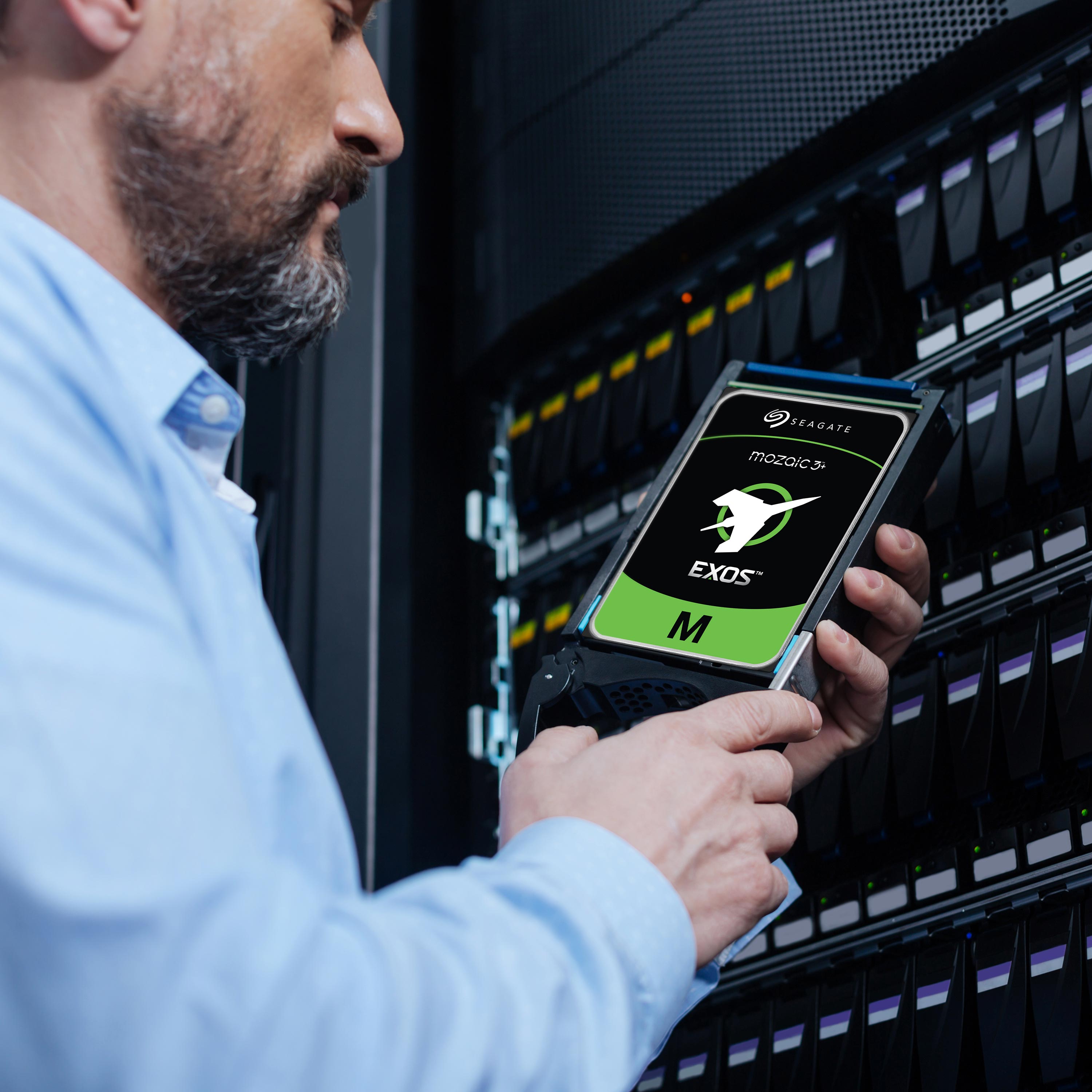
The company’s Mozaic 4+ drives support up to 44 TB and have been qualified by major hyperscale customers. A separate October 26 announcement said Microsoft Azure qualified a Broadcom host-bus adapter with Seagate’s HAMR plus shingled magnetic recording configuration. That interoperability milestone could make very dense storage easier to deploy, but it is distinct from Seagate’s quarterly earnings.
More profit today, higher expectations for tomorrow
Seagate reported $1.761 billion in GAAP net income, versus $549 million one year earlier, and retired approximately $1.2 billion in debt during the quarter. The company forecast $4.8 billion in revenue, plus or minus $100 million, for fiscal Q2 2027, with non-GAAP EPS guidance of $9.20 ± $0.20. Those are management expectations, not recorded sales.
The broader engineering story is the amount of data stored per rack and watt. Seagate’s results extend BitcoinVersus.Tech’s history of computer storage and complement its latest SK hynix memory earnings report: HBM feeds active AI computations, while nearline hard drives preserve enormous datasets economically. Pricing and capacity cycles can reverse, so stronger current margins do not guarantee uninterrupted growth.
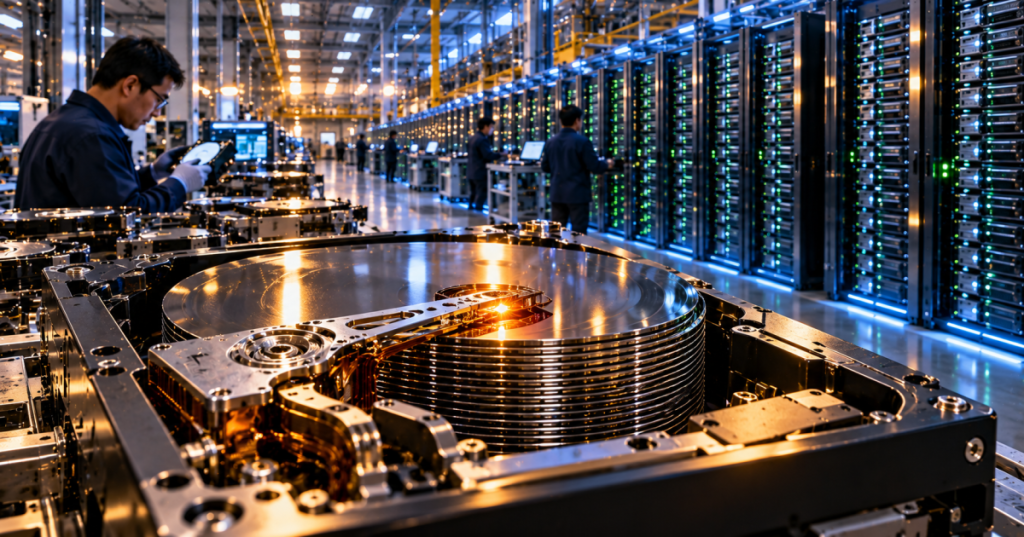
Editor’s Note: Financial results, engineering claims and forward guidance are attributed to the company’s original disclosures. The story contains Seagate’s authentic product video and official platform photograph; the cover is original conceptual editorial artwork, not an actual factory photograph. Support BitcoinVersus.Tech’s reporting by donating 5,000 satoshis via the QR code below.

Scan the QR code with a compatible Bitcoin wallet while viewing the article on a second screen.


Leave a Reply