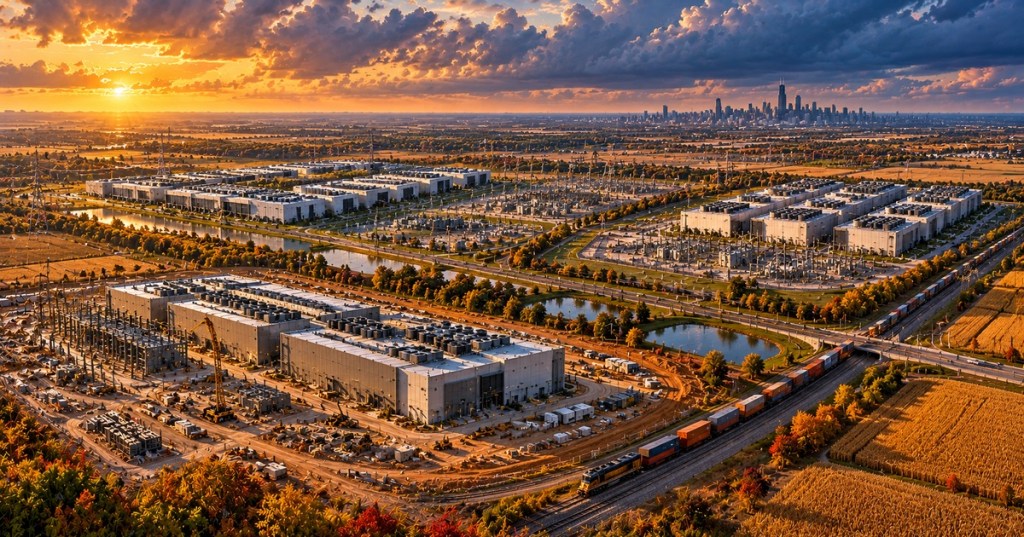
Illinois is among the largest U.S. markets for new data-center construction, with multiple proposals approaching two gigawatts each. This edition of BitcoinVersus.Tech’s state-by-state infrastructure ranking compares the largest publicly documented Illinois data-center projects as of October 28, 2026. Two proposed campuses tie at 1.8 GW, while a third has moved into initial construction with approximately 1.55 GW of reported utility power. None of these figures should be read as 2026 operating server demand.
Ranking method: Projects are ordered by their largest published planned campus electrical-service demand or gross power, not square footage, investment or current IT consumption. Joliet and Project Cardinal each carry a reported 1,800 MW buildout; T5 Chicago IV has been associated with about 1,550–1,600 MW of secured power but plans 1,200 MW of leasable IT capacity. The first two tie numerically, with Joliet presented after Yorkville in this countdown because its municipal record directly states the 1,800 MW estimate. These different metrics are kept explicit throughout.
3. T5 Chicago IV, Grayslake — Approximately 1,550 MW Reported Grid Supply
At Peterson and Alleghany roads in Grayslake, Lake County, T5 Data Centers’ Chicago IV is planned as a large phased hyperscale campus covering roughly 472–474 acres. The approved development envelope allows up to approximately 10 million square feet of floor area. Project reporting quotes 1.2 GW of potential IT load and roughly 1.55 GW of contracted ComEd electrical supply; some sources round the secured service figure to 1.6 GW. The IT number describes capacity assigned to computing equipment, while the larger electrical figure also supports cooling, conversion and other site loads.
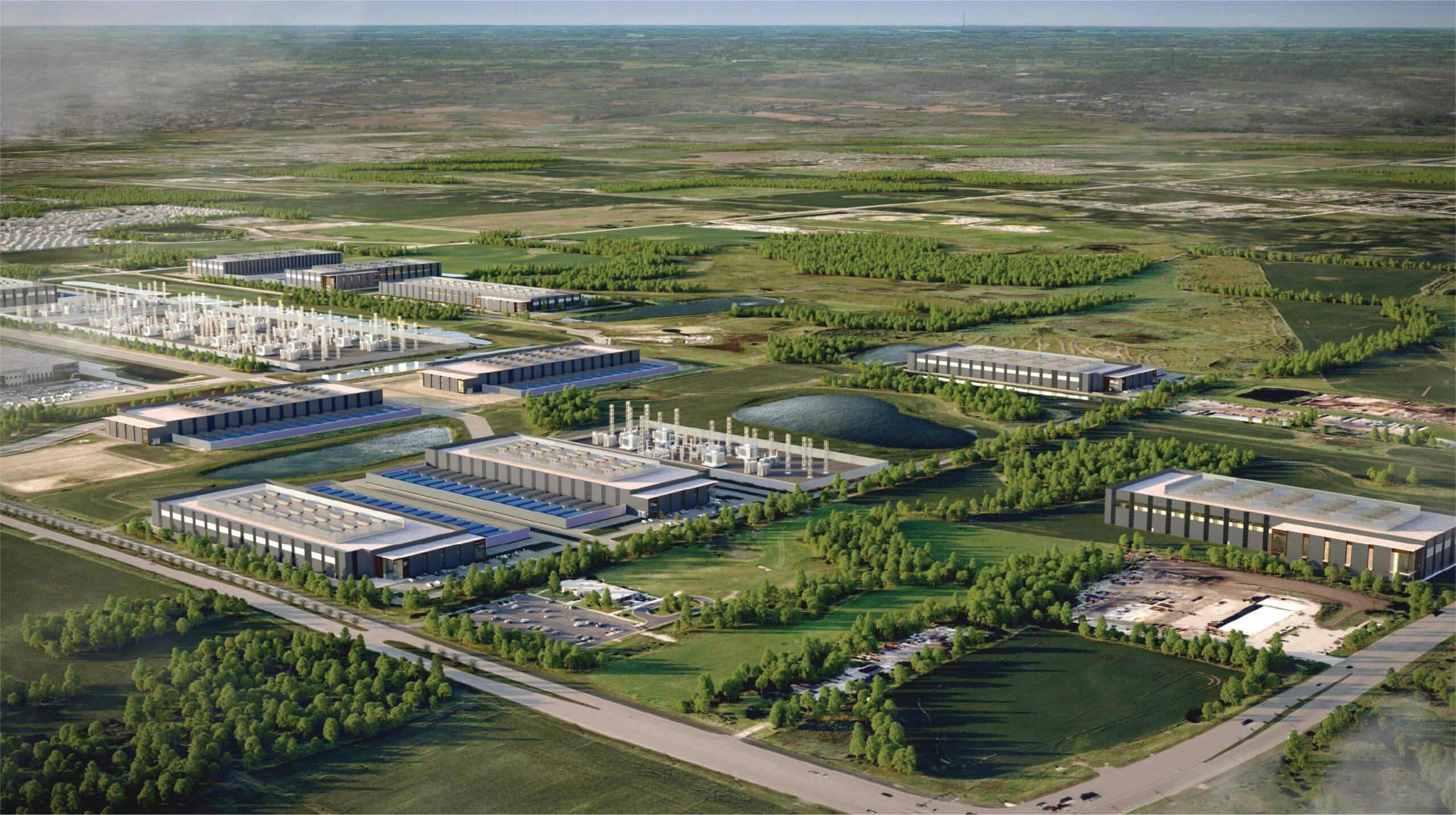
Grayslake issued a permit for the first approximately 800,000-square-foot building on September 1, 2026, with grading and utility work already visible. Initial delivery was projected for late 2027, not 2026. The village’s June FAQ estimates average daily water demand of no more than 50,000 gallons at full approved development, subject to how the buildings are actually configured. The project also faces a lawsuit filed by nearby residents, with a status hearing scheduled for October 30. Site work and an issued building permit do not establish an energized full-campus 1.55 GW load.
2. Project Cardinal, Yorkville — 1,800 MW Reported Planned Campus
Project Cardinal, proposed by Pioneer Development, LLC, spans approximately 1,037 acres of farmland in Yorkville in Kendall County. The city’s application record describes 14 two-story data-center buildings totaling over 17 million square feet, two substations, a switchyard, seven stormwater basins and access roads. Independent project ledgers and contemporaneous filings report a planned 1.8 GW electrical scale; that is a development target rather than an amount approved for immediate delivery by ComEd. The proposed first building was targeted for 2029 in the developer’s application.
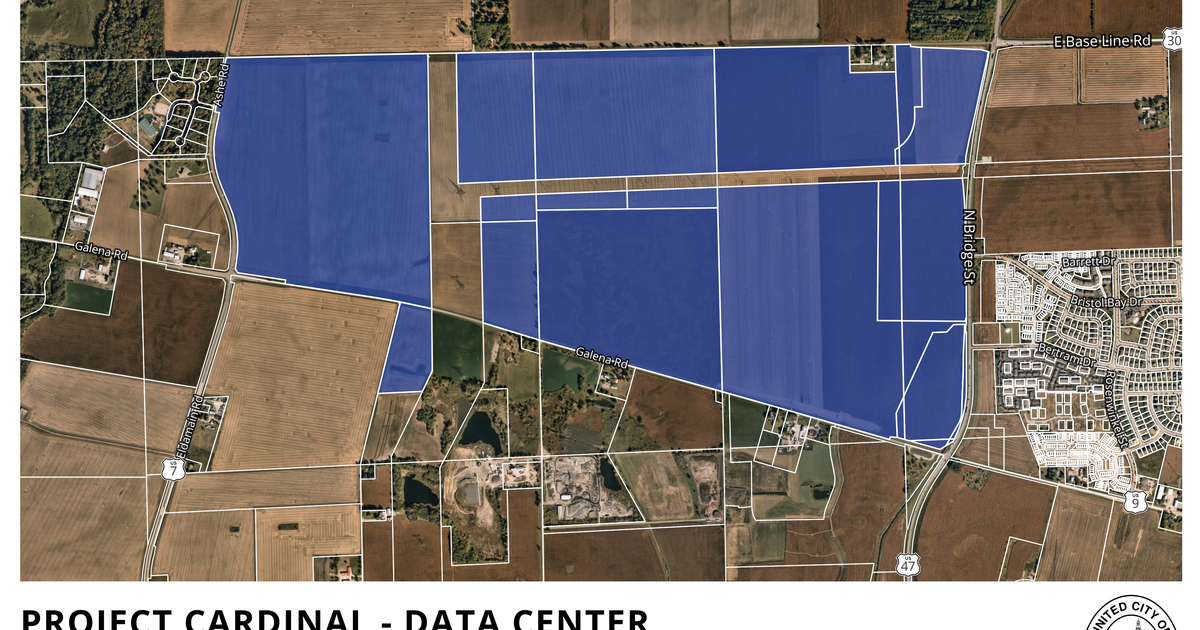
The project’s approval is more complex than a single headline. Yorkville approved an annexation and planned-development framework, but parcel transfers, infrastructure commitments and additional phase implementation still matter. A June 2026 amendment request sought to extend a land-closing notice deadline from July 1, 2026 to December 31, 2027, affecting approximately 305 acres of the original annexation. Yorkville’s June planning memo confirmed the developer needed more time to acquire the parcels. No fully energized 1,800 MW campus has been established in the municipal record.
Cardinal’s water and cooling plans are also still design-dependent. An engineering memo submitted to Yorkville estimated domestic water use under different cooling scenarios, but said closed-loop cooling makeup demand remained undetermined until equipment and tenant choices are made. Community scrutiny includes noise, power allocation and construction timing. The important distinction is that land-use permission, land ownership and firm electrical interconnection are three different milestones.
1. Joliet Technology Center — 1,800 MW Developer Buildout Estimate
Joliet Technology Center is a planned 795-acre campus southwest of Chicago, near South Rowell Road and Bernhard Road, developed by Hillwood and PowerHouse Data Centers. The developer advertises a possible $20 billion investment, a phased campus of approximately 24 buildings and 1.8 GW of proposed full-buildout electrical demand. The city’s March 2026 legislative record independently documents the 1,800 MW developer projection, making this tied first-place entry documented directly as a reported planning figure.
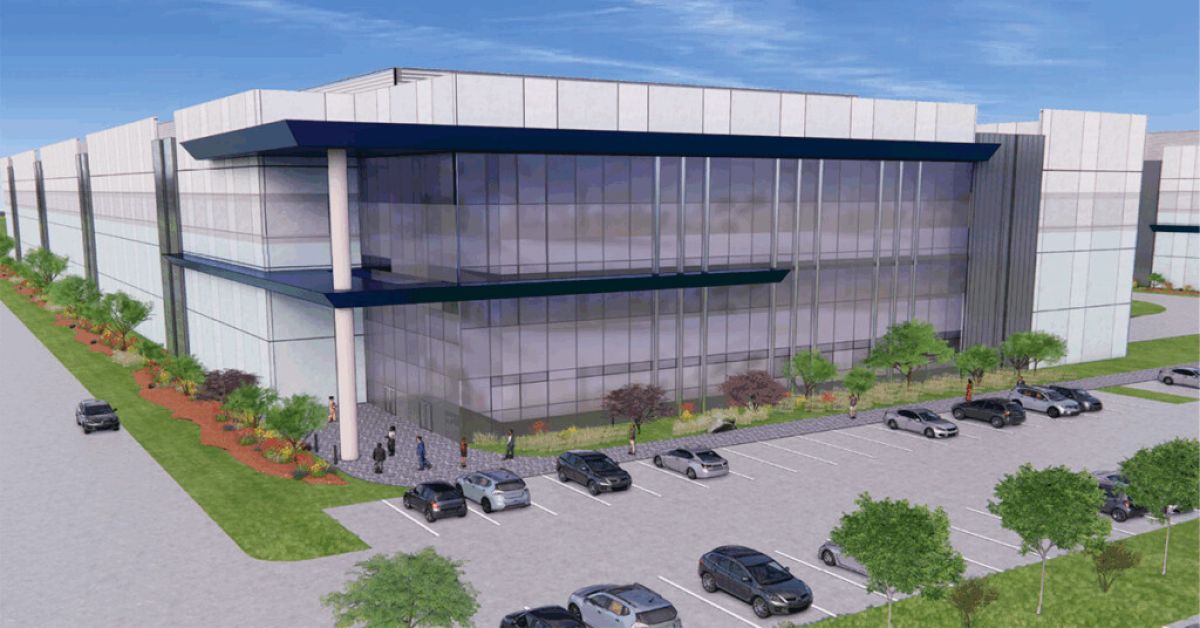
On March 19, 2026, Joliet announced conditional approval of annexation for the property, with the associated rezoning and preliminary planned-development ordinances passed by City Council. The annexation depends on the developer completing acquisition. Individual future phases must still proceed through permits and final plans. A group of residents filed a lawsuit in May contesting approval procedures, according to local-record research. This approval is not confirmation that the entire 1.8 GW campus is under construction or consuming grid power.
The city’s official file puts more specific boundaries on water usage than some national summaries. It says average potable-water use may not exceed 150,000 gallons per day without rate penalties, and that the developer will help fund infrastructure and public services under the annexation agreement. The city projected significant long-term tax revenue, while the developer advertises thousands of temporary union construction jobs if all phases proceed. Those are estimates contingent on development, not existing jobs or tax receipts.
Other Large Illinois Data Center Proposals
Below the three leading projects, Monarch Rock Air near Davis Junction has been reported at about 1,400 MW of proposed power, while Tract’s Morris Technology Park has been discussed at approximately 1,000 MW. Yorkville also approved Prologis’s Project Steel, a development involving roughly 540 acres and, after a March 2026 revision, 16 buildings. No directly comparable power specification was established in its current municipal summary. The separate CyrusOne Yorkville Phase 2 application was withdrawn in April 2026 and is not counted as an active project. These exclusions matter because combining stalled or unquantified schemes would distort the state’s pipeline.
Planned Megawatts Are Not Operating Megawatts
A megawatt (MW) measures the rate at which electrical energy is used; a megawatt-hour (MWh) measures the energy consumed over time. For illustration, a continuous 1,800 MW draw sustained for 24 hours would use 43,200 MWh (43.2 GWh). That multiplication does not establish the present load of Joliet or Cardinal. Neither is documented here as a completed, fully energized campus. Both still depend on site preparation, final permits, interconnection, substations, switchgear, tenants and commissioning.
The same distinction matters inside the data center fence. T5’s approximately 1.2 GW planned IT capacity is less than the approximately 1.55–1.6 GW electrical service reported for its entire campus. Cooling, power-conversion losses and facility support equipment account for part of the difference, while actual occupancy can be much less than design capability. Our Idaho ranking and Georgia ranking similarly separate announced buildout targets from operating load.
Illinois communities and utilities are debating the cost of transmission upgrades, electricity procurement, jobs, water, land use and noise. See also our report on Google and Constellation’s multigigawatt PJM electricity arrangement, an example of how power commitments and generation investments must be evaluated separately from actual computing consumption. The next objective evidence will be utility service agreements, final construction permits, on-site substation progress and independently documented energization, rather than simply larger proposed numbers.
Editor’s Note: This ranking uses dated municipal records, developer statements and sourced reporting, and keeps planned total facility power separate from critical IT power and operating demand. Three project-specific visuals are credited, and no new diagrams appear in the story. To support BitcoinVersus.Tech independent reporting, donate 5,000 sats by scanning the QR code below.

Scan this QR code with a Bitcoin wallet while viewing the report on a second screen.


Leave a Reply