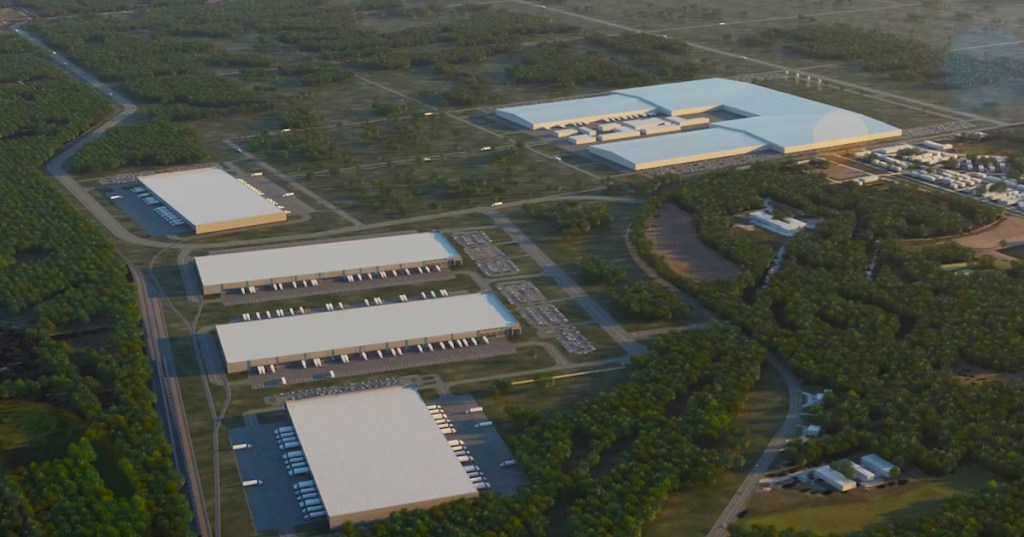
Kansas is confronting an unprecedented wave of proposed data center construction, but the state’s largest reported power figures remain plans rather than active electricity demand. This edition of BitcoinVersus.Tech’s state power rankings compares three of the largest individually documented Kansas data center developments as of October 28, 2026: Digital Realty’s Astra Enterprise Park campus in De Soto, Cloverleaf Infrastructure’s Project Bluestem near Tonganoxie, and Red Wolf’s proposed development in Kansas City, Kansas.
Ranking method: Projects are ordered by the largest attributable planned full-development electrical service or site demand in public sources, not current operating IT load, real estate acreage, capital cost or proposed generation alone. Digital Realty has documented 2,000 MW of eventual utility service under an energy service agreement. Bluestem’s up-to-1,200 MW estimate is an early development concept, and Red Wolf’s 600 MW is a proposed site demand subject to utility agreements and legal issues. These are different evidence levels; a headline MW estimate is not a promise of energized power or an opening date.
3. Red Wolf DCD Properties, Kansas City — 600 MW Proposed
The Red Wolf proposal would occupy land on both sides of Parallel Parkway near Kansas Speedway in western Wyandotte County. KCUR’s January 29, 2026 investigation, based on local utility and government proceedings, describes a roughly 548-acre development with a proposed 600 MW electrical requirement—approximately 300 MW north and 300 MW south of the parkway. The broader concept includes multiple data center buildings, major electrical substations and connecting infrastructure.
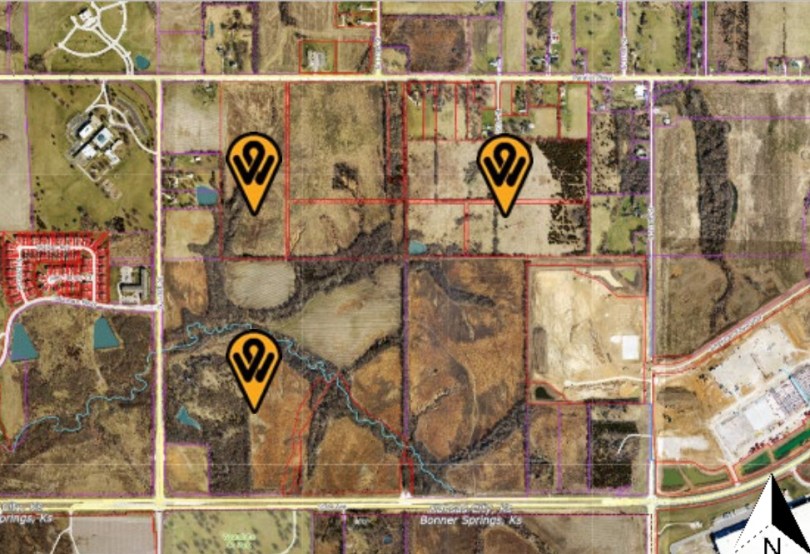
Development status is less settled than the size suggests. The local-record chronology documents a south-tract zoning approval, but also describes a failed supermajority vote on the northern tract following a protest petition. Residents challenged the zoning process in court. As of the January 2026 reporting, no final signed deal existed with the Board of Public Utilities (BPU) or Unified Government. That is not equivalent to approval of the whole 600 MW campus or commencement of construction.
The power proposal raises a difficult utility-planning question: a single 600 MW customer could exceed the BPU system’s existing peak demand, based on the comparison reported by KCUR. Any final service agreement would need to address firm capacity, new substations, grid upgrades, ratepayer protections and the eventual tenant. In short, this entry is ranked on its documented proposed electrical demand, not on usable power already delivered.
2. Project Bluestem, Tonganoxie — Up to 1,200 MW Proposed
Project Bluestem, developed by Cloverleaf Infrastructure near the Tonganoxie Business Park in Leavenworth County, has expanded from an early 600 MW concept to an up-to-1.2 GW development scale reported during the September 16 county public meeting. The updated plan covers more than 1,000 acres near the Tonganoxie/Eudora I-70 interchange, according to KCTV’s contemporaneous reporting and local project tracking. This is a potential campus requirement, not independently tested IT power or a signed Evergy capacity commitment.
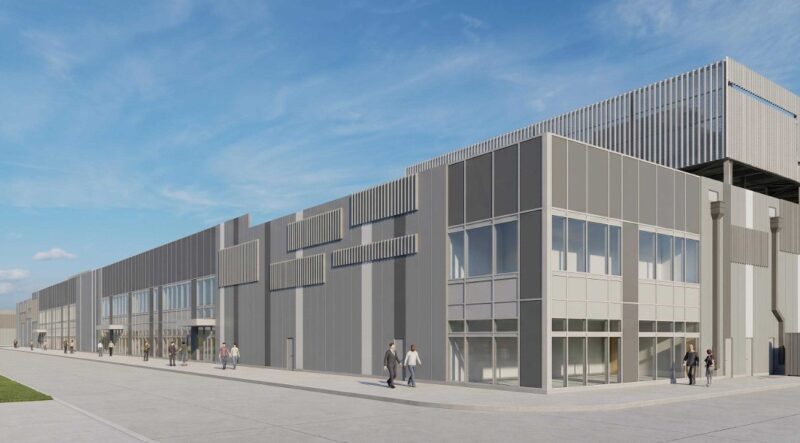
Cloverleaf’s project FAQ describes plans for closed-loop cooling and says Evergy is studying how much electrical capacity could ultimately be available. The developer says it will fund incremental transmission and generation upgrades associated with the development, rather than pass those new costs to existing customers. Those are developer commitments and planned utility conditions; the detailed engineering, future tenants and final power contracts remain to be established.
An important September change complicates the original design. On September 28, 2026, Cloverleaf announced it had withdrawn the initial application for an associated power-generation facility while evaluating other locations. It explicitly said the data center’s rezoning application remained active. The proposed gas-generation concept therefore should not be described as approved or under construction. Nor should the separate plant’s proposed output be automatically added to the 1,200 MW data center figure. Residents have also raised concerns about noise, water, land use and the siting of large electrical infrastructure.
1. Digital Realty, Astra Enterprise Park, De Soto — 2,000 MW Eventual Utility Service
Digital Realty’s June 22, 2026 investor announcement is the strongest capacity evidence in this Kansas ranking. The company said it acquired approximately 1,440 acres at Astra Enterprise Park, on the former Sunflower Army Ammunition Plant property in De Soto, in a transaction valued at approximately $475 million. It disclosed an Energy Service Agreement to provide 600 MW of utility power by early 2028, rising to 2 GW at full delivery. The latter figure is a future contractual development objective, not data center energy consumption today.
The City of De Soto’s project portal describes the initial Astra North phase as roughly 280 acres, with up to nine buildings totaling around 3 million square feet. Astra North is only part of the much larger landholding, which also includes Astra South. It would be inaccurate to say the nine proposed North buildings are already using the entire 2 GW development allocation. The city also provides an original recording of Digital Realty’s developer presentation, along with plans and a public questions-and-answers guide.
Digital Realty said on October 9, 2026 that it would commit $20 million toward utility and property-tax credits for De Soto residents. The company announcement describes possible credits of up to $1,000 per household annually for ten years, with implementation details still being finalized. This is a promised community investment, not a statement that the entire facility has cleared permitting, secured tenants or become operational.
In technical terms, utility service power is not the same metric as critical IT load. Servers and networking equipment consume IT power, while cooling, UPS losses, pumps and other systems contribute to total facility demand. The city’s review materials describe plans for new substations, acoustic controls and a cooling approach expected to rely substantially on outdoor air, with supplemental water use during hotter weather. Electrical and water designs remain subject to engineering, permitting and final approvals.
What Was Excluded From Kansas’s Top Three?
The three largest clearly comparable public development-scale figures were favored over speculative aggregation. Project Catalyst in Osawatomie has been reported at approximately 500 MW. Compass Datacenters’ proposal southwest of Topeka has been discussed at roughly 400 MW and faced local permitting restrictions. PowerTransitions’ Quindaro reuse project proposes approximately 200 MW of critical IT capacity at a former Kansas City, Kansas power station; that is a different power metric and smaller reported number. Other developments, including Beale Infrastructure’s De Soto campus and projects involving Google in Barber County, lack a sufficiently comparable, publicly substantiated full-campus utility MW figure for inclusion here. No unstated total is invented for them.
Why These Gigawatts Matter for Kansas
A megawatt measures power, while a megawatt-hour measures energy accumulated over time. If a hypothetical site drew 2,000 MW continuously for 24 hours, it would consume 48,000 MWh (48 GWh). That calculation illustrates scale; it is not a claim about Digital Realty’s 2026 operating demand. Large new loads can also require transformers, transmission, substations, upstream generation and long-term grid planning before equipment is commissioned.
The distinction between power requests and actual delivery is central to BitcoinVersus.Tech’s reporting on who pays for data center infrastructure, the Illinois state power ranking and our review of Iowa’s large proposed campuses. Future audits should look for finalized utility agreements, verified building permits, environmental approvals, construction progress and actual energized IT capacity. These milestones—not only impressive round-number power claims—will determine which Kansas projects become major operating facilities.
BitcoinVersus.Tech
BitcoinVersus.Tech Editor’s Note: We volunteer daily to ensure the credibility of the information on this platform is Verifiably True.
If you would like to support to help further secure the integrity of our research initiatives, please scan the QR code to donate (For the best results, scan the QR code on a Laptop or larger screen).
Suggested support: 5,000 sats. Bitcoin destination: 3C9o19EH5HSiwEPyCTmEKzxhNCbo2X6TTb. Confirm that the destination matches your wallet before sending.

BitcoinVersus.tech is not a financial advisor. This media platform reports on financial subjects purely for informational purposes.


Leave a Reply