
Maine’s biggest proposed data centers tell a very different story from the gigawatt-scale developments leading Louisiana or Kentucky. The state’s largest documented 2026 proposals have been blocked, withdrawn, or scaled around existing power connections. As of October 28, 2026, the three largest publicly reported historical proposals by maximum stated development or available-service power are Sanford Woods in York County, the former Androscoggin Mill project in Jay, and Nautilus Data Technologies’ former Millinocket plan. None should be mistaken for an operating hyperscale AI campus.
Ranking methodology: For continuity with this series, the table orders the largest documented project-associated power figures even when proposals have since been suspended or canceled. However, the 300 MW Sanford number is an early upper-end data-center load concept, the 82 MW Jay figure is an existing mill utility-service allotment (not the developer’s confirmed server demand), and Millinocket’s 60 MW was a canceled historical development proposal. Because these are different metrics and project stages, the figures are not a like-for-like measure of new energized compute. We explicitly distinguish each below. A ranking restricted to viable current proposals would be substantially smaller.
3. Nautilus, Great Northern Paper Mill, Millinocket — 60 MW Canceled Project
Nautilus Data Technologies had planned a 60 MW data center at the former Great Northern Paper industrial site in Millinocket, with an initial investment proposal around $300 million. Announced in 2021, the development was originally expected to open by the end of 2022 and drew attention for its potential reuse of hydropower-adjacent paper-mill infrastructure. By April 9, 2025, however, the site’s redevelopment managers confirmed to the Bangor Daily News that the entire project had been canceled. Data Center Dynamics reported the same status on April 16.

The company reportedly struggled to secure a suitable AI tenant and sufficient power for the anticipated workload. Steve Sanders, director of mill redevelopment at One Katahdin, said the project was abandoned. Therefore the 60 MW remains an earlier proposal, not current capacity. The site has continued to pursue other kinds of industrial reuse. In any 2026 operating-load comparison, the canceled Nautilus plan contributes zero commissioned data center megawatts; it appears in this historical proposal ranking only to document Maine’s previously announced scale.
2. Sentinel / JGT2, Androscoggin Mill, Jay — 82 MW Existing Utility Allotment; Project on Hold
At the former Androscoggin Mill in Jay, Franklin County, property owner JGT2 Redevelopment and intended data-center operator Sentinel Data Centers had proposed converting industrial buildings into a roughly $550 million computing campus. The mill already held a Central Maine Power agreement for 82 MW of electric service. In an May 4, 2026 developer interview, JGT2 principal Tony McDonald said the data center might initially use around 50–55 MW and could grow toward the 82 MW utility allotment. That makes 82 MW a service ceiling or availability reference, rather than a measured or formally designed critical IT load.

Another source distinguishes the planned grid import even more sharply. Public-record tracking reports that developers expected to draw up to 25 MW from Central Maine Power under their proposed combination of existing hydro and future solar supply. The same record identifies up to 150 MW of solar generation as a separate concept. A grid import ceiling, generating plant nameplate capacity, existing utility service allotment and data center load are four different measures. Neither the 25 MW nor the 150 MW should be added to the 82 MW allotment.
The project appeared close to proceeding after Governor Janet Mills vetoed a statewide data-center moratorium in April 2026, partly out of concern for Jay’s redevelopment. But on June 12, 2026, Maine Public confirmed that Sentinel told JGT2 it would not move forward. Town officials described the data center as on hold while the property owner sought another partner. A possible new tenant would require a revised project, and the old 82 MW allotment cannot be presented as 82 MW of installed or operating AI computing power.
NEWS CENTER Maine reported directly from Jay on June 12, 2026 after Sentinel Data Centers withdrew from the former mill redevelopment. The video below covers that specific project and the questions raised by local officials.
Video: NEWS CENTER Maine — “Data center in Jay halts over company withdrawal” (June 12, 2026). The report concerns Sentinel Data Centers leaving the Jay project; the site remains a prospective redevelopment location, not a commissioned data center.
1. Sanford Woods, Sanford — Up to 300 MW Early-Stage Proposal; Paused
Sanford Woods Industrial and Technical Campus is the largest individual Maine data center concept with a specifically reported project-demand range. During a February 19, 2026 work session of the Maine Legislature’s Energy, Utilities and Technology Committee, developers Randy Gibbs and Walt Bussells discussed an industrial development along the Mousam River on around 1,060 acres. Sanford Springvale News reported a proposed 100–300 MW data center, supported by a separately described 300 MW fuel-cell power plant, with greenhouse, cold-storage and manufacturing uses included in the campus. The total investment concept exceeded $2 billion.
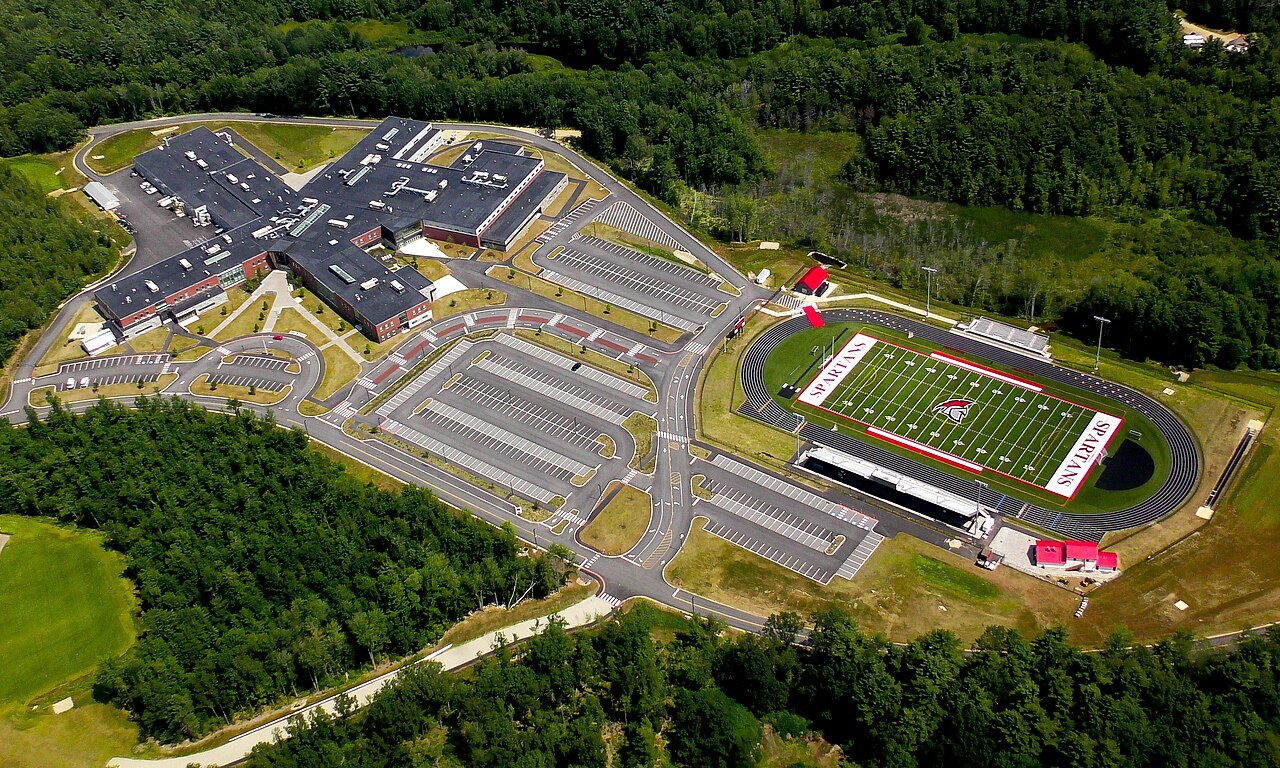
The developer envisioned generation that could initially use natural gas and eventually incorporate hydrogen. The 300 MW generator proposal is separate from the upper bound of the data center’s 100–300 MW range; it is not another 300 MW of data-center demand. Contemporaneous reporting characterized the project as an early-stage prospect without a secured data center tenant, final site approvals or completed permitting. Also, a power plant’s fuel-cell nameplate rating is not a measure of energy already generated.
The project has been halted by a local moratorium. On August 4, 2026, Sanford City Council unanimously extended its emergency pause on data-center permits for another 180 days, through January 31, 2027, while local officials developed standards for future projects. See the Portland Press Herald’s report. The 300 MW ranking is therefore a developer-stated upper-limit concept, not a permitted, contracted or energized load.
Two lawmakers representing different perspectives on these proposed developments discussed the state’s choice on CBS News during the legislative debate.
Video: CBS News, April 16, 2026, “How Maine lawmakers are reacting to large data center projects.” The interview includes Representative Melanie Sachs and Senator Matt Harrington. The legislature later sustained the governor’s veto of the statewide moratorium; local pauses, including Sanford’s, remain a separate question.
Maine’s Smaller Active Prospect: Loring LiquidCool at Limestone
The projects above illustrate why the largest historic announced figures are a poor proxy for actual progress. At the former Loring Air Force Base in Limestone, LiquidCool Solutions / Loring LiquidCool Data Center has pursued a much smaller redevelopment in an existing 115,000-square-foot building. The company said the facility could begin with 2 MW already in place and expand through a utility arrangement to roughly 26 MW. The Maine Morning Star and Boston Globe reported the developer’s staged plan. Other company comments spoke of a possible 50 MW longer-run expansion, but this has not been shown as secured current electric service.
The Loring development has a much smaller public power target than Sanford, Jay’s former allotment or the canceled Millinocket plan. Nevertheless, retaining existing structures, substations and fiber connectivity can make a 2–26 MW phased redevelopment more credible than a much larger proposed campus without tenants, permits or power. In October 2025, NEWS CENTER Maine covered the former base as a potential data center location, before later statewide policy developments.
Video: NEWS CENTER Maine, October 17, 2025, “Data center may be coming to Maine with sights set on Aroostook County.” This authentic news report concerns the emerging Loring proposal and does not establish that full capacity is now operational.
Why Maine’s Proposed Power Is Not Running Power
Maine legislators approved LD 307, which would have imposed a temporary statewide pause on data centers above a set power threshold, but Governor Mills vetoed it in April, and the legislature did not override that veto. The governor instead created a statewide advisory process. Individual municipalities may impose separate restrictions, which remain binding within their jurisdictions. The distinction matters: Maine did not enact the statewide pause described in some earlier April headlines or videos, even though particular city or town moratoriums have halted individual developments. For state background, see the legislature’s April 14 summary and the April 29 veto-override result.
A megawatt measures instantaneous power, whereas a megawatt-hour measures energy consumed or generated over time. At a hypothetical constant 300 MW, a facility would consume 7,200 MWh (7.2 GWh) in 24 hours. Maine has no documented operating 300 MW data center in these sources; this is only an explanatory calculation. Utility allotment, grid import, power-plant nameplate output, on-site solar production and IT load should never be combined into one headline number. Our capacity factor explainer and Kansas project power rankings provide further context.
The next meaningful Maine ranking will likely depend on documented new operators, local building permits, the end or revision of moratoriums, new utility-service commitments and the commissioning of actual data halls. Until those are available, the biggest reported historical plan is not the biggest functioning data center.
BitcoinVersus.Tech
BitcoinVersus.Tech Editor’s Note: We volunteer daily to ensure the credibility of the information on this platform is Verifiably True.
If you would like to support to help further secure the integrity of our research initiatives, please scan the QR code to donate (For the best results, scan the QR code on a Laptop or larger screen).
Suggested donation: 5,000 sats. Bitcoin address: 3C9o19EH5HSiwEPyCTmEKzxhNCbo2X6TTb. Confirm the recipient address before sending.

BitcoinVersus.tech is not a financial advisor. This media platform reports on financial subjects purely for informational purposes.


Leave a Reply