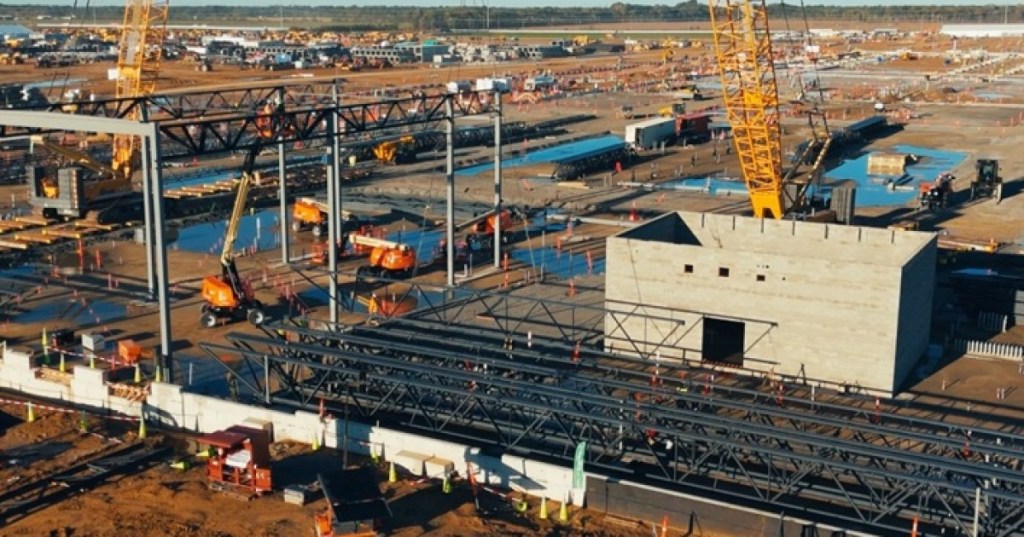
Louisiana’s largest data center plans now range from a five-gigawatt AI cluster under construction to a proposed one-gigawatt technology campus that has not yet passed major development milestones. This installment of BitcoinVersus.Tech’s state-by-state power rankings examines the biggest independently attributable individual data center developments for which their developers have disclosed a comparable electrical or IT-power figure as of October 28, 2026. The three are Meta Hyperion in Richland Parish, ONE Nuclear’s Project Barracuda in Louisiana, and Applied Digital’s Delta Forge 1 in Rapides Parish.
How to read these rankings: The numbers describe planned compute capacity, critical IT load, or total utility power, depending on the source. These metrics are not identical. The comparison uses each independently published campus figure, with its type and development stage attached; it does not imply that any facility is already consuming the stated load. Early concepts can outrank smaller, financed developments by nominal size without being closer to operation. We do not turn proposed power generation into data center demand, combine separate campuses, or treat a financial investment figure as megawatts.
3. Applied Digital Delta Forge 1 — 430 MW Planned Utility Power
Applied Digital’s Delta Forge 1 is a purpose-built AI computing campus near Boyce in Rapides Parish. On January 22, 2026, the developer said construction had started on two planned buildings designed to support an initial 430 MW of total utility power. It specified 300 MW of critical IT load within that initial design. This is a more concrete development commitment than an untethered site-capacity estimate, but not evidence that the full campus was electrically energized in 2026.
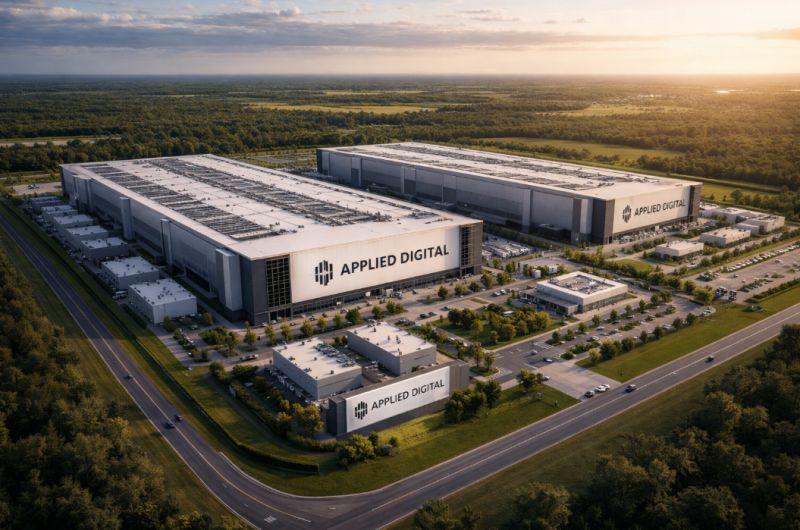
On April 23, 2026, Applied Digital announced a 15-year lease worth roughly $7.5 billion for the planned 300 MW IT deployment with an unnamed investment-grade U.S. hyperscale tenant. The company also said the agreement increased total contracted revenue across its AI-factory portfolio to more than $23 billion. The unnamed tenant’s identity should not be guessed; contractual revenue is also not cash already received.
Louisiana Economic Development’s May 26 release identifies a planned $3.6 billion investment at Delta Forge 1, a projected 200 direct operating jobs, more than 1,000 peak construction jobs, and initial operation targeted for mid-2027. The company says the site may scale beyond the first 430 MW in later years, but has not supplied a firm, comparable final campus utility figure for ranking. We therefore rank the published initial 430 MW, rather than inventing a future multigigawatt buildout.
2. ONE Nuclear Project Barracuda — Up to 1,000 MW Proposed IT Capacity
Project Barracuda entered Louisiana’s data center pipeline in September. In a September 10, 2026 company announcement that was also filed with the Securities and Exchange Commission, ONE Nuclear Energy described a proposed 1.2 GW Energy Park and Technology Campus, with up to approximately 1 GW of critical IT data center capacity. That is the ranking figure. It is a planning-level concept, not a signed tenant lease or commissioned server load.
The developer’s preliminary configuration includes approximately 1.2 GW of dispatchable natural-gas generation and 300 MW / 1.2 GWh of battery storage. These figures measure the supply-side infrastructure; they must not be added to the one-gigawatt planned IT demand. A 300 MW battery output rating describes possible discharge power, while 1.2 GWh describes stored energy and, at rated discharge, corresponds to a nominal four-hour duration. Local grid reliability, interconnection conditions, emissions, water demand and fuel supply all require additional engineering and review.
ONE Nuclear is still evaluating siting and commercialization details and has not disclosed a named data center tenant, executed power service agreement, site-specific permits, completed financing, or a committed Barracuda opening date in that filing. It expects to phase generation, storage and digital infrastructure in response to demand and regulatory approvals. As such, Barracuda is larger on paper than Delta Forge 1 but substantially less mature. A ranking that looked only at financed construction or leased IT power would place Applied Digital above Barracuda.
Barracuda is also not the same project as Project Amberjack, a proposed standalone 1 GW nuclear-generation campus, or Project Cayman, a proposed 2.88 GW gas-generation and storage development with the potential for co-located computing. ONE Nuclear described the three together as a roughly 5 GW energy portfolio; that aggregate is neither five gigawatts of data center IT load nor a single data center site. Those separate power-generation projects are not double-counted in this list.
1. Meta Hyperion, Richland Parish — 5,000 MW Planned Compute Capacity
Meta Hyperion, near Holly Ridge in Richland Parish, is Louisiana’s largest documented AI campus. In its July 13, 2026 update, Meta announced an expansion of its ongoing Richland Parish project to five gigawatts of compute capacity. The expanded long-term investment exceeds $50 billion, and the site is intended to house Meta’s largest multi-gigawatt AI training cluster. The earlier 2024 announcement was substantially smaller; the revised 5 GW scope should not be presented as additional separate campus capacity.
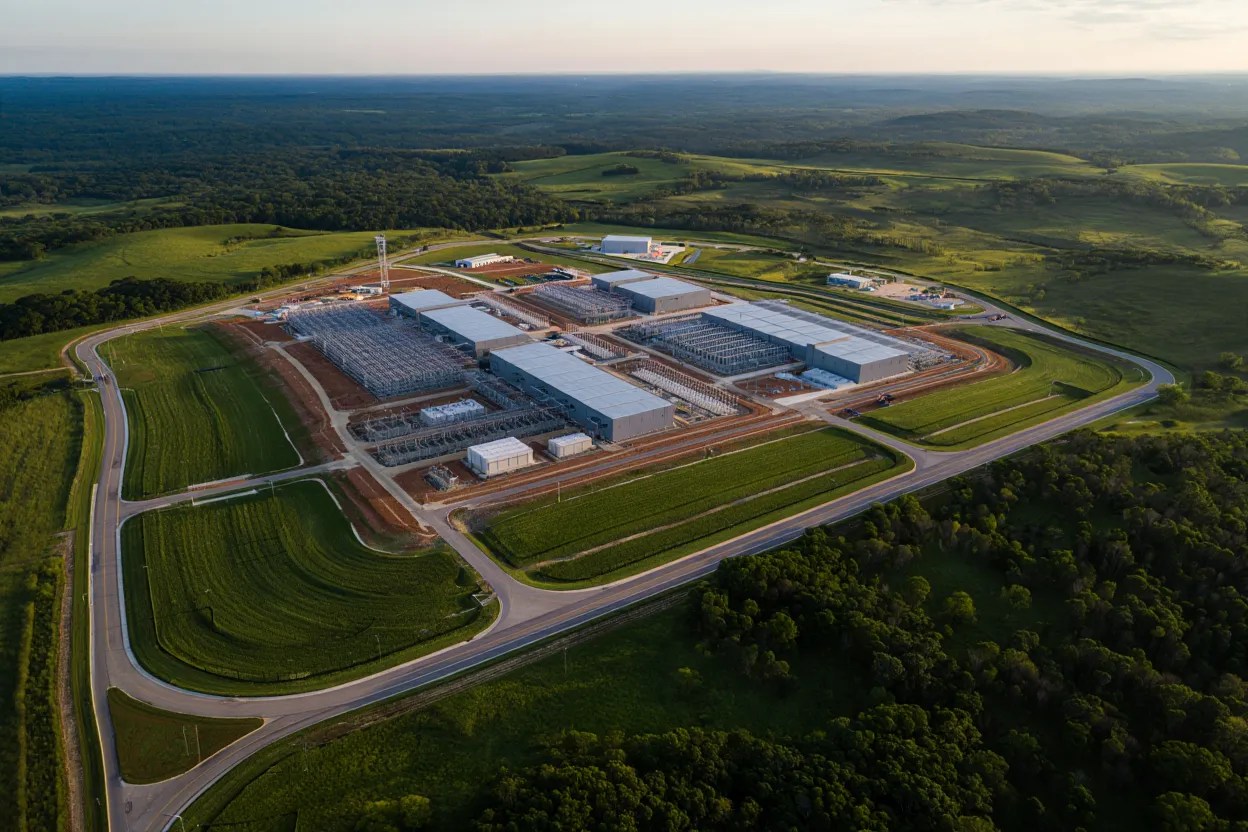
The company expects more than 7,500 construction workers at peak and approximately 1,000 positions when fully operational. Meta reports more than $1.6 billion contracted with Louisiana suppliers and additional community investments, including local infrastructure and workforce programs. Its July community announcement describes teacher bonuses and local business growth associated with the project. These are company- and community-reported impacts, not proof that all proposed data halls have entered service.
The utility implications extend beyond the campus. Meta and Entergy describe a plan involving seven natural-gas-fueled generating plants, battery projects, transmission investments and nuclear output increases to support regional demand. Louisiana regulators’ April 2026 proceedings and the later company disclosures address the cost and permitting debate, including how customer-backed generation can affect other ratepayers. The five-gigawatt Hyperion number is the planned compute-cluster scale; it is not a measured 2026 grid draw, and total eventual facility electrical service could differ because computing systems also need cooling and electrical support equipment.
Other Louisiana Developments Not Included in the Top Three
Hut 8’s River Bend campus in West Feliciana Parish has particularly firm commercial evidence: a 245 MW critical IT lease with Fluidstack associated with Anthropic and a 330 MW utility-power plan. The June 2026 SEC filing describes $3.25 billion in financing for the associated construction and substation. It also documents the transition of River Bend from the developer’s energy-capacity-under-development category into energy capacity under construction. Initial delivery is targeted for 2027, not a completed 2026 facility.
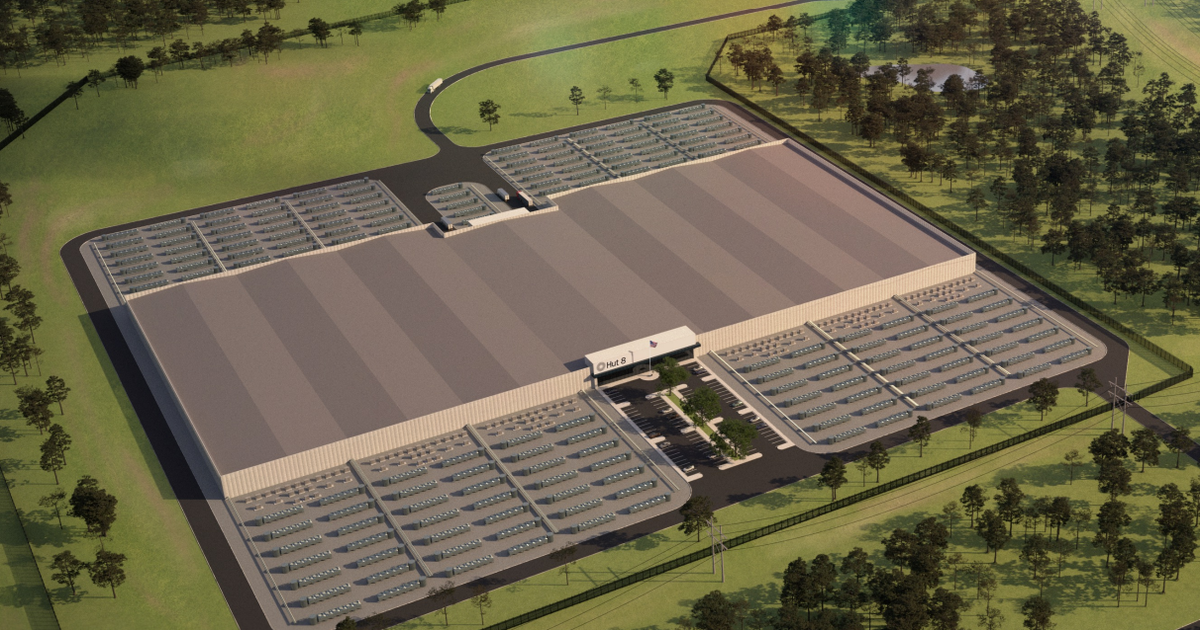
Hut 8’s project page mentions potential expansion beyond the initial phase and a right of first offer for future capacity, subject to more power availability. Those options are not the same as fully financed or energized capacity. We therefore use 330 MW for River Bend’s currently documented utility phase, placing it below Delta Forge 1’s 430 MW. This lower numeric rank does not mean River Bend’s contracts or schedule are weaker.
Amazon plans $18 billion across three data center campuses in Caddo and Bossier Parishes, including a new Shreveport site, according to its August 18, 2026 update. The company has not disclosed sufficiently attributable per-campus utility MW for a defensible numerical ranking, so investment dollars are not used as a substitute. A proposed site near Moss Bluff and other data center developments with undisclosed power requirements likewise cannot be ranked from acreage alone.
What the Power Numbers Mean for Louisiana
A megawatt is a measure of instantaneous power; energy used over time is reported in megawatt-hours. If a hypothetical campus drew 5,000 MW continuously for a full day, it would use 120,000 MWh (120 GWh). That is a mathematical illustration of scale, not a claim about Hyperion’s measured demand today. Likewise, 5,000 MW of computing capacity does not imply precisely 5,000 MW at the utility meter; cooling systems, transformers, networking equipment and power-conversion losses can change total facility demand. Capacity-factor basics and the Kansas ranking offer further context for how announced power figures should be interpreted.
The practical test is no longer the largest press-release number. For Hyperion, Delta Forge 1, and Barracuda alike, decisive milestones will include signed power agreements, permit and environmental approvals, utility substations, tenant contracts, completed data halls and verified energized IT capacity. Tracking each separately is the only responsible way to distinguish ambitious Louisiana infrastructure projects from operating compute.
BitcoinVersus.Tech
BitcoinVersus.Tech Editor’s Note: We volunteer daily to ensure the credibility of the information on this platform is Verifiably True.
If you would like to support to help further secure the integrity of our research initiatives, please scan the QR code to donate (For the best results, scan the QR code on a Laptop or larger screen).
Suggested donation: 5,000 sats. Bitcoin address: 3C9o19EH5HSiwEPyCTmEKzxhNCbo2X6TTb. Confirm the wallet destination before sending.

BitcoinVersus.tech is not a financial advisor. This media platform reports on financial subjects purely for informational purposes.


Leave a Reply