The three biggest Minnesota data center proposals with defensible, publicly reported electricity requirements face very different paths forward. Google’s 780-megawatt Project Skyway in Pine Island now requires a new state-supervised environmental review; Tract’s 708 MW technology park in Farmington has moved beyond key land-use approvals without a known operating customer; and Google’s 500 MW Hermantown plan is awaiting a decisive City Council meeting on Friday. As of October 29, 2026, none of the three full-campus power figures represents energized data halls.
The most immediate change came Wednesday, October 28, when Pine Island’s council approved a settlement ending a legal fight over the first Google project. The settlement places a new environmental assessment under the Minnesota Pollution Control Agency and blocks construction until the required state and city review is complete. The decision makes Minnesota’s growing data center industry a story about what developers can actually build, not just how much power their plans might eventually consume. MPR News reported the settlement Thursday morning.
This ranking compares the largest currently advancing, independently substantiated single-campus electric-demand proposals in Minnesota—not wind farms, battery-discharge capacity, undeveloped alternative land-use scenarios, or already-suspended projects. Google’s energy procurement includes 1,900 MW of separate wind, solar and storage resources near Pine Island, but the actual proposed data center demand is 780 MW. A project must have a attributable MW figure and a credible current development pathway to enter this edition. The capacity and readiness distinctions are explained in each entry.
3. Google Project Loon, Hermantown — 500 MW; Local Vote Delayed
Near Midway Road and Highway 2, west of Duluth, Google wants to build a multi-building data center campus next to Minnesota Power’s Arrowhead Substation. The proposed facility would require approximately 500 MW of electricity, according to the Citizens Utility Board of Minnesota’s October 19 review of the company’s proposed electric-service agreement. The figure represents expected campus electricity demand; it is not a measurement of operating GPU power, and the Public Utilities Commission has not yet approved the final service agreement.
The City of Hermantown’s project record describes up to four data center buildings in a development whose initial construction could span years. Google withdrew a request for local property-tax abatements in October and offered commitments concerning well monitoring and eventual decommissioning. City officials estimate new property-tax revenue if the campus reaches completion, while opponents have questioned the early use of nondisclosure agreements, environmental impacts and the decision-making process. The city and the developer have disputed the suggestion that the site cannot meet existing environmental requirements.
The city published the actual October 20 Planning and Zoning Commission presentation about Google’s proposed special-use permit. It documents what was presented to local officials before the final council debate, rather than depicting a fully approved or operating development.
Hermantown Planning and Zoning Commission, October 20, 2026: Google project special-use-permit presentation. The City of Hermantown provides the original recording.
The commission recommended approval, but a City Council vote scheduled for October 26 was interrupted by extended demonstrations. A follow-up attempt on October 27 was also canceled. The council has rescheduled consideration of the permit, development agreement and other resolutions for Friday, October 30, at 6:30 p.m., according to MPR News. That is a pending decision, not an approval. Separate legal challenges and utility review also remain relevant. The official project page and its recorded meetings document how the environmental and land-use discussions have evolved.
The proposed 300 MW of wind power and 400 MW of battery storage discussed by CUB in connection with the Hermantown electric agreement are separate supply and storage resources. They do not transform the 500 MW computing proposal into a 1.2 GW data center. Batteries discharge energy previously stored; generation nameplate ratings are not server electricity consumption.
2. Tract Farmington Technology Park — 708 MW; Entitled but Not Operating
In Farmington, Dakota County, Colorado-based developer Tract has pursued a roughly 343-acre campus spanning former Fountain Valley Golf Course land and property associated with the local school district. Its public municipal environmental-review record separates the planned gross facility electricity requirement into 408 MW for one tract and 300 MW for another—a combined 708 MW across the same proposed development. The project envisions as many as 12 buildings and approximately 2.5 million square feet. Gross campus demand includes infrastructure overhead; it cannot be relabeled as 708 MW of critical IT equipment.
Farmington approved the original environmental-review and rezoning pathway in November 2024. The city later approved updated development contracts and changes dividing the plat into two additions at its April 20, 2026 meeting. The city’s project history provides the actual council video and associated records for those decisions.
Farmington City Council, April 20, 2026: public meeting that approved revised development agreements and the split of the Farmington Technology Park final plat. City of Farmington meeting archive.
The development also encountered litigation. On September 16, 2026, the city reported that plaintiffs in two legal matters had filed dismissals, while final court directions were still pending. That reduces an important legal obstacle but does not commission a server building. A demolition permit for structures on the former golf course was issued earlier in 2026, and the municipality records completion of that limited work; site preparation should not be equated with construction of a 708 MW data center.
Most importantly, there is no independently established final 708 MW electricity-service agreement, operating data-hall load or named end user in the accessible current record. A detailed review of the site’s power and permit evidence describes the park as entitled rather than operating. Tract is the infrastructure and land-development sponsor, not necessarily the operator of every eventual building. The developer and a future customer would still need to demonstrate the power, capital and delivery schedule for a campus of this scale.
1. Google Project Skyway, Pine Island — 780 MW; New Environmental Review
Google’s proposal in Pine Island, Goodhue County carries the largest disclosed demand in this Minnesota ranking: 780 MW. That is the electric requirement analyzed by the Citizens Utility Board from Google and Xcel Energy’s pending service application, filed on April 15, 2026 under Minnesota PUC docket 26-170. The initial site is part of the broader approximately 482-acre Project Skyway land-use area developed by Ryan Companies. The maximum-buildout scenario assessed in the original environmental study is not identical to the first data-center buildings requested by Google.
The project has faced months of legal uncertainty. Environmental groups argued that the city’s earlier review lacked sufficient detail about water supply, energy use, noise and related impacts; Ryan Companies and city officials maintained that relevant protections had been considered. On October 28, Pine Island’s City Council approved a settlement with the Minnesota Center for Environmental Advocacy and developer Ryan Companies. Under the arrangement, the Minnesota Pollution Control Agency will supervise a new environmental assessment and a mitigation plan covering water, electricity, noise and light. Google and the developer cannot begin construction until the required reviews and local approvals for that plan are completed. Existing municipal land-use approvals were not automatically voided.
The video below is a local report from KIMT News 3 documenting the Pine Island Planning and Zoning Commission’s early consideration of Project Skyway. It is from November 2025; the more recent settlement is described above and in MPR News’s October 29 reporting. The older footage is included to show the development discussion, not to suggest that the 2026 settlement was already in place.
KIMT News 3, November 10, 2025: “Pine Island Addresses Project Skyway,” coverage of the proposed campus during local planning discussions. Original KIMT report.
The settlement creates a pathway to continue review, but not a construction authorization. It is especially significant because, according to MPR News, this will be Minnesota’s first data center proposal to undergo this kind of environmental review under state agency supervision. The public will have further opportunities to comment before the project can move forward.
Google’s February 24 energy announcement listed 1,400 MW of wind, 200 MW of solar and 300 MW of long-duration energy storage associated with the wider grid plan. Those amounts add up to 1,900 MW of separate generation-and-storage nameplate capacity. They do not describe a 1,900 MW Google data center. This matters because an online Minnesota ranking has repeated that higher number as if it were site demand. Google’s proposed 780 MW requirement and the 1,900 MW supply package must not be conflated; the latter combines technologies that do not all deliver continuous firm energy at their nameplate ratings.
Why Other Minnesota Proposals Are Not Ranked Here
Minnesota has several other substantial developments that deserve coverage. Tract’s Cannon Falls Technology Park received final plat approval at an October 6, 2026 council meeting, but city records and its developer FAQ do not establish a comparable confirmed campus electricity-demand figure; some third-party rankings assign the site 708 MW or more without a matching utility filing. We do not import that uncertain figure or duplicate Farmington’s number.
Amazon Web Services’ Becker site also appears in older Minnesota rankings at figures reaching hundreds of megawatts, but MPR News reported in May 2025 that Amazon paused development on its Sherco-area property and redirected resources elsewhere. Across public directories, its listed MW values vary; those estimates cannot be promoted to a verified active service contract. Meta’s Rosemount campus is a real, major construction project, but available public disclosures do not establish a comparable larger full-campus load figure for this ranking. A future company or utility filing may change which sites qualify.
What Comes Next for Minnesota’s Data Centers
A large megawatt number is a potential power-delivery rate, not electricity already consumed. At a hypothetical constant 780 MW, a data center would use 18,720 megawatt-hours in one day. That calculation does not mean Project Skyway currently uses that energy; the development remains unbuilt. The same distinction applies to Farmington’s 708 MW proposal and Hermantown’s 500 MW target. As discussed in BitcoinVersus.Tech’s Michigan state rankings and Maryland state rankings, developers’ plans and utility contracts are different from finished computing equipment.
Minnesota’s next meaningful decisions are easy to identify: whether Hermantown’s council grants final local permissions on October 30, whether the state utility commission approves the two proposed Google service agreements, how Pine Island’s new state environmental review addresses community concerns, and whether Tract secures tenants and delivery commitments in Farmington. Those decisions will tell readers far more about real capacity than a collection of speculative gigawatt figures.
BitcoinVersus.Tech
BitcoinVersus.Tech Editor’s Note: We volunteer daily to ensure the credibility of the information on this platform is Verifiably True.
If you would like to support our work and help further secure the integrity of our research initiatives, please scan the QR code below to donate (For the best results, scan the QR code on a Laptop or larger screen).
Suggested donation: 5,000 sats. Bitcoin address: 3C9o19EH5HSiwEPyCTmEKzxhNCbo2X6TTb. Confirm the recipient address before sending Bitcoin.

BitcoinVersus.tech is not a financial advisor. This media platform reports on financial subjects purely for informational purposes.
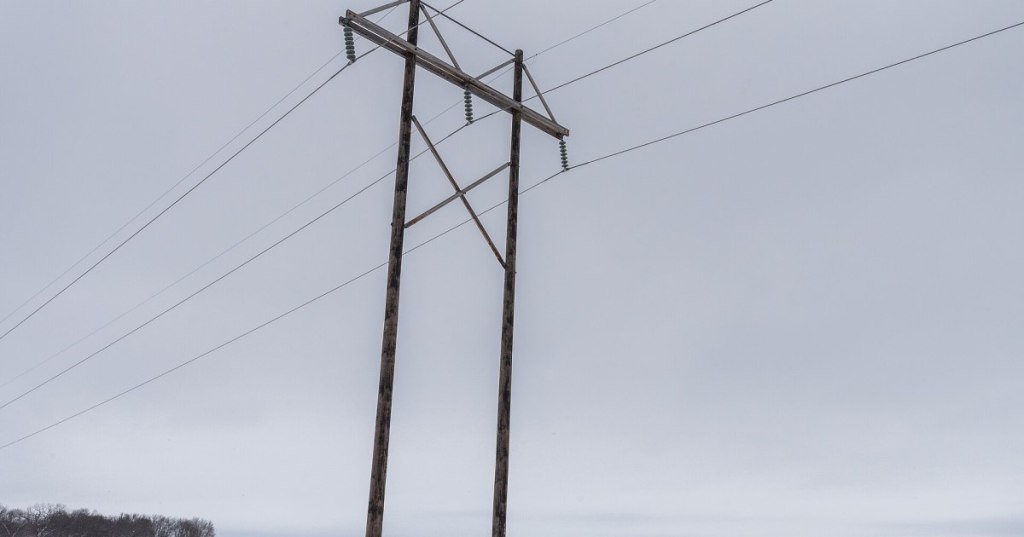
Featured cover photo: Tony Webster, “Power lines in winter, Rural Minnesota” (March 2018), CC BY 2.0. Image cropped to 1200 × 630 for this article. This is a photograph of Minnesota’s rural electric infrastructure, not a data center site.


Leave a Reply