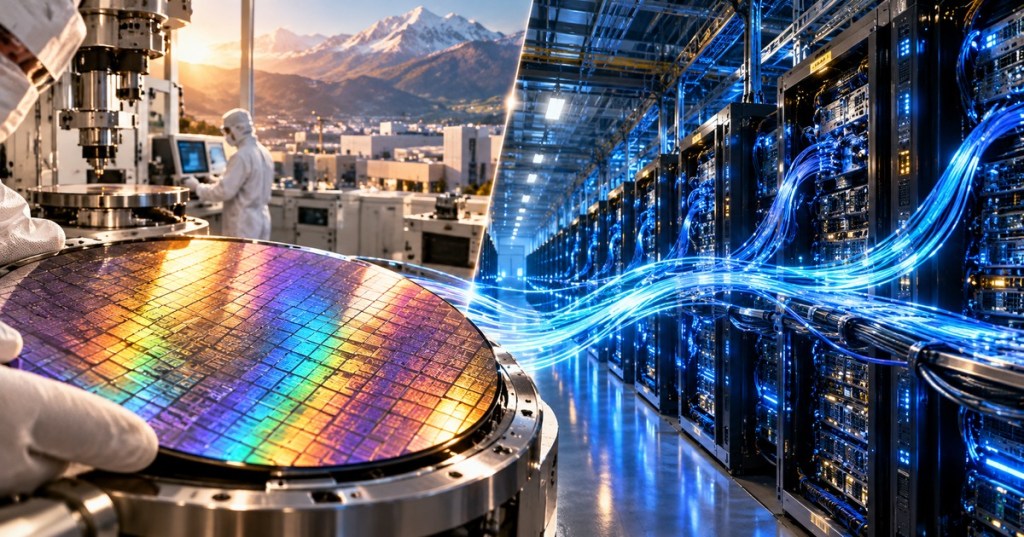
STMicroelectronics raised its 2026 AI data-center revenue outlook to about $1.3 billion on Thursday, October 29, as demand for optical communications chips and other infrastructure components helped lift its third-quarter sales. The company now expects the fast-growing market to contribute well above $2 billion in 2027, though those figures remain management forecasts rather than booked future sales.
The revised outlook, disclosed during its earnings call, follows a July expectation of more than $1 billion in 2026. ST reported quarterly revenue of $3.76 billion, up 17.9% from a year earlier, and a 37.3% gross margin. Its fourth-quarter sales guidance is $4.15 billion at the midpoint.
Why AI data centers are buying more optical chips
A central piece of the growth is silicon photonics: chips that use optical signals to move data over fiber, alongside conventional electronics. Faster links help connect the accelerators and servers that train and run AI models. ST makes photonic integrated circuits, electronic interface chips and controllers rather than the GPUs themselves.
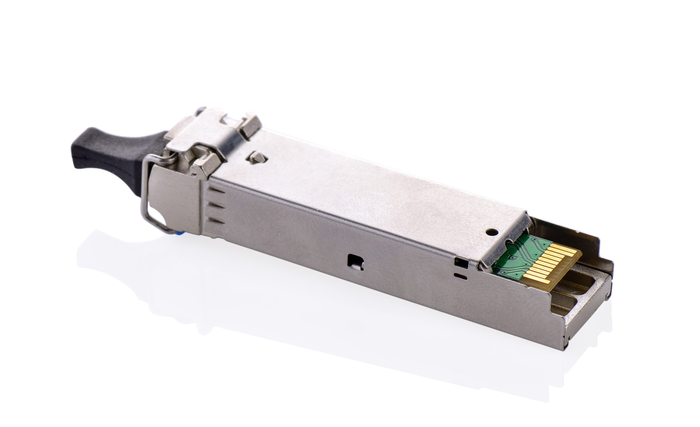
ST said its PIC100 platform entered high-volume production on 300-millimeter wafers earlier this year, supporting optical modules rated at 800 gigabits and 1.6 terabits per second. The company plans to expand manufacturing capacity by more than fourfold by 2027. That ambition fits the broader shift toward optical connections between AI systems and co-packaged optics in networking switches.
The numbers—and the limits
ST’s RF Optical Communications segment generated $504 million in third-quarter revenue, up 46.2% year over year. However, that segment also includes radio-frequency products, so its total must not be mistaken for silicon-photonics revenue alone. Company executives attributed the data-center momentum to a combination of optical and other semiconductor products.

Silicon photonics is only one response to AI’s demand for bandwidth. The economics also depend on transceiver supply, production yields, power consumption and the way data-center operators design their networks. BitcoinVersus has previously covered additional photonics foundry capacity and advances in high-speed copper—technologies that may complement or compete with optical links at different distances.
For now, ST’s published results demonstrate revenue growth across its chip portfolio; its multibillion-dollar data-center targets are forward-looking and will depend on customer demand and manufacturing execution.
Editor’s Note: We volunteer daily to ensure the credibility of the information on this platform is Verifiably True. If you would like to support our work and help further secure the integrity of our research initiatives, please scan the QR code below to donate 5,000 sats.



Leave a Reply