Michigan’s largest data center developments now reach gigawatt scale. The top three documented individual campuses by publicly reported full-site power figure as of October 29, 2026 are Oracle and OpenAI’s 1,383-megawatt Stargate project in Saline Township, Google’s 1,000 MW Project Cannoli in Van Buren Township, and Hyperscale Data’s up-to-340 MW expansion concept in Dowagiac. The comparison needs a crucial distinction: the first figure is a regulated utility-service contract, the second is a proposed campus demand figure, and the third is a developer’s possible long-run expansion—not a committed 340 MW electric service agreement. None of these three figures represents 2026 operating AI server load.
The state already has sizeable computing infrastructure, including the long-established Switch Pyramid campus near Grand Rapids. The rankings below focus on the largest discrete reported campus-scale MW figures rather than guessing power usage for facilities with no comparable disclosed number. Construction and regulatory status are independently discussed. The figures must never be added to battery storage or separate renewable generation nameplate values as if everything powered additional IT equipment.
3. Hyperscale Data, Dowagiac — Up to 340 MW Long-Term Potential; 20 MW Initial AI Contract
At 415 East Prairie Ronde Street in Dowagiac, Cass County, Hyperscale Data, through subsidiary Alliance Cloud Services, is repurposing an existing industrial computing campus from Bitcoin mining toward commercial AI infrastructure. In a September 17, 2026 company announcement, Hyperscale Data described roughly 340 MW of total potential campus capacity. That number is an expansion concept dependent on utilities, funding, development permissions and equipment—not 340 MW delivered to AI tenants.
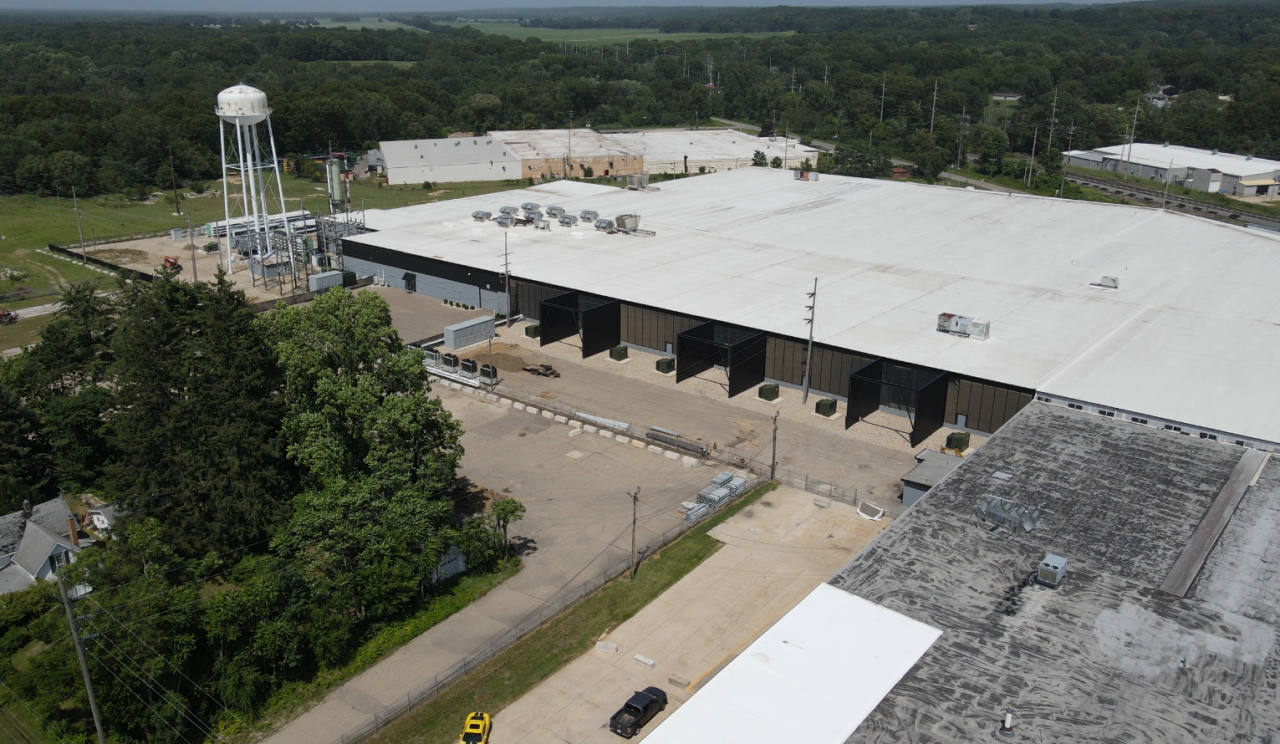
Its signed master services agreement starts with 20 MW of critical AI compute capacity; the customer has an option to expand to 52 MW. The company said more than $70 million had been invested through September 15 and targeted an initial November 2026 service start. In filings it had described roughly 28 MW of legacy Bitcoin mining before the transition. The operator reported stopping Bitcoin mining on September 1, but a City of Dowagiac notice dated October 6 disclosed a temporary restart for court-ordered noise testing, expected to last no more than 24 hours, with possible additional tests. That narrow exception does not establish a resumption of normal crypto-mining operations.
Dowagiac residents filed litigation alleging excessive fan and equipment noise, while the company disputed those allegations. The following video is an authentic, project-specific report from WXYZ-TV Detroit documenting neighbors’ experiences and the operator’s response in July—not a determination of liability or a measurement of today’s noise level.
Video: WXYZ-TV Detroit | Channel 7, “Neighbors say noise from Michigan data center is 24/7 and upending their lives”, July 23, 2026. The facility pictured is the Dowagiac site.
The company’s SEC-filed disclosure explicitly calls expansion above 300 MW preliminary. BitcoinVersus.Tech has previously covered the operator’s planned shift away from Bitcoin mining, its cash and Bitcoin resources, and its reduced equity financing program. Those financial and deployment constraints are relevant to whether the full 340 MW vision becomes real.
2. Google Project Cannoli, Van Buren Township — 1,000 MW Proposed; Final Site Plan Approved
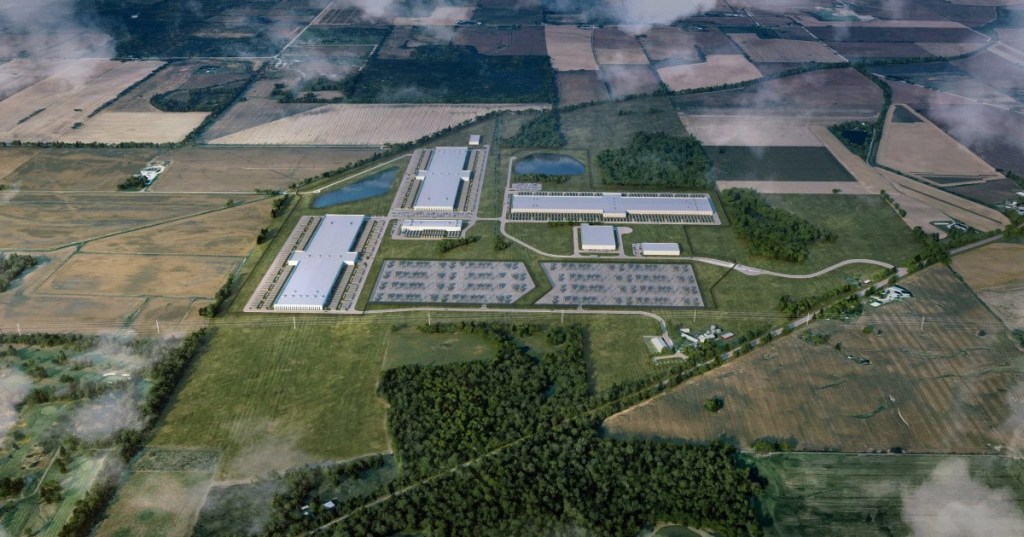
Google’s Project Cannoli proposes a 1,000 MW (1 GW) campus on roughly 282.2 acres near Interstate 94, Haggerty Road and Interstate 275 in Wayne County. Panattoni Development is preparing the industrial-zoned site for Google. The master plan includes three data-processing buildings along with supporting administrative and network-service structures. The developer’s official project page describes proposed ecological buffers, stormwater management, transmission-level electricity service and water from Great Lakes Water Authority. The precise 1 GW figure appears in local coverage of the detailed planning record, while township planning documents identify the underlying site and structures.
On October 14, 2026, the Van Buren Township Planning Commission voted 5–1 to approve the final site plan. The decision does not mean the entire gigawatt has been constructed, energized or leased to paying computing customers. The Michigan Public report on the meeting records both the development case and neighbors’ concerns regarding water, noise, construction and electricity costs.
The following WDIV Local 4 report covers the actual final site-plan decision in Van Buren Township, not a generic illustration of cloud computing.
Video: Click On Detroit | Local 4 | WDIV, “Final site plan approved for Van Buren Township data center project”, October 15, 2026. The report concerns Project Cannoli’s local planning vote.
The electricity accounting requires particular care. In a March 2026 township clarification, officials said the proposed data center remained 1.0 GW. A separate 1.7 GW in Google’s broader Michigan clean-energy procurement contributes to a widely circulated 2.7 GW total, but that is not a 2.7 GW Project Cannoli facility. The Michigan Public Service Commission’s October 1 conditional electricity-contract approval contains additional ratepayer protections and minimum-billing obligations. Our earlier report on Google’s 20-year DTE agreement explains those mechanisms.
The October 1 Wayne County Commission tax-incentive vote was a different decision from the October 14 final site-plan approval. The county itself emphasized that its override of the executive’s veto concerned the project’s tax benefits, not an independent construction permit. Keeping these decisions separate avoids misreporting how a large-load development obtains permission and utility service.
1. OpenAI–Oracle Stargate “The Barn,” Saline Township — 1,383 MW Electric Service; Under Construction
Stargate Michigan, developed by Related Digital and built with Walbridge for Oracle and OpenAI, is the state’s largest documented individual campus power commitment. The Michigan Public Service Commission identifies its approved DTE electricity-service contract as 1,383 MW. OpenAI separately describes The Barn as a 1 GW data center campus in its June 1 construction announcement. Those are different descriptions: 1,383 MW is the utility-service demand figure, while “1 GW campus” is the partners’ public project scale. Neither is proof that 1.383 GW of GPUs is operating.
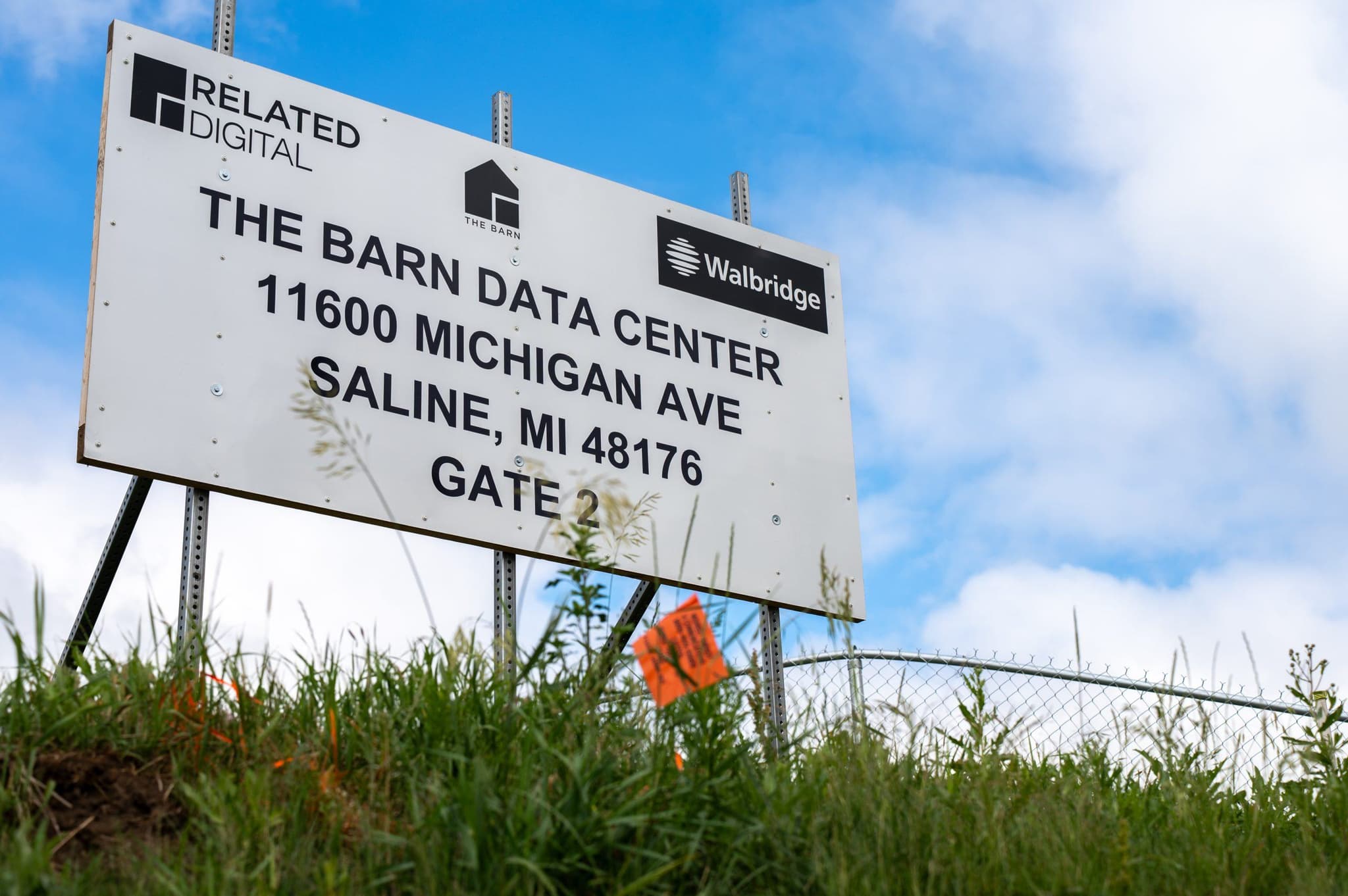
The developers held a construction ceremony on June 1, 2026; a joint Oracle, OpenAI and Related Digital release confirmed that more than 700 tradespeople were already working on the site. An Oracle construction update dated September 28 said the project had reached one million union craft hours. The official campus timeline targets the first buildings for Q1 2027, with phased work continuing through the year. These are construction achievements and targets; they do not establish completed power acceptance or current IT consumption.
The local approval process was contentious. After an initial township rejection, developers challenged the decision and the parties agreed to a consent judgment in 2025. In this archived project-specific video, residents question the Saline Township board about that process; the meeting footage documents speakers’ views, not independent proof of their allegations.
Video: Saline Township board public-comment meeting, November 2025, embedded and documented by The Saline Post. This is authentic local footage about the same Stargate project; it predates the June 2026 construction ceremony.
Power and storage must be separated here too. The MPSC’s March 27 order described the first 332 MW of planned battery storage in a larger energy-storage program linked to the project’s 1,383 MW contracted demand. Batteries can shift energy across hours but do not represent an additional 332 MW of data center load. Oracle states that its cooling design uses a closed-loop, non-evaporative system and that the project will fund required energy-infrastructure upgrades; the company’s published commitments are subject to implementation and regulatory oversight. The MPSC’s ratepayer protections should be understood as contractual and regulatory terms, rather than a guarantee that no future system cost can ever change.
What Michigan’s Numbers Actually Measure
An instantaneous gigawatt is a rate of power delivery, not an amount of electricity consumed. A facility maintaining 1,000 MW continuously for 24 hours would consume 24,000 MWh (24 GWh). That is a hypothetical engineering illustration—not evidence that Google is already using 24 GWh each day in Van Buren Township. Likewise, 1,383 MW of approved utility service at The Barn does not confirm 1,383 MW of commissioned AI equipment, and 340 MW of potential expansion in Dowagiac is not a committed load or a utility-approved interconnection at that level.
This edition therefore ranks project-associated published full-site power figures while visibly distinguishing contracted grid service, approved but not energized planned demand, and developer aspirations. The 340 MW Dowagiac target is a less secure basis than the other two figures; other Michigan inventories place the operating Switch Pyramid campus near Grand Rapids at about 320 MW announced capacity, making it a close and materially different comparator. Switch’s figure is not an independently established present-day metered load either. For a ranking limited to existing energized capacity, these three positions would change.
The next milestones to verify are service energization and site-phase commissioning at The Barn, phased construction and interconnection at Google’s Van Buren campus, and actual AI deployment plus enforceable power agreements at Dowagiac. Readers comparing states can also consult our Maryland power rankings and Massachusetts power rankings. Their numbers, too, distinguish development-scale proposals from working infrastructure.
BitcoinVersus.Tech
BitcoinVersus.Tech Editor’s Note: We volunteer daily to ensure the credibility of the information on this platform is Verifiably True.
If you would like to support to help further secure the integrity of our research initiatives, please scan the QR code to donate (For the best results, scan the QR code on a Laptop or larger screen).
Suggested donation: 5,000 sats. Bitcoin address: 3C9o19EH5HSiwEPyCTmEKzxhNCbo2X6TTb. Confirm the destination address before sending.

BitcoinVersus.tech is not a financial advisor. This media platform reports on financial subjects purely for informational purposes.


Leave a Reply