Missouri’s largest data center projects are taking three sharply different paths: Nebius has started construction on a gigawatt-scale AI campus in Independence, Google is building another campus in Kansas City’s Northland, and developer CRG has cut its proposed Festus project by 40% after community opposition. Together, they show how quickly the state’s AI infrastructure plans are expanding—and how far the biggest announced power figures remain from electricity actually being consumed by operating servers.
The largest individual Missouri campuses with site-specific power figures confirmed by their developers or public development authorities are Nebius Independence at up to 1,200 MW, Google Project Mica at nearly 700 MW, and CRG Festus at approximately 600 MW, according to records available on October 29, 2026. These are full-development power figures, not metered 2026 loads. In Nebius’s case, the plan combines grid supply and proposed on-site generation; Google’s figure is a Port KC development power envelope; Festus remains a conceptual design without an announced end-user tenant.
3. CRG Festus — 600 MW Proposed After Major Redesign
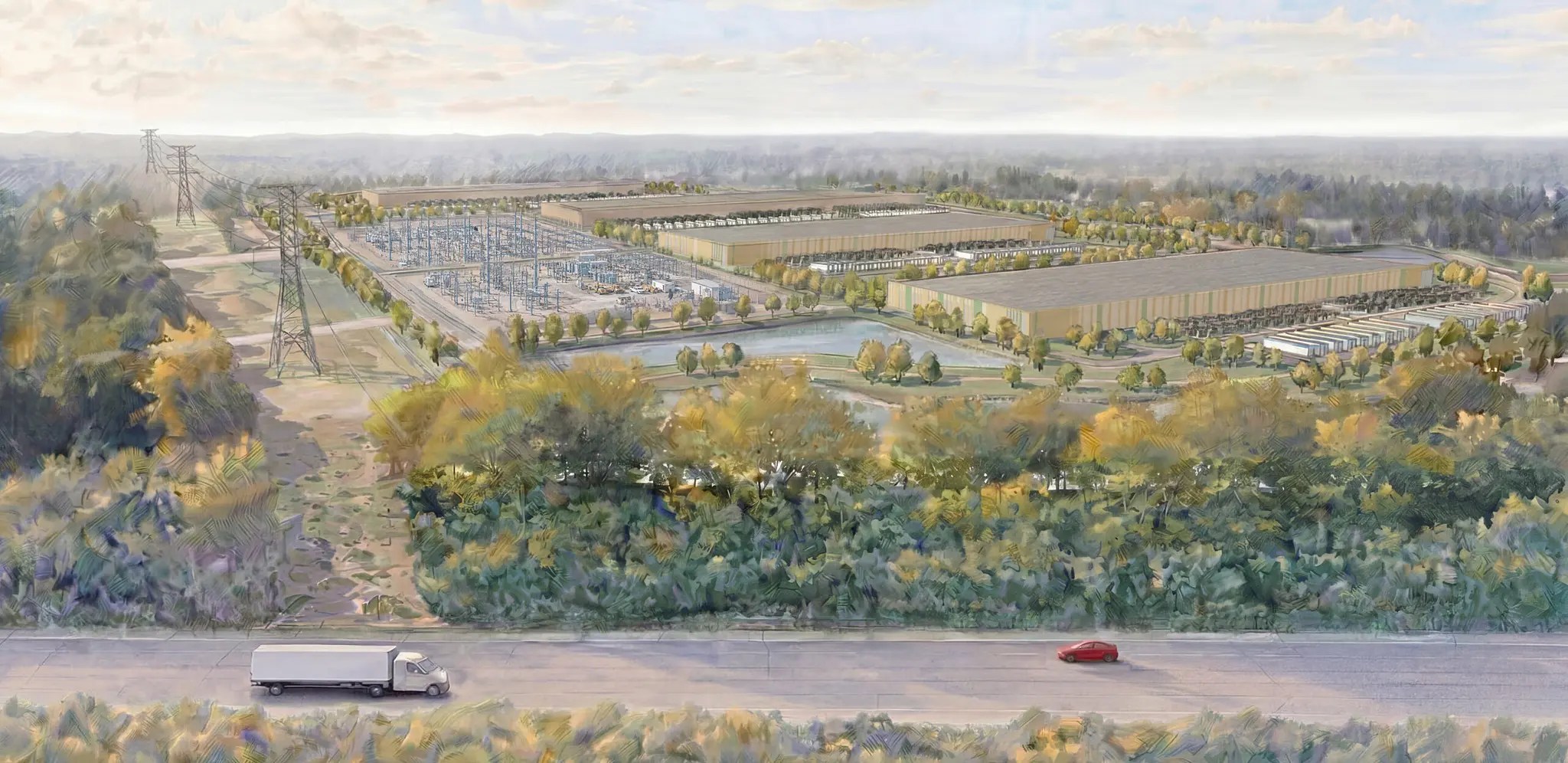
St. Louis-based CRG, a Clayco subsidiary, has scaled down its planned data center outside Festus, Jefferson County, from an initial 1,000 MW concept to roughly 600 MW. The company’s current official project page specifies four single-story data center buildings on about 173 acres of development area, while preserving an estimated 188 acres of woodland. A potential $6 billion investment represents the developer’s expectation over the completed project, not money already spent on an operating facility.
The developer’s community information site makes the design change explicit: the original idea called for 12 two-story buildings and approximately 1 GW. CRG says the revised campus would have deeper buffers, a 500-foot setback from residential property lines, closed-loop cooling and an Ameren switchyard. The 600 MW is the current proposed facility scale; the company has not publicly established that a 600 MW utility service contract is fully energized, nor that 600 MW of critical IT equipment is installed.
CRG held community webinars in July, August and September to discuss the project’s effects on power, water and local infrastructure. The company’s August 25 discussion with an Ameren representative remains available from its official webinar page. An independent FOX 2 St. Louis report below documents the original local controversy before the June 2026 redesign.
Video: FOX 2 St. Louis, “Data center debacle in Festus,” March 8, 2026. The report covers residents’ concerns about the original CRG project. The developer reduced its planned campus to 600 MW in June, after this report aired.
The site has not started vertical construction. In an October 22 local interview, CRG president Chris McKee said the company hoped to begin limited site mobilization and grading in November if approvals allowed it. The city still had to review permits and the developer had not publicly identified a final customer. The City of Festus’s October 14 request for independent permit-review and public-communications support confirms that municipal coordination remained active. Residents’ lawsuit challenging earlier rezoning and development decisions also remained a source of uncertainty; the allegations are not treated as adjudicated findings.
2. Google Project Mica, Kansas City — Nearly 700 MW Under Development
Google confirmed on February 12, 2026 that it was developing Project Mica in Kansas City’s Northland, at the northeast corner of Interstate 435 and U.S. Highway 169. Port KC’s official development record describes a nearly 500-acre, five-building campus with approximately 1.56 million square feet of data center space. The port authority reports that the full development would draw nearly 700 MW using the adjacent Nashua Power Station and planned on-site substations. That is the most specific publicly attributable site power figure for Project Mica; it is not a record of current IT consumption.
Construction was already underway when Google confirmed its role. The port authority had authorized up to $10 billion in taxable revenue bonds, which is a financing ceiling, not evidence that Google has already borrowed or spent that sum. The project also carries a 25-year property-tax exemption arrangement and upfront workforce payments totaling $1.75 million to the Smithville School District and Northland Career Center, according to Port KC.
The original KSHB 41 report shows construction activity at the site and explains Google’s disclosure and electricity agreement. It is specific to Project Mica, and the publisher identifies it as its second Kansas City data center development.
KSHB 41, February 12, 2026: “Google announces construction underway for second data center campus in Kansas City.” Construction footage and company confirmation of Project Mica.
Under the company’s Missouri data center program, Google has committed to the cost of the electricity and infrastructure its projects require. The local reporting describes an agreement with Evergy under its new large-load rate. Importantly, a separate 400 MW of new carbon-free generation highlighted on Google’s Kansas City page is not 400 MW of additional Project Mica server demand. Similarly, some reports cite 500 MW as the prospective campus draw and about 700 MW as the wider Port KC power arrangement. The ranking uses Port KC’s nearly 700 MW full-development figure and makes that basis clear rather than claiming every megawatt has been connected.
Google has another Kansas City site, the Hunt Midwest Business Center campus, which started construction in 2024. It is a distinct property, and this ranking does not add its unknown site power into Project Mica’s figure. The next crucial evidence for Mica will be permitted building phases, substation completion, executed utility milestones and commissioned computing load.
1. Nebius Independence AI Factory — Up to 1,200 MW Across Planned Power Sources
Nebius is building a roughly 400-acre AI factory near Route 78 and Little Blue Parkway in Independence, east of Kansas City. Its March 3, 2026 announcement followed City Council approval of a Chapter 100 industrial development incentive plan and specified an eventual 1.2 GW campus. On May 12, the company held a groundbreaking, independently confirmed by the Missouri Department of Economic Development. The first phase is under construction, but the whole 1.2 GW project is not online.
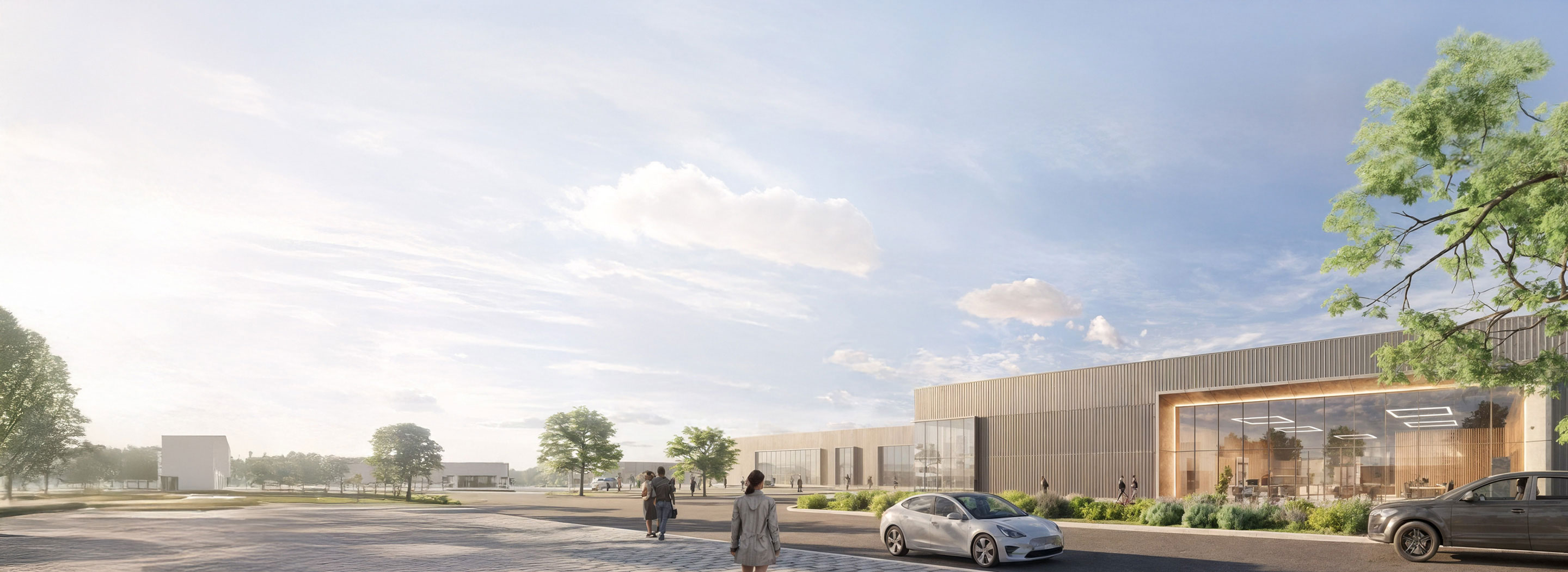
The developer’s updated Independence project FAQ provides the power split missing from many summaries: 800 MW from Independence Power & Light and 400 MW of planned on-site generation for later phases. Its utility arrangement involves power provided by a new privately financed facility at the retired Blue Valley Power Plant and energy transactions through the Southwest Power Pool. Nebius says it will pay for infrastructure upgrades and expects residents’ rates to be protected. These are company commitments and contractual/regulatory arrangements—not independent proof that all 1,200 MW is installed, available or being drawn by GPUs.
The company plans four buildings, with construction spanning roughly five to seven years. It expects about 1,200 construction jobs and 130 permanent technical positions at full operation. Its water-cooling design includes a one-time fill of approximately 1 million gallons per 200 MW unit, followed by lower recurring operating consumption. Some neighbors have questioned the project’s scale, city incentives and future sound or utility effects; Nebius has described closed-loop cooling, acoustic barriers and a neighborhood advisory process in response.
KSHB 41 reported from the project’s May 12, 2026 groundbreaking, showing actual machinery, officials and the site rather than a conceptual image.
KSHB 41, May 12, 2026: “Nebius Breaks Ground on $5 Billion AI Factory in Independence.” The video documents the construction launch; it does not establish 1.2 GW of energized equipment.
Nebius lists Q2 2026 through 2029 and beyond for phased construction and power delivery, with future dates subject to change. The 800 MW utility component and 400 MW potential on-site component are parts of one 1.2 GW facility. They should not be added to claim 2 GW, and the possible on-site generation has a materially different status from the grid-related arrangements already being developed.
Why Bigger Missouri Claims Are Not In These Rankings
Missouri has more hyperscale proposals than a three-entry list can capture, but the numbers must refer to the correct project and source. Google’s $15 billion New Florence development in Montgomery County is officially announced, and the state says Google has contracted over 1 GW of new generation across Missouri. The company’s May announcement separately describes more than 500 MW of additional system capacity supported through its agreement with Ameren. Neither statement establishes that the individual New Florence data center consumes 1 GW. Its project size should not be guessed from the power resources bought for the wider region.
The Meramec Valley Technology Park near Pacific is another example. A secondary database has published a 1.2 GW estimate, but the local public-record review does not identify a matching official site demand figure. A separate application for a data center within the City of Pacific was withdrawn in August, while Franklin County approved rezoning for a distinct Crooked Creek site in September; the two should not be treated as one unchanged, approved, energized project. Contemporaneous reporting explains the county vote. Until official plans clarify capacity and legal status, an unsupported 1.2 GW figure does not qualify for a numerical position.
Missouri also hosts Meta’s Kansas City data center and other planned campuses. Some private directories assign large MW values to these properties, but absent comparable public company, permit or utility disclosures, their figures cannot be treated as confirmed. Excluding them from this source-limited power comparison does not mean they are physically smaller than the three sites listed above.
The Power Behind Missouri’s AI Expansion
A megawatt measures power at an instant; a megawatt-hour is energy consumed over time. For illustration, a completed 600 MW data center drawing that power continuously would use 14,400 MWh (14.4 GWh) in 24 hours. CRG has not built an operating 600 MW facility in Festus, so that is a theoretical calculation, not its current electricity bill. Port KC’s Project Mica figure is a full-development power envelope, and Nebius’s proposed 1.2 GW combines utility supply with future generation—it is not 1.2 GW of GPUs operating today.
The major questions are now practical. How quickly will Independence deliver contracted electricity and bring buildings into service? When will Google’s substations and data halls complete commissioning? Will Festus secure permits and an end-user customer after its redesign? Missouri’s grid investments and large-load tariffs are part of the answer. For comparisons across the series, see Mississippi’s reported power plans and Minnesota’s largest proposals, which make the same distinction between announced supply and operating computing demand.
BitcoinVersus.Tech
Follow BitcoinVersus.Tech on X for technology reporting and original research.
BitcoinVersus.Tech Editor’s Note: We volunteer daily to ensure the credibility of the information on this platform is Verifiably True.
If you would like to support our work and help further secure the integrity of our research initiatives, please scan the QR code below to donate (For the best results, scan the QR code on a Laptop or larger screen).
Suggested donation: 5,000 sats. Bitcoin address: 3C9o19EH5HSiwEPyCTmEKzxhNCbo2X6TTb. Please confirm the destination address in your wallet.

BitcoinVersus.tech is not a financial advisor. This media platform reports on financial subjects purely for informational purposes.
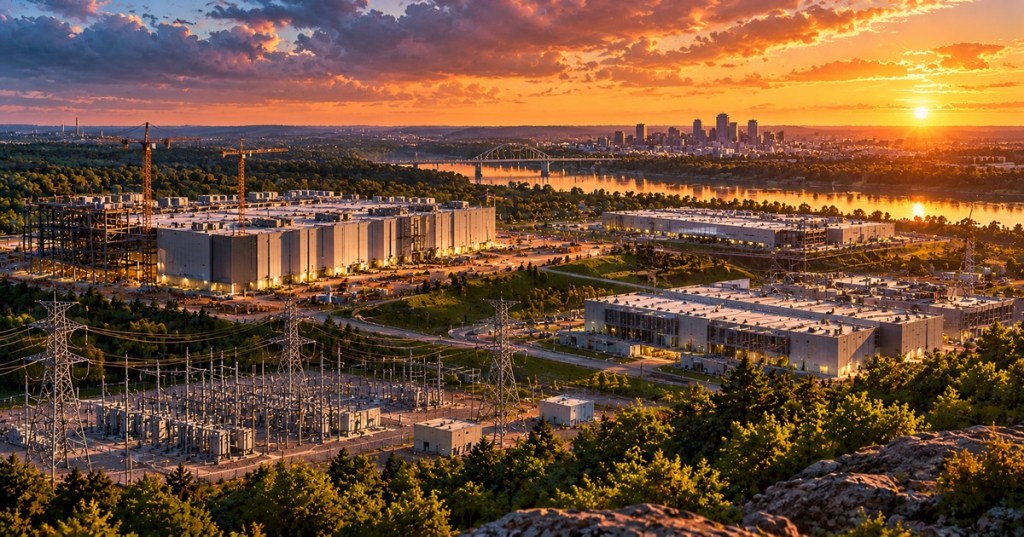
Featured cover artwork: Original cinematic editorial illustration created for this article, depicting a hypothetical Missouri data center construction landscape, not a specific completed facility.


Leave a Reply