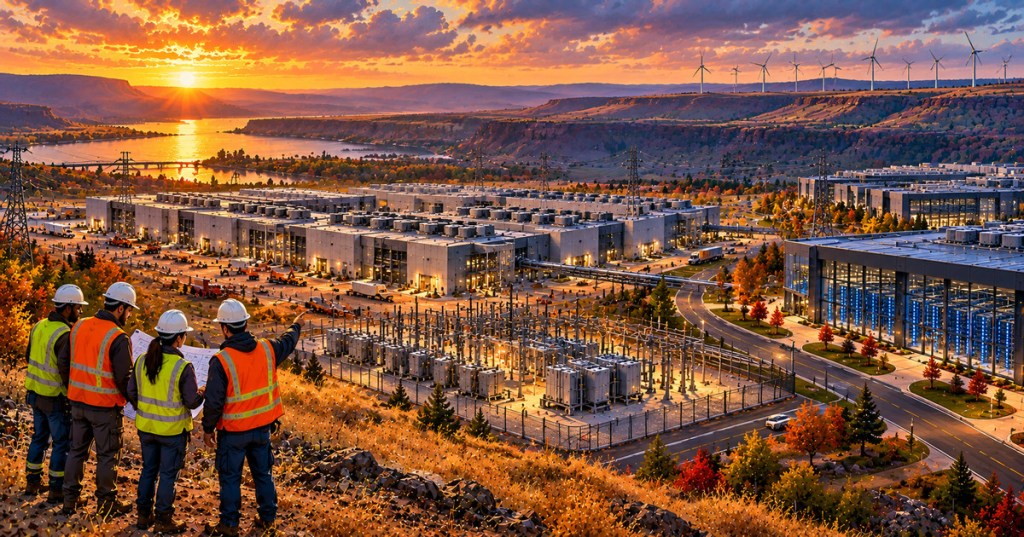
Oregon’s data center expansion is facing a new permitting barrier just as developers pursue some of the largest computing campuses in the Pacific Northwest. Amazon has acquired nearly 1,300 acres near Boardman for a project whose planning documents explored a 1-gigawatt buildout. Rowan Digital Infrastructure is developing a 300-megawatt campus in the same Columbia River corridor. In Hillsboro, STACK Infrastructure already operates part of a 200 MW campus. The scale of each project matters, but so does the difference between a hypothetical design, an owned development site and computing capacity already available to customers.
These are three of Oregon’s largest separately identifiable campuses with documented site-level figures: Amazon’s Threemile/Boardman concept (a hypothetical 1,000 MW envelope), Rowan’s Percheron campus (300 MW planned), and STACK’s POR03 Hillsboro campus (approximately 200 MW total critical capacity, part operating). They are ordered by publicly associated potential capacity, not by electricity being consumed or a final construction commitment. In particular, Amazon says it is not currently planning to build out the full 1 GW concept. Smaller facilities and some established campuses may have more operational computing equipment than these proposals.
3. STACK Infrastructure POR03, Hillsboro — Approximately 200 MW Total Critical Capacity
STACK Infrastructure operates and markets its POR03 campus in Hillsboro as a six-building development on approximately 55 acres with 200 MW of total critical capacity. Crucially, STACK separately identifies about 72 MW of operational critical capacity, 25 MW of near-term availability and 96 MW of expansion capacity. Those descriptions distinguish already operating data halls from space that still depends on construction, fit-out and customer requirements. STACK’s rounded campus headline is not a reading from an electricity meter.
The company’s site breakdown lists three existing 24 MW facilities—POR03A, POR03B and POR03C—followed by a 25 MW POR03D building and a planned combined 96 MW POR03E/F development. These are differentiated phases within one identified campus, not separate 200 MW projects that can be added together. The site is designed for dense cloud, machine-learning and AI workloads with high-capacity networking, redundant electrical equipment and low-water-use cooling strategies.
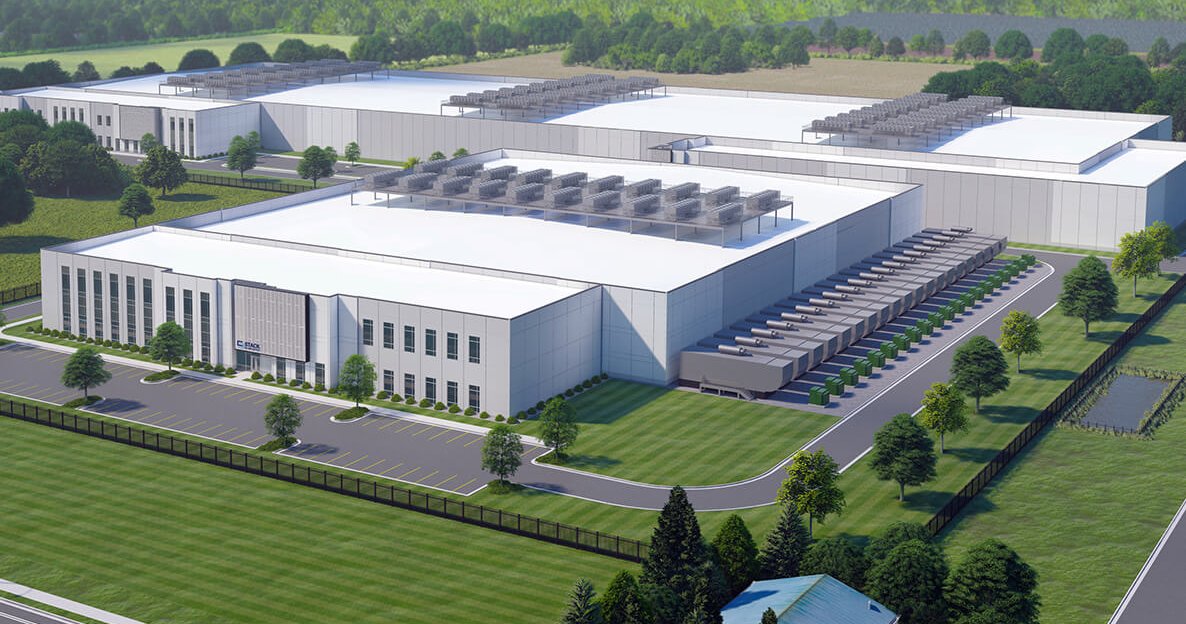
Hillsboro’s location is valuable for a practical reason: data center operators can reach major Pacific Northwest enterprise customers, nearby semiconductor manufacturers and regional fiber connections without locating their entire business in a major downtown. That access makes phased construction and colocation leasing attractive. It does not remove the need to fund substations, transformers, backup power and cooling equipment or to demonstrate compliance with local land-use requirements.
On July 27, 2026, Hillsboro enacted a 120-day moratorium on new applications for certain data center and battery-storage developments. The city said applications filed before the pause can continue through review. The order should not be described as a shutdown of existing STACK operations, or as automatic cancellation of permitted campus phases. Whether any particular future phase needs a fresh application is a question for city records and the developer. The initial moratorium is scheduled through November 24, subject to further council action.
2. Rowan Percheron, Boardman — 300 MW Planned Campus
Rowan Digital Infrastructure describes Percheron as a 300 MW hyperscale campus across about 275 acres in the Columbia River Gorge near Boardman. Rowan began site due diligence in late 2022, secured rezoning approvals in 2023, and closed its land acquisition in 2024. The developer lists a phased buildout targeting completion by 2030. That is a future delivery target, not evidence of 300 MW of energized servers in October 2026.
Percheron represents a different development strategy from an operating colocation building: its owner secures industrial land, develops a utility and permitting pathway, prepares the campus for major cloud customers and then advances construction in stages. Rowan says its property is close to established fiber corridors and power infrastructure. Company marketing has not established a full 300 MW of signed customer IT load, commissioned substations or an independently verified delivery schedule for each phase.
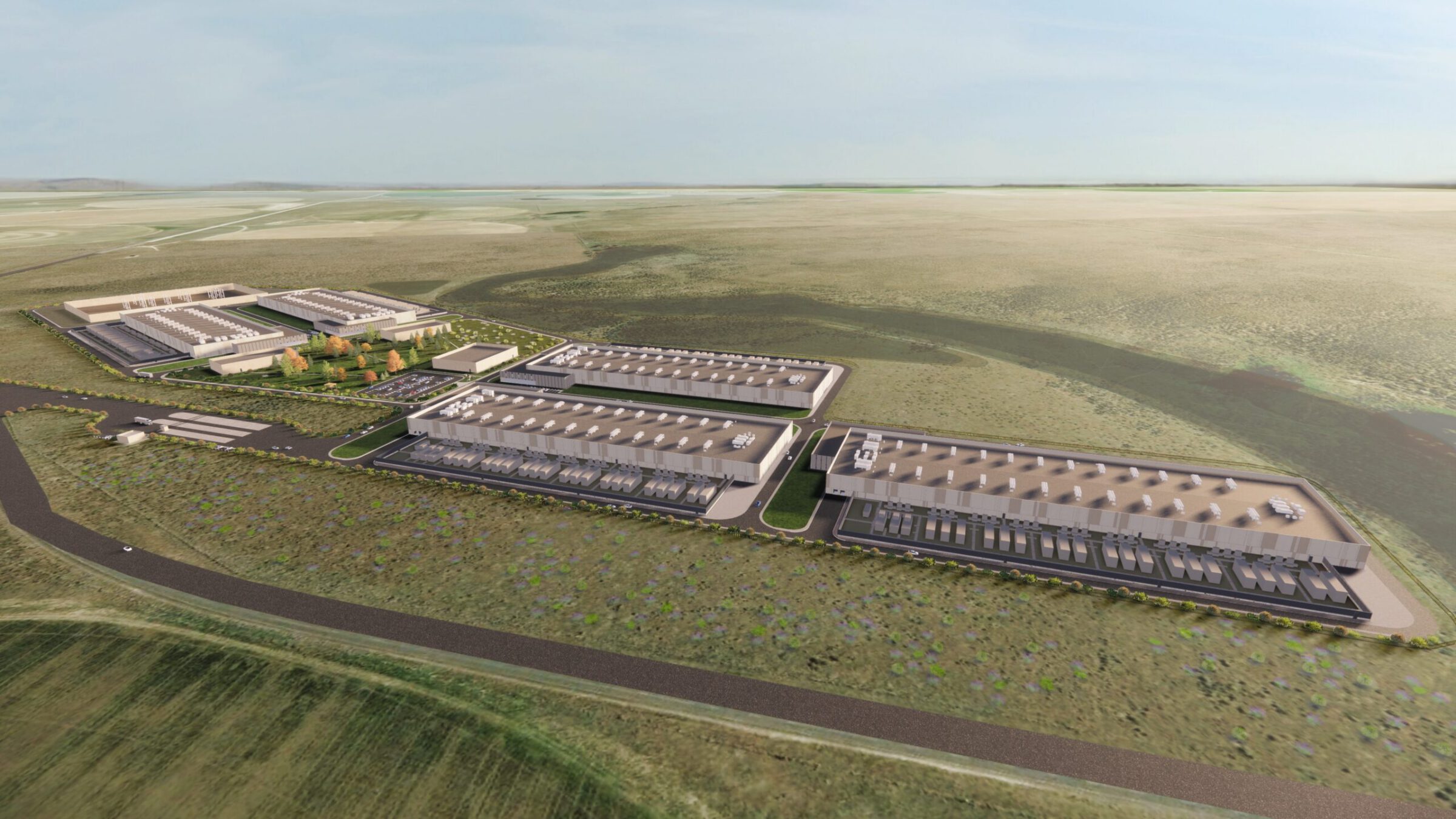
Rowan says it designed the site around land-use constraints, environmental studies and phased power procurement. The City of Boardman’s economic-development representatives have supported the potential reuse of land described as difficult to farm, seeing the project as a route to investment and broader industrial employment. That economic argument is meaningful in a region with existing cloud infrastructure, but construction jobs, tax revenue and long-term operations positions must be measured as they materialize rather than inferred from the full-site capacity figure.
The main unanswered questions concern how electricity would be delivered at each phase, who would pay for transmission improvements, what cooling system and water rights would be required, and whether new state air or water permits will be needed while Oregon’s temporary pause is in effect. A rezoning approval and land closing are tangible development milestones; neither is a utility commitment to serve a live 300 MW load.
1. Amazon Threemile/Boardman — Hypothetical 1,000 MW Campus Envelope
Amazon Web Services acquired roughly 1,300 acres near Boardman in Morrow County for a potential data center development that has drawn attention under the Threemile or exascale label. Earlier planning documents presented a hypothetical 1,000 MW complex with up to 20 buildings and approximately 4 million square feet. The figure gives a sense of the maximum footprint explored in site planning. It is not a confirmed Amazon construction order, an energized grid connection or the official capacity of a funded 20-building phase.
Amazon explicitly narrowed that interpretation in a September 14 interview with Oregon Public Broadcasting. Roger Wehner, its vice president for economic development, told host Dave Miller that the current vision is more like the company’s four-building campus model, potentially repeated incrementally as demand and local needs allow. When asked whether Amazon planned the full 1 GW scale, he said the company’s current vision was not to develop at that scale. That statement is central to the ranking: the 1 GW number ranks first as an explored site envelope, not as Amazon’s committed project capacity.
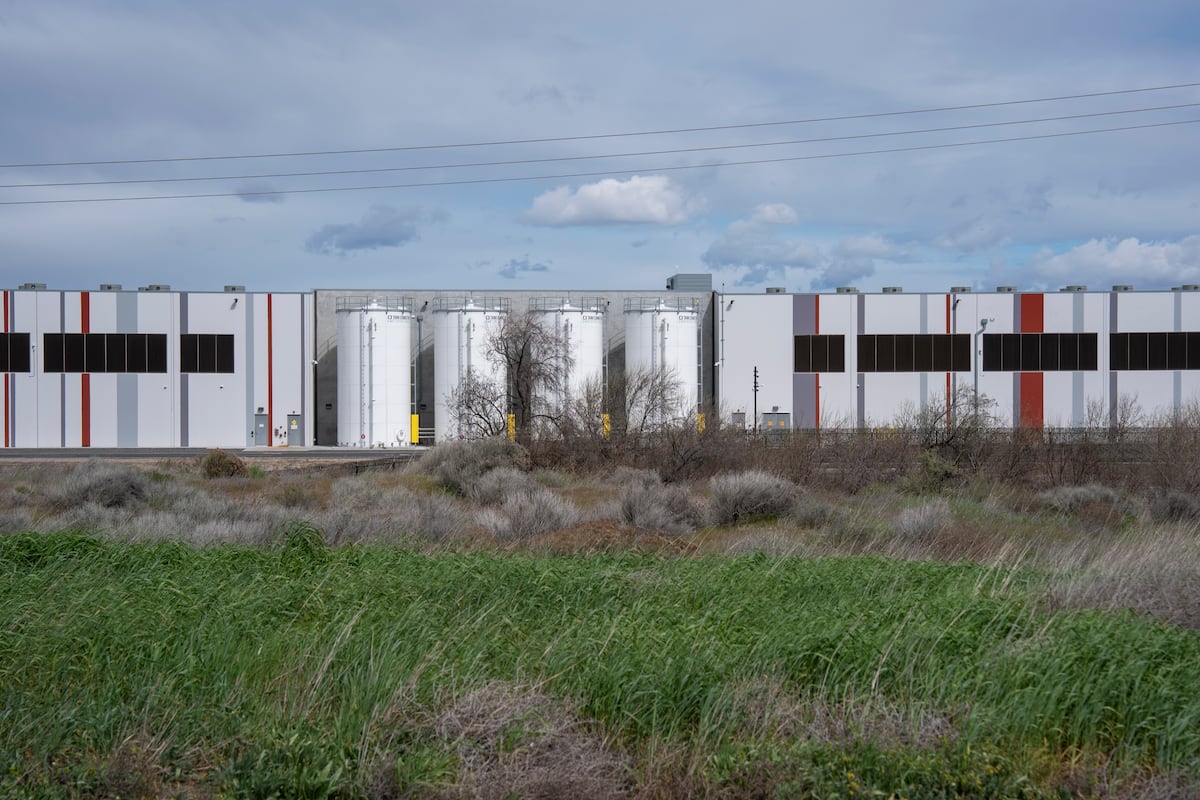
AWS already has a significant operating presence across Morrow and Umatilla counties, which explains its interest in another large site. In the OPB interview, Wehner said Amazon’s 15-year Oregon presence had involved approximately $55 billion in cumulative investment and 2,500 direct employees, while reporting $71.3 million in local property taxes and fees for 2025. Those are company-supplied figures for its broader Oregon footprint, not projected revenue or jobs specifically guaranteed by the new Threemile concept.
One of the clearest unresolved issues is environmental review. OPB reported on October 13 that Oregon’s governor had directed the Department of Environmental Quality to pause processing and issuing air and water permits for new or expanding data centers, potentially affecting Amazon’s Boardman proposal. A company can own private land and still need pollution permits, grid agreements, local development approvals and financing before construction proceeds. Existing Amazon data centers are not automatically shut down by that directive.
Amazon argues that its regional operations support infrastructure upgrades, workforce training, tax receipts and local suppliers. Residents and environmental advocates have raised questions about diesel backup generators, water demand, regional groundwater quality and the power needed for a larger cloud footprint. The appropriate way to judge the proposed site is by the next actual permit, specific four-building design, contracted megawatts and enforceable mitigation measures—not the largest hypothetical number in an early planning study.
Oregon’s 2026 Permit Pause Changes the Development Timeline
Oregon’s policy environment shifted materially this autumn. On September 8, Governor Tina Kotek directed state agencies to stop advancing unapproved transactions for state-owned land associated with data centers until July 1, 2027 unless statewide action changes the policy. That restriction is distinct from the local Hillsboro moratorium and does not itself prohibit every privately owned site from development.
The broader October 9 directive to DEQ, publicly reported October 13, asked regulators to pause new and pending air and water pollution permits for new or expanding data centers through July 1, 2027. Data Center Dynamics reported that DEQ confirmed it had paused issuance while evaluating implementation. The practical effect depends on whether a development phase requires one of the affected approvals, not solely on its published megawatt figure.
Oregon has also changed how utilities price very large electrical loads. The state reported in September that implementation of the 2025 POWER Act raised Portland General Electric’s applicable large-data-center rates by an average of 29% and lowered average residential rates by around 1.3%. Those percentages apply to that utility’s rate framework, not every power provider statewide. They illustrate the attempt to allocate infrastructure costs to the customers causing the new demand.
Why Google, Meta, QTS and Other Oregon Sites Are Not Ranked Above These Plans
Oregon already hosts major operating infrastructure from Google in The Dalles, Meta in Prineville, and multiple Amazon campuses in Eastern Oregon, as well as large QTS facilities around Hillsboro. These sites may have much more live computing activity than Percheron or Threemile. A comparable owner-confirmed single-campus design figure larger than the three ranked envelopes was not established in the reviewed materials, so the ranking does not claim they are smaller operational businesses.
Other substantial but smaller documented projects include Sabey’s Umatilla campus at approximately 150 MW, Rowan’s Meriwether concept near Forest Grove at approximately 150 MW, and a 100 MW Crane Data Centers campus in Forest Grove. They matter to the state’s construction pipeline but are below STACK’s reported total campus capacity on the declared figures. Planned or operating counts also depend on whether a developer reports gross facility electricity, critical server load or data hall capacity.
Oregon’s opportunity is not simply to maximize planned megawatts. It is to turn viable power connections, modern networks and skilled technical labor into dependable computing infrastructure while limiting impacts on water, air quality, farmland and household utility costs. For context, BitcoinVersus.Tech’s Oklahoma, Ohio, North Dakota rankings and data center capacity-planning lesson explain why advertised electrical service, IT capacity and measured operation must remain distinct.
BitcoinVersus.Tech
BitcoinVersus.Tech Editor’s Note: We volunteer daily to ensure the credibility of the information on this platform is Verifiably True. If you would like to support our work and help further secure the integrity of our research initiatives, please scan the QR code below to donate 5,000 sats. For best results, scan the QR code from a laptop or larger screen.
Bitcoin address: 3C9o19EH5HSiwEPyCTmEKzxhNCbo2X6TTb. Confirm the destination address before sending.

BitcoinVersus.tech is not a financial advisor. This media platform reports on financial subjects purely for informational purposes.


Leave a Reply