
Oregon regulators approved a new electricity tariff on November 13, 2026, requiring qualifying large data centers in Pacific Power’s Oregon service territory to cover the costs of supplying their expanding electrical demand. Public Utility Commission Order 26-443 establishes Schedule 401 for new large energy-use facilities capable of consuming 20 megawatts or more. The rules are scheduled to take effect January 1, 2027.
The regulation implements Oregon’s 2025 POWER Act, House Bill 3546. Its central purpose is preventing substations, transmission expansions, energy procurement and financial exposure associated with new data centers from being shifted without justification onto existing residential and commercial electricity customers. The adopted settlement uses individually reviewed power-service agreements rather than a single published flat electricity price for every developer.
Oregon Governor Tina Kotek discusses the POWER Act and energy charges for major data centers, July 2, 2026. Credit: KATU News/YouTube. The interview predates the November 13 Pacific Power tariff approval.
The 20 MW threshold includes available capacity
The qualifying test covers a facility that uses or can use at least 20 MW and primarily provides computing infrastructure, processing, hosting or related services. A facility’s contracted or usable power capacity therefore matters, not merely its average energy consumption. Twenty megawatts describes power at a moment; electricity charges accrue over time in kilowatt-hours.
For new qualifying customers, a standard agreement must last at least 10 years and no more than 30 years, including the ramp-up period. An upfront $25,000 nonrefundable application fee is separate from the engineering studies. Customers generally pay for required network upgrades before construction, although a narrowly defined category of shared, high-voltage transmission upgrades receives proportional cost allocation.
Earlier BitcoinVersus.Tech reporting on Oregon’s largest data center proposals examines capacity at the project level. Projected megawatts are not proof that a campus has connected to the grid or entered a Schedule 401 agreement.
How the utility will bill large campuses
The approved standard approach combines an hourly electricity charge tied to a commission-approved market pricing node, a peak-demand charge, recovery for necessary generation and storage, applicable system surcharges and other customer-specific expenses. Exit fees address infrastructure left behind when a developer terminates service before the contract ends. Exceeding contracted demand may also require approval or trigger curtailment.
A separate one-cent-per-kilowatt-hour community energy benefits charge applies to facilities over 100 MW. Funds are intended for eligible low-income home repairs, energy-efficiency work and distributed-energy resources. The order ties the charge to a corresponding Portland General Electric provision: a final judicial ruling against that provision could temporarily reset the Pacific Power charge to zero. The surcharge is not a universal one-cent increase for every data center or household.
KGW News explains Oregon’s POWER Act and possible effects on data center electricity rates, July 2, 2026. Credit: KGW News/YouTube. The broadcast provides legislative background rather than footage of November’s commission decision.
Ratepayer protection does not eliminate grid constraints
Pacific Power must evaluate whether the new load can be served without undermining Oregon’s electricity-emissions targets and resource adequacy. The order says incremental resources procured specifically for these customers must be non-emitting. Facility design, actual supply contracts and transmission availability remain separate hurdles; paying for a connection does not itself create new deliverable capacity.
Similar pressures appear outside Oregon. Virginia’s 54.9 GW data center power pipeline illustrates the gulf between requested capacity and connected load, while Australia’s proposed 30 MW grid-test threshold focuses on electrical-system performance rather than tariff cost recovery.
The adopted arrangement also leaves questions open. The Data Center Coalition sought greater flexibility and clarity on allowable charges; Amazon sought assurances against resource overbuilding. The commission found the overall settlement in the public interest, but individualized contracts still require regulatory review. The practical outcome will be visible through future filings, connection schedules and actual customer bills.
The financial structure also differs from behind-the-meter data center projects that bring their own generation but still face interconnection and reliability constraints. Oregon’s decision establishes a new cost-allocation framework, not a ban on data center development or a guarantee of lower household rates.
Sources and verification
Primary sources: Oregon Public Utility Commission Order 26-443, entered November 13, 2026 (UE 463); Pacific Power’s November 13 announcement; KTVZ’s same-day independent report; and the linked July KATU and KGW interviews. Monetary amounts, customer thresholds and contract terms come from the commission order. The videos are contextual reporting produced before the approval.
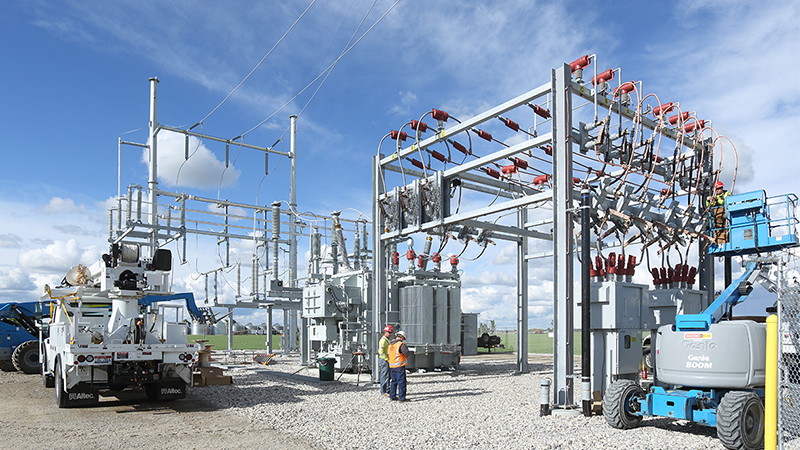
Editor’s Note: Coverage distinguishes the November 13 regulatory approval from the January 1, 2027 implementation date. Schedule 401 applies to a defined class in Pacific Power’s Oregon territory, not every Oregon data center. Contract pricing will depend on individual commission-reviewed agreements, while limited network-upgrade exceptions and potential judicial changes to the community charge are disclosed. The featured 1200 × 630 colored-pencil cover is an original conceptual illustration, not a photograph of a regulated facility or actual utility employees. The in-story substation photograph is authentic Pacific Power material; the July news videos provide historical context, not evidence of a November hearing. Rendering and playback require independent end-user verification.
Support BitcoinVersus.Tech
Optional contributions of 5,000 satoshis support independent research and technology reporting. Scan the original BitcoinVersus.Tech QR code from a second device using a compatible Bitcoin wallet. On the same phone, save the QR image and import it into a wallet supporting saved-image QR scanning, where available. Verify the recipient and amount before authorizing payment.

BitcoinVersus.Tech is volunteer-run and strives to publish independently verified engineering and business reporting. Donations are voluntary; Bitcoin transactions can be irreversible. Verify destination 3C9o19EH5HSiwEPyCTmEKzxhNCbo2X6TTb and 5,000 satoshis before sending. The article is educational journalism, not a legal determination, investment recommendation or electrical design approval.


Leave a Reply