
China’s Tianwan offshore solar development connected a 301.7-megawatt construction section to the grid at full capacity, marking another step toward a planned 2-gigawatt tidal-flat photovoltaic facility in Jiangsu province. The completed section was reported October 30 by TaiyangNews, citing Energy China. It is one section of a multi-stage project, not proof that the entire 2 GW development is generating electricity.
The arrays occupy shallow coastal waters around the warm-water discharge area of the nearby Tianwan nuclear power station in Lianyungang. Instead of using conventional dry land or a fully floating platform, the photovoltaic modules are elevated above tidal flats on fixed supports. Engineers must account for saltwater corrosion, changing water levels, marine construction windows and electricity transmission from the shore.
More than one section is already producing power
The project’s developer reported on October 28 that cumulative grid-connected capacity had exceeded 1 GW, with construction approximately 77% complete. That figure and the newly reported 301.7 MW construction-section milestone describe different scopes of progress and should not simply be added together. The two-gigawatt target remains a future full-project milestone.
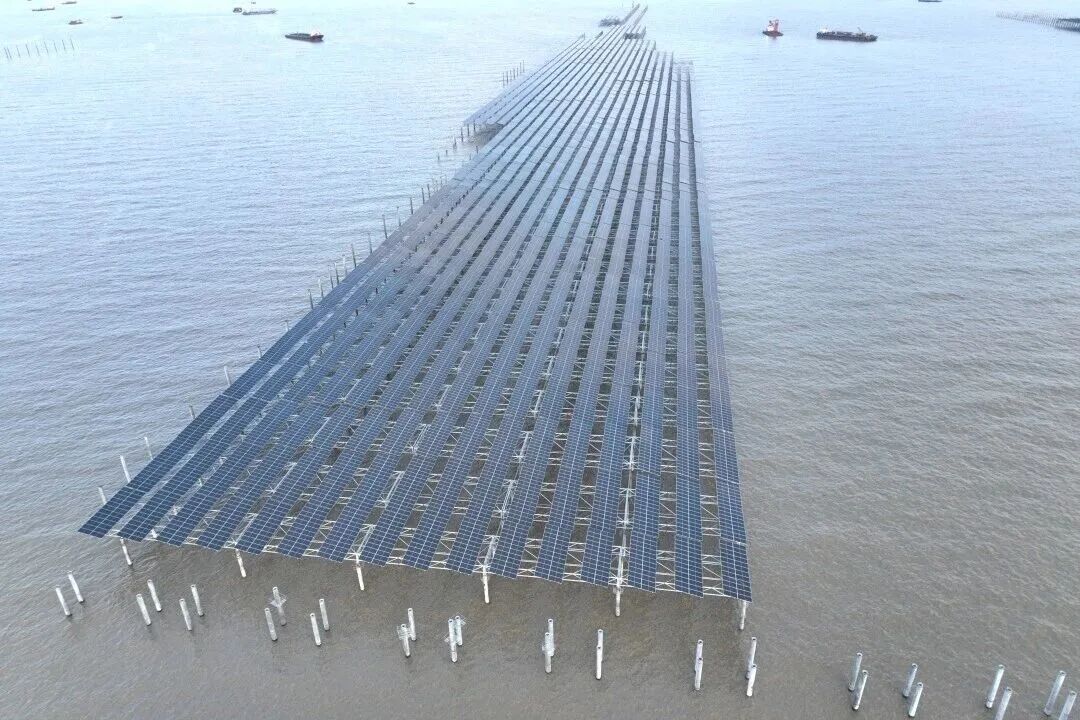
The project’s October progress report describes about 1,867 hectares of sea area, a 220-kilovolt transmission connection and associated energy storage. Its full-build annual generation is projected at approximately 2.234 billion kilowatt-hours, or 2.234 terawatt-hours. Those figures are design forecasts, not energy already produced in 2026.
Tianwan illustrates a land-use strategy in which multiple technologies share existing energy corridors. The nuclear plant provides steady generation, photovoltaic panels add daytime output and batteries help shift supply. The nuclear and solar plants remain distinct generating sources; the arrangement does not mean the solar panels directly convert nuclear waste heat into electricity.
The remaining construction test
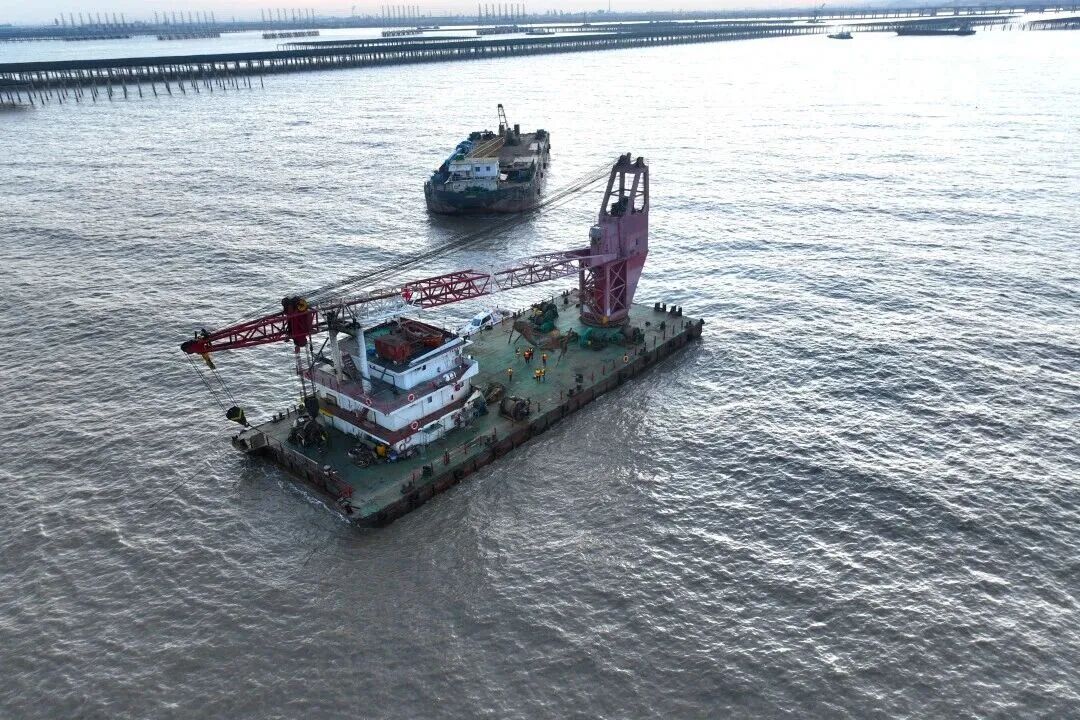
The developer has targeted full grid connection by the end of 2026, but that remains a schedule rather than a completed event. It still faces the practical challenges of final module installation, saltwater-resistant equipment, electrical testing and integrating additional output into the grid. Tianwan’s emerging solar-and-nuclear hub illustrates the same infrastructure constraints that shape new nuclear plant commissioning and the broader power-storage investment cycle. Each milestone must be measured by capacity actually placed in service, not announced nameplate targets.
Editor’s Note: We volunteer daily to ensure the credibility of the information on this platform is Verifiably True. If you would like to support our work and help further secure the integrity of our research initiatives, please scan the QR code below to donate 5,000 sats.

Scan the QR code with a compatible Bitcoin wallet while viewing the article on a laptop or larger screen. Donation address: 3C9o19EH5HSiwEPyCTmEKzxhNCbo2X6TTb.
BitcoinVersus.tech is not a financial advisor. This media platform reports on financial subjects purely for informational purposes.


Leave a Reply