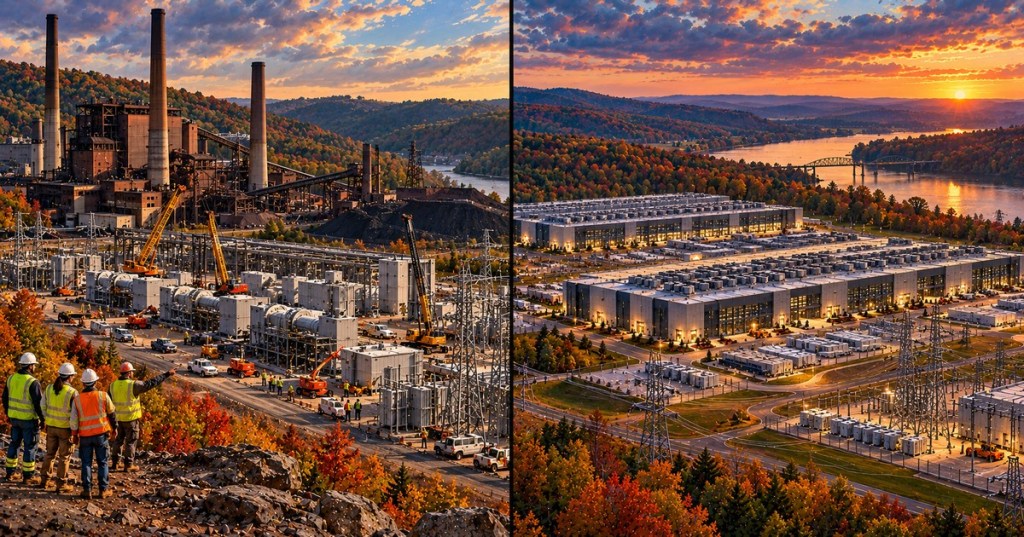
Pennsylvania is turning former coal plants and industrial campuses into some of the nation’s largest proposed AI computing developments. In Indiana County, construction crews are building gas-generation infrastructure at Homer City. In Westmoreland County, TECfusions has put an initial computing installation into service while pursuing a much larger redevelopment. And in Beaver County, Aligned Data Centers broke ground on a two-gigawatt campus beside a retired coal station in September. Each project could reshape the region’s technology economy, but their headline power figures represent different stages and different equipment.
The three largest identifiable, advancing Pennsylvania energy-and-data-center campus developments with documented site-level power figures in this comparison are Homer City Energy Campus (about 4.4–4.5 GW of planned electricity generation), TECfusions Keystone Connect (3 GW planned IT load) and Aligned Project Phoenix (2 GW planned data center campus). This ordering uses advertised development-scale figures, not comparable operating server capacity. The 4.5 GW at Homer City is a proposed power-plant output, and neither the TECfusions nor Aligned full-campus target is currently energized.
3. Aligned Project Phoenix, Shippingport — 2 GW Planned Campus, Construction Started
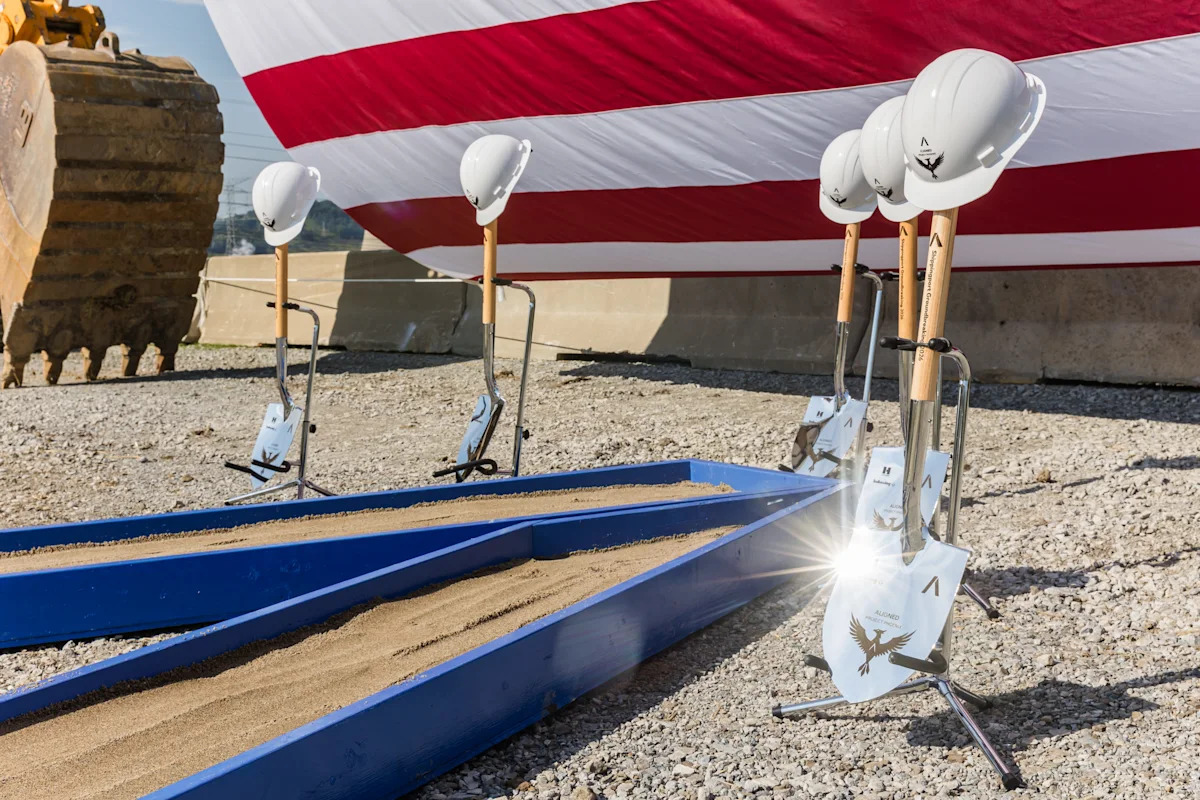
Aligned Data Centers broke ground on Project Phoenix on September 10, 2026, at a former industrial power property near the decommissioned Bruce Mansfield coal plant in Shippingport, Beaver County. The company describes a 2 GW, three-facility campus on a site along the Ohio River, with approximately 2 million square feet of planned data center space. The groundbreaking marks a construction milestone, not the commissioning of 2 GW of servers.
Aligned projects approximately $10 billion in regional economic investment, about 3,000 construction jobs and roughly 640 long-term operating positions. These figures are developer forecasts, not completed spending or a verified head count. Its plans include dedicated energy infrastructure and commitments intended to reduce the potential impact of project-related grid upgrades on other utility customers.
The community has an economic reason to welcome reuse of the former energy-industrial site: substantial construction contracts, demand for power and cooling technicians, and new employment where a major power station once supported regional jobs. Residents have also asked about groundwater, operating noise, natural-gas emissions and electricity costs. WPXI’s September 10 reporting recorded both local support and requests for clearer answers about power and water.
Local land-use approvals and the company’s groundbreaking do not automatically settle every state environmental authorization or electricity-service agreement. Pennsylvania project records describe the campus as under construction, with major future delivery still dependent on permits, financing, the generation system and customer fit-out. The meaningful next milestones are completed buildings, independently verifiable power service and data halls accepted for operation.
2. TECfusions Keystone Connect, Upper Burrell — 3 GW IT Ambition, Small Initial Phase Operating
TECfusions Keystone Connect, built around the former Alcoa research complex in Upper Burrell Township, Westmoreland County, has the largest explicit IT-power development target among the three entries. The company markets approximately 1,395 to 1,400 acres for an eventual 3 GW of IT load, using former research buildings as the foundation for a much larger AI computing campus. Its Keystone Connect project sheet describes 3 GW as the site’s total capability, not capacity already operating.
The more precise status appears in the company’s 2026 investor materials. TECfusions identifies approximately 2 MW of live computing in its initial building, with 10 MW more contracted for buildout. It describes the remaining 3 GW as a phased, five-year pipeline to 2031. That creates a dramatic difference between operating megawatts and the project’s promoted long-range potential. The latter depends on additional construction, electricity supply, customer demand and financing.
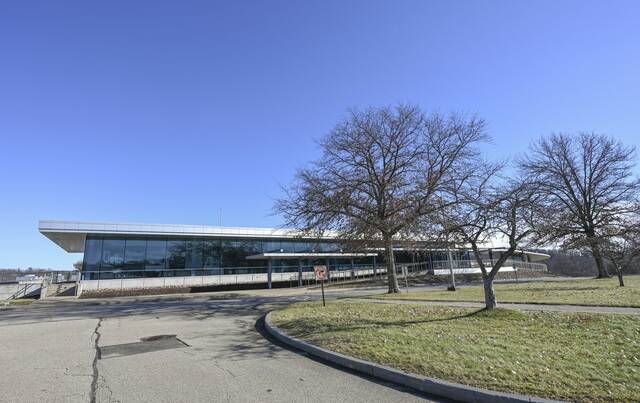
The conversion has faced local challenges. Upper Burrell imposed a 180-day pause on new data center development in May 2026, while previously filed work on the existing Building J continued through a separate approval process. Supervisors approved a land-development plan for that building on August 5, but residents and an environmental group appealed. The September permitting record describes the appeal and proposed township restrictions on noise, setbacks and self-supplied electricity. An approved building phase should not be treated as permission for a 3 GW campus.
TECfusions argues that adapting unused industrial facilities can accelerate deployment, preserve existing land and attract new computing customers. Opponents contend that the power and physical consequences of an enormous expansion need closer review, including generator emissions, noise and effects on nearby homes. The key evidence will be the outcome of legal challenges, financing and signed service agreements, and the amount of IT power that actually passes commissioning tests.
1. Homer City Energy Campus, Indiana County — 4.4–4.5 GW Planned Power Generation
The largest overall electrical development tied to a Pennsylvania data center campus is Homer City Energy Campus, a more than 3,200-acre redevelopment of the former Homer City coal-fired generating station. Developer Homer City Redevelopment and construction contractor Kiewit plan a large new natural-gas power system, with seven GE Vernova gas turbines intended to supply future AI and high-performance computing facilities as well as the wider grid.
The project was announced in April 2025 with up to 4.5 GW of generating capacity; subsequent air-permit and engineering descriptions use around 4.4 GW. These numbers describe intended gas-fired electricity production, not 4.5 GW of computers or guaranteed IT load. Developer material says some of the electricity could be exported to the grid. The future data center’s own load, tenants and construction schedule require separate evidence.
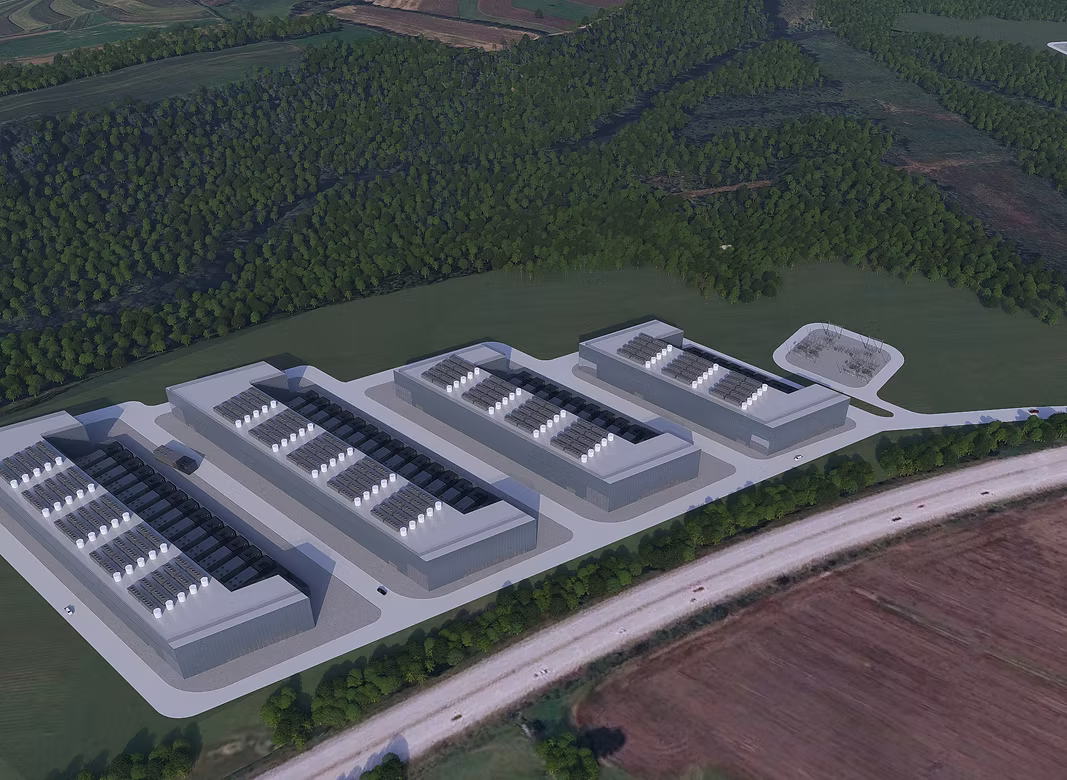
Physical work on the power-campus redevelopment is substantial. The developer reported more than 1,800 construction tradespeople in early September 2026, while the Pennsylvania Department of Environmental Protection’s air permit approval, announced in November 2025, authorized construction and initial operation of the proposed generating facility under defined conditions. The approval remains subject to legal challenges. First electricity production is targeted for 2027, but neither commercial gas generation nor a hyperscale data center was confirmed operating at the announced scale in October 2026.
Amazon has discussed a separate data center proposal at the site, but the company said in August that it had no definitive agreement with Homer City Redevelopment. Public records later described an AWS land-development submission and further planning review. An AWS filing is evidence of a concrete prospective user, not proof that Amazon has signed for all 4.5 GW or that the data center itself has received every necessary approval.
Kevin Keys’ May 2026 report examines the Homer City coal-to-computing redevelopment, its planned power plant and environmental questions.
The project could reuse power lines, substations and industrial property developed over decades of coal generation. Construction also offers substantial work to regional trades, and a future campus may bring technical positions, tax receipts and infrastructure spending. The environmental trade-offs are serious: additional natural-gas combustion creates air pollution and carbon dioxide, while data centers need cooling, water management, backup systems and credible power-delivery contracts. September reporting on the permit appeal describes both construction progress and environmental opposition.
Homer City therefore ranks first for proposed power infrastructure associated with a data center development. It does not rank first for independently verified server power already delivered. That distinction should remain until the project reports finalized data center plans and energized IT capacity.
Other Large Pennsylvania Developments
Several major projects warrant attention but cannot all fit into a three-place comparison. Pennsylvania Digital I (PAX-1) near Carlisle is a three-campus, approximately 700-acre development with 1.35 GW of planned initial electrical service and a stated possibility of expansion toward 1.8 GW. As of October 2026, the project had local approvals and physical construction activity, while legal challenges and environmental permit applications remained unresolved. The developer’s electrical plan describes three substations rated at 450 MW each; their combined design rating is not proof of live load.
Amazon’s existing Susquehanna-related development in Salem Township also has a publicly reported multi-hundred-megawatt expansion envelope and sits near major nuclear-power infrastructure. Project trackers quote varying figures depending on whether they refer to a single computing building, the site’s gross service arrangement or the adjacent power-station capacity. The nuclear station’s output is not automatically the data center’s IT load.
Other filings describe a potential 2 GW Slate Belt campus in Northampton County and additional large projects around Archbald, Limerick, and the Pittsburgh region. Some have no final tenants or permits; others are facing appeals, zoning refusals or public opposition. A queue request, property acquisition or developer projection can justify reporting about a project, but it cannot substitute for confirmed operating capacity.
What Pennsylvania Needs to Track
Pennsylvania’s established industrial and energy network provides real advantages for AI data centers: experienced electrical workers, brownfield parcels, access to regional transmission and proximity to major East Coast customers. Reuse of retired coal infrastructure may be preferable to disturbing new land, and long-term investment could bring important local revenue. But the benefits must be tested against enforceable commitments for air quality, power prices, water, noise and employment.
The strongest future comparison will separate fuel-burning power plants, gross electrical service, critical IT capacity, capacity under construction and megawatts actually energized. Homer City, TECfusions and Project Phoenix are different types of progress, not interchangeable operating facilities. See BitcoinVersus.Tech’s Oregon ranking, Ohio ranking, New York ranking and data center capacity-planning lesson for comparisons using the same distinctions.
BitcoinVersus.Tech
BitcoinVersus.Tech Editor’s Note: We volunteer daily to ensure the credibility of the information on this platform is Verifiably True. If you would like to support our work and help further secure the integrity of our research initiatives, please scan the QR code below to donate 5,000 sats. For best results, scan the QR code from a laptop or larger screen.
Bitcoin address: 3C9o19EH5HSiwEPyCTmEKzxhNCbo2X6TTb. Confirm the destination address before sending.

BitcoinVersus.tech is not a financial advisor. This media platform reports on financial subjects purely for informational purposes.


Leave a Reply