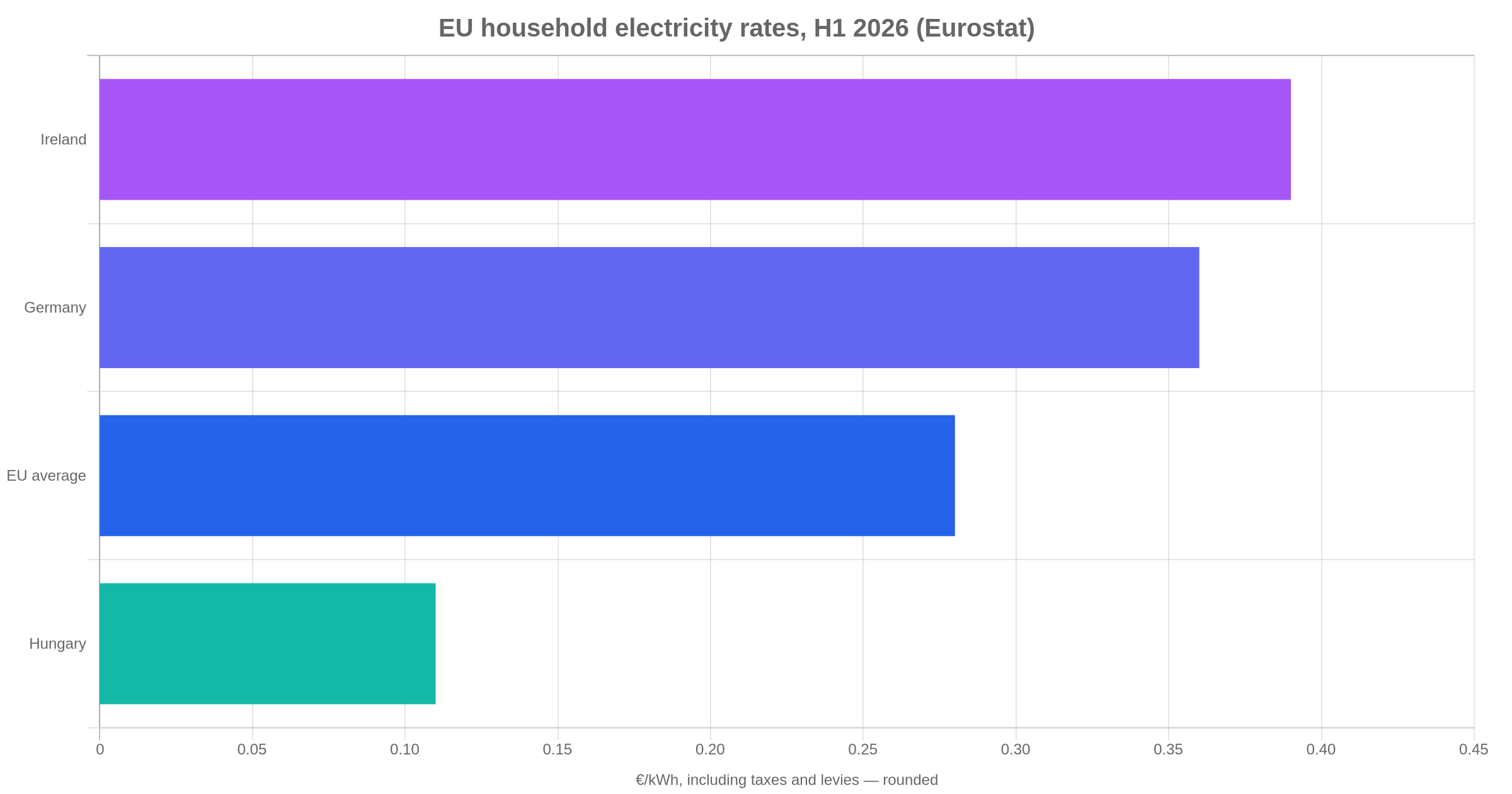
Eurostat reported on October 30, 2026, that average European Union household electricity prices fell 2.2% to approximately €0.28 per kilowatt-hour in the first half of 2026. That modest decline still leaves a costly proposition for anyone considering a continuously operating Bitcoin miner at home. The figures describe January–June household prices, not tariffs newly offered in November.
Prices differ considerably: Ireland averaged about €0.39/kWh, Germany €0.36 and Hungary €0.11. All are rounded and include applicable household taxes and levies. They are country-level statistical averages, not quotes for industrial sites or specific customers.
The 3 kW Bitcoin Mining Test
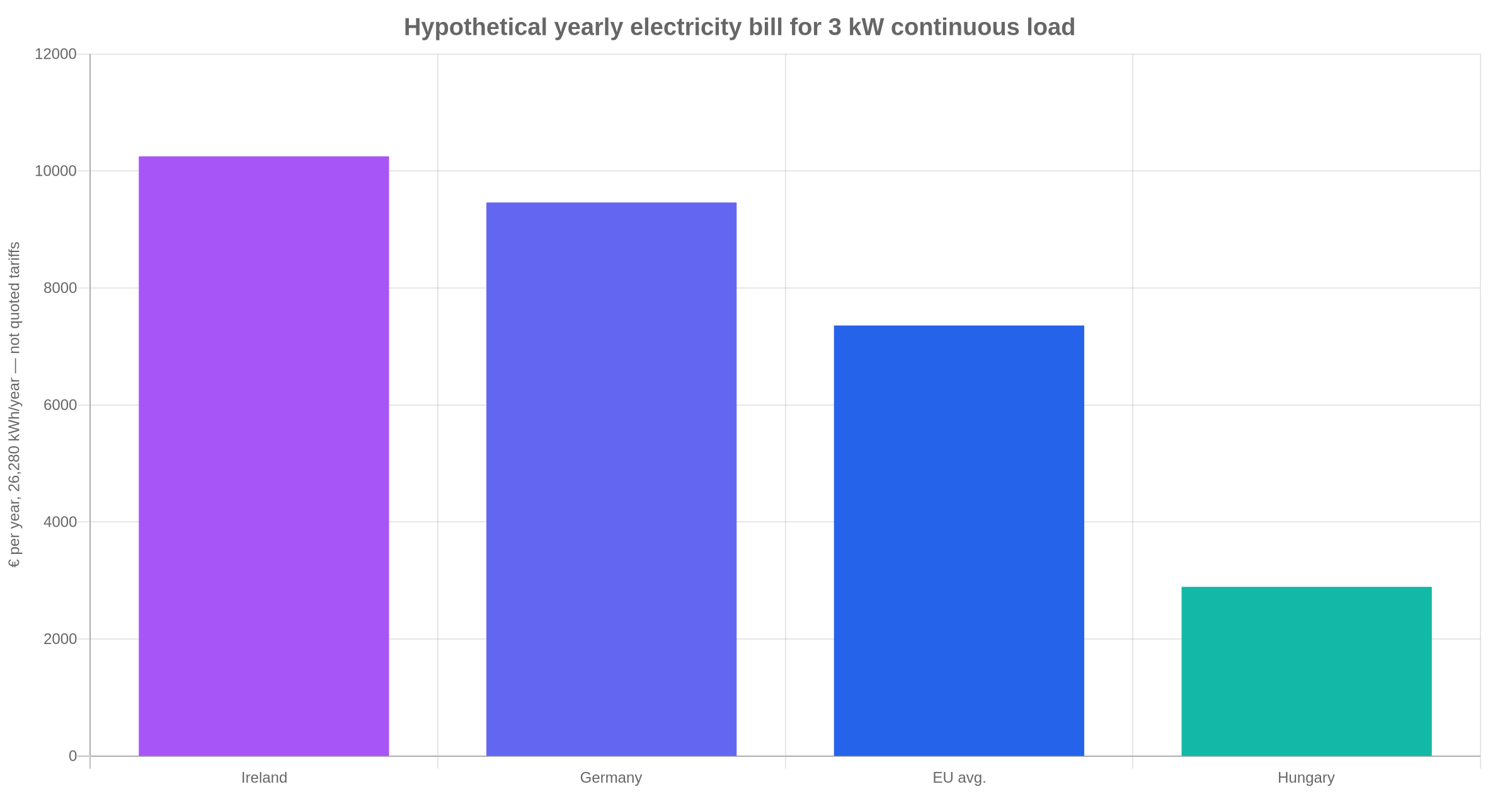
Consider a hypothetical 3-kilowatt ASIC running continuously. At 24 hours a day for 365 days, it consumes 26,280 kWh per year. At the EU’s rounded average of €0.28/kWh, electricity alone would cost roughly €7,358 annually; at Ireland’s €0.39, about €10,249. A cheaper tariff matters more than a small percentage change in coin rewards.
But this is a scenario, not a household bill prediction. Eurostat’s standard household comparison band uses roughly 2,500–4,999 kWh yearly, far below the modeled miner’s consumption. A real buyer could face different energy blocks, demand charges, taxes, contractual limits, ventilation costs and breaker requirements.
Measure the Wall, Not Just the ASIC Label
An ASIC’s joules-per-terahash rating describes miner energy efficiency, but a home installation must also budget airflow, networking and losses. Our BITMAIN hydro efficiency comparison models the same principle at equal hashrate. Measured input power, runtime and the actual rate schedule are needed before estimating operating cost.
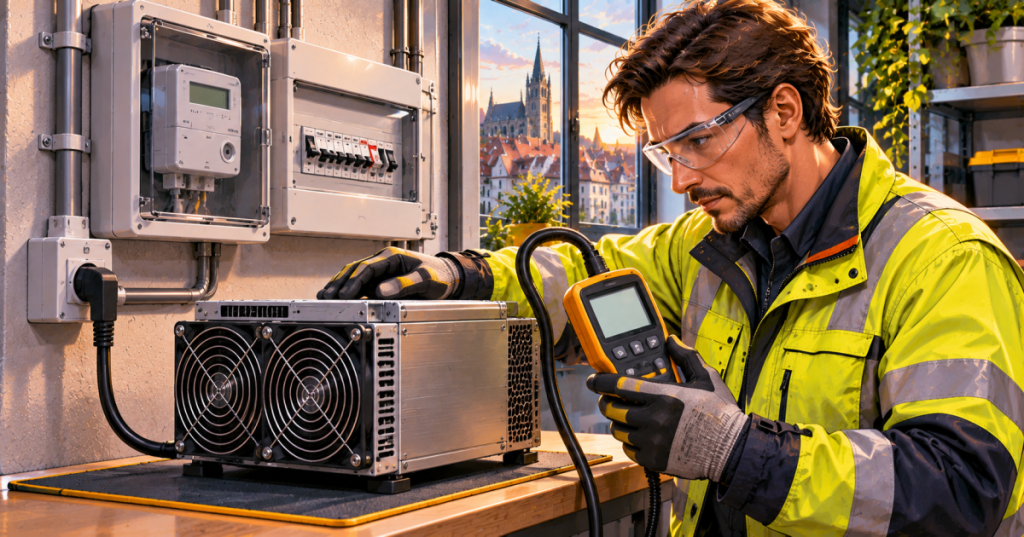
The Hobbyist Miner’s 2022 power-meter demonstration explains why measuring real wall consumption matters. This is historical education, not the October 2026 Eurostat announcement. Fixed mains wiring should be handled by a qualified electrician.
Mining heat can sometimes replace useful household heating, as shown in our heat-reuse report. That does not make electricity free, especially during warm months. Customers should also understand demand charges and compare revenues using hashprice rather than nameplate hashrate alone.
Eurostat’s next release will update the statistical averages. For miners, the immediate next step is comparing a real contract against measured power and any utility restrictions—not treating €0.28/kWh as a guaranteed available price.
BitcoinVersus.Tech
BitcoinVersus.Tech Editor’s Note: We volunteer daily to ensure the credibility of the information on this platform is Verifiably True. If you would like to support our work and help further secure the integrity of our research initiatives, please scan the QR code below to donate 5,000 sats. For best results, scan the QR code from a laptop or larger screen.

Bitcoin address: 3C9o19EH5HSiwEPyCTmEKzxhNCbo2X6TTb. On a phone, open the QR image on another screen or copy and verify the address in your wallet before sending.
BitcoinVersus.tech is not a financial advisor. This media platform reports on financial subjects purely for informational purposes.


Leave a Reply