Nikola Tesla told a journalist in 1935 that he once expected to live 150 years but had revised his prediction to 135 after stopping alcohol consumption during U.S. Prohibition. The extraordinary estimate appeared in an interview titled “Nikola Tesla’s Youth and Strength at 78”, published in the March 1935 issue of Physical Culture. Tesla ultimately died on January 7, 1943, at age 86.
The interview is a useful historical document, not evidence that Tesla had discovered a reliable method of extending human life. His calculations were personal expectations based on his own health theories, and the claimed effects of electricity, alcohol and diet were not established through controlled longevity studies.
Why Tesla reduced his estimate
Interviewed by George F. Corners, Tesla said he had stopped drinking to obey Prohibition, the federal ban on alcoholic beverages that ran from 1920 to 1933. In the March 1935 article, he maintained that alcohol had sometimes helped him relieve stress and claimed the change reduced his lifespan prediction by 15 years.
Tesla’s own words were explicit: “I had previously expected to live 150 years.” He went on to describe a new 135-year expectation. The claim was a prediction, not a measured medical outcome, and should not be interpreted as evidence that drinking alcohol improves survival. Modern evidence does not support using alcohol as a longevity treatment.
The inventor also described a routine of walking long distances, eating two meals daily and attempting to regulate the body as though it were a machine. Those remarks reflected his personal habits and the period’s popular physical-culture ideas, some of which are now considered medically unsupported.
The electrical bath was another claim
Tesla told Corners that he believed high-frequency electricity could be used for a “waterless bath,” involving high electric potential applied to the body. He asserted that the process could cleanse, stimulate and rejuvenate a person. He also said he was working on equipment that might eventually make the procedure safe and economical for ordinary users.
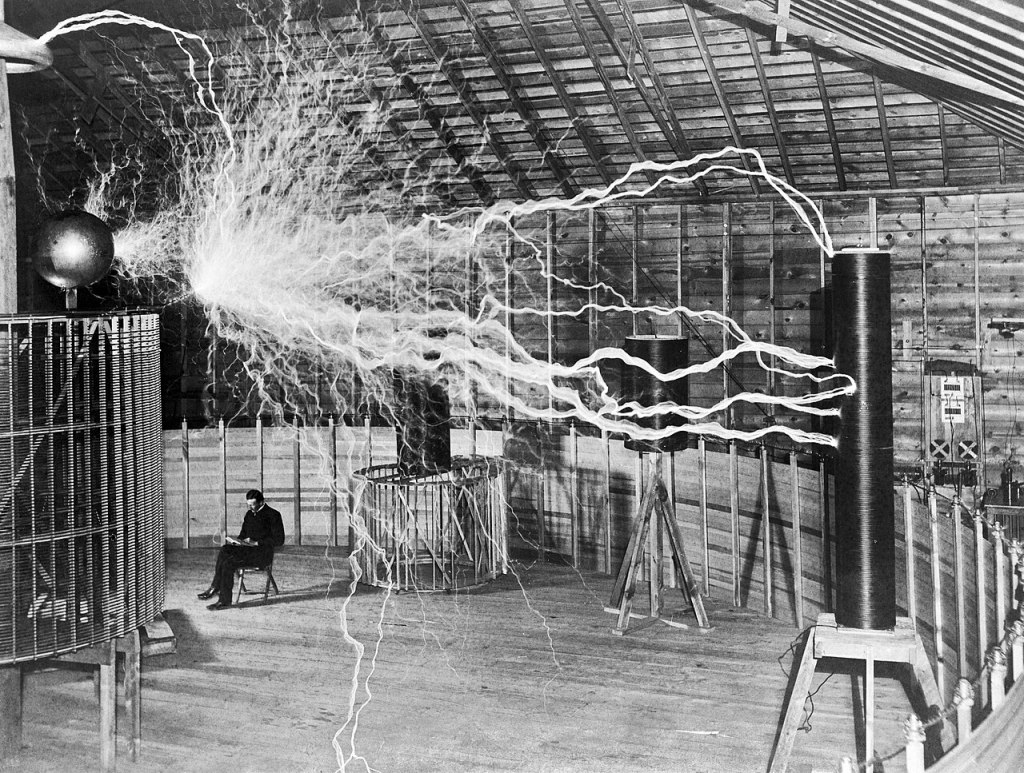
One famous photograph shows Tesla calmly seated beneath spectacular electrical arcs. Its image-making process matters. According to the archival description, photographer Dickenson V. Alley created the scene with a double exposure: the sparks and Tesla were photographed separately. It is not evidence that he safely sat next to active discharges or that high voltage prolonged his life.
Safety: High-voltage electricity can cause lethal shock, cardiac injury and serious burns. Tesla’s historical assertions provide no justification for applying high voltage to the body or attempting to recreate his supposed therapeutic apparatus.
Engineering legacy versus longevity beliefs
Tesla made important contributions to alternating-current motors, power systems and electrical experimentation. BitcoinVersus.Tech explains related engineering principles in AC versus DC electricity, alternating-current fundamentals, transformer turns ratios and isolation, and high-voltage protection systems.
Those technical achievements do not confer medical authority on every health-related claim Tesla made. His 1935 interview is best understood as a revealing portrait of how a pioneering electrical engineer thought about aging, personal discipline and speculative biological effects.
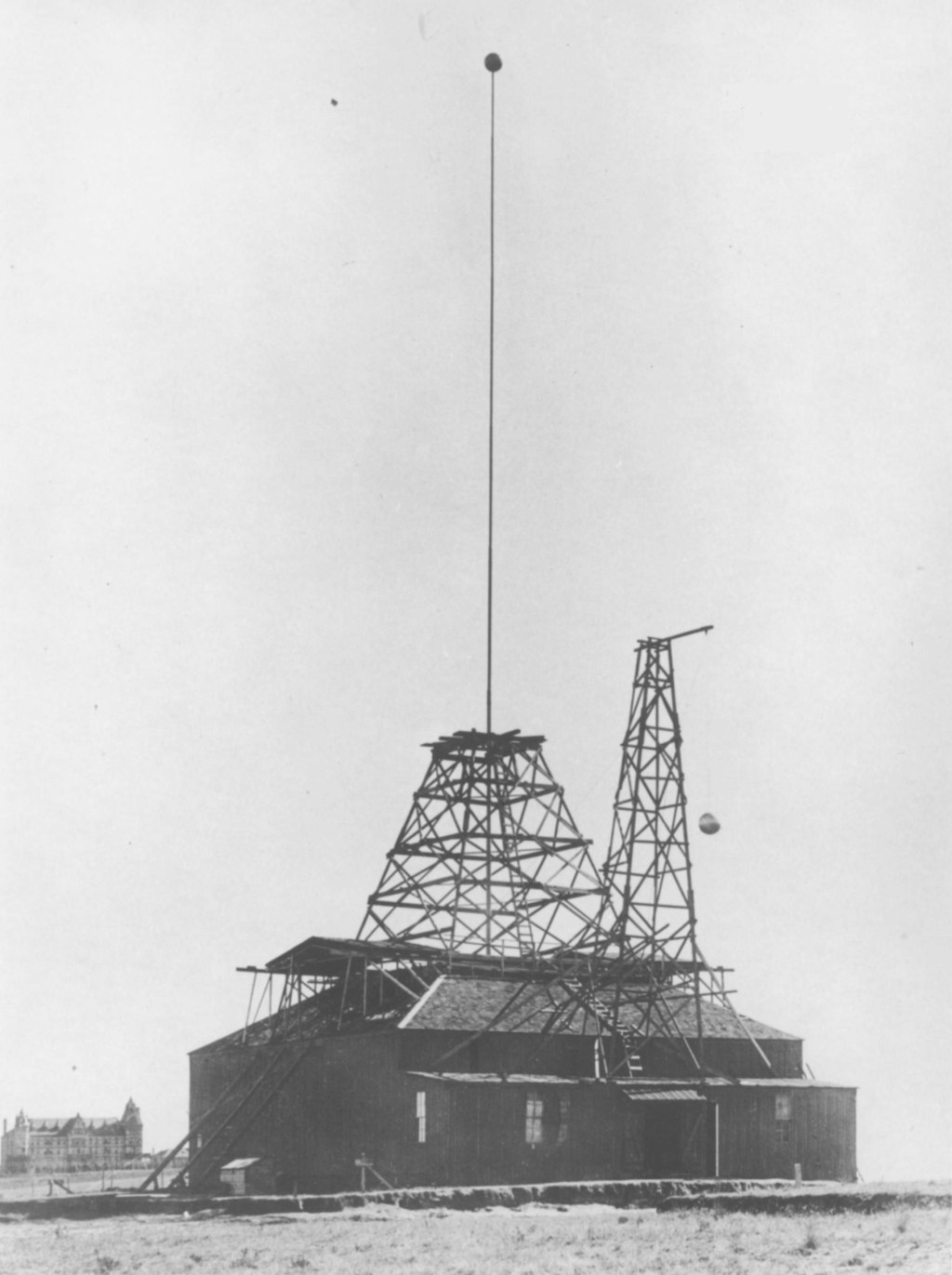
Historical sources: Physical Culture, March 1935; 1899 laboratory photograph description; laboratory exterior image record.
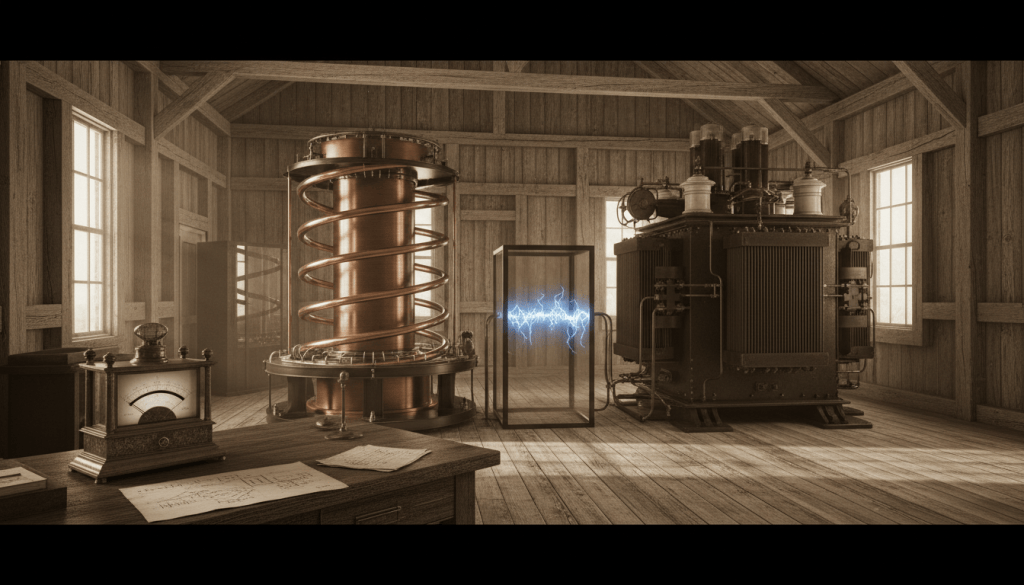
Editor’s Note: The quoted lifespan estimates reflect Tesla’s recorded 1935 statements, not medically verified predictions. The featured cover is a modern editorial reconstruction; the two in-body images are historical archival photographs.
We volunteer daily to improve the credibility of the information on this platform. If you would like to support the research, please donate here: 3C9o19EH5HSiwEPyCTmEKzxhNCbo2X6TTb
BitcoinVersus.tech is not a financial advisor. This media platform reports on technical and financial subjects purely for informational purposes.


Leave a Reply