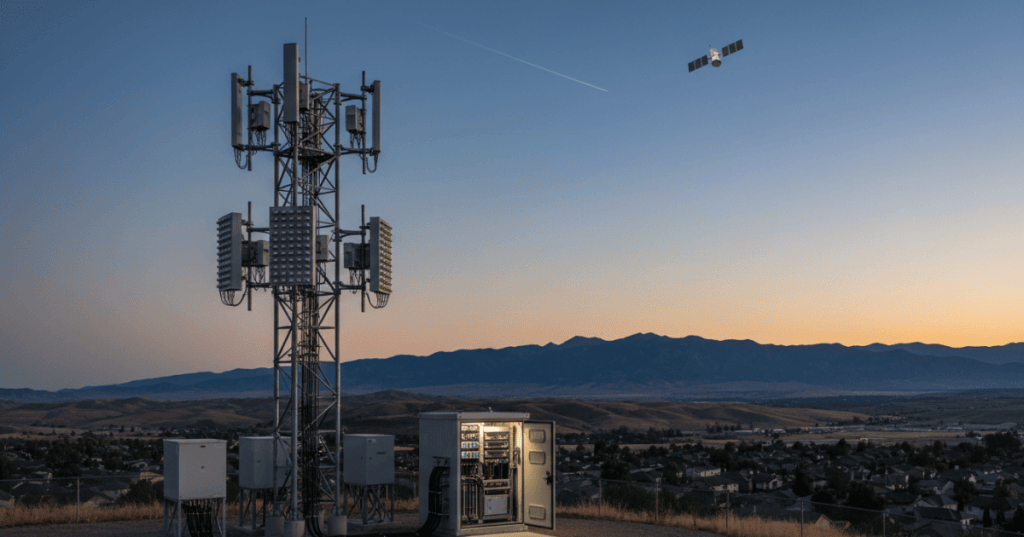
Qualcomm Technologies and SpaceX announced a multiyear agreement on November 4, 2026, to build the terrestrial 5G infrastructure for Starlink Mobile’s planned nationwide U.S. wireless network. Qualcomm will supply Dragonwing radio and baseband platforms, along with software, to support tens of thousands of cell sites as deployment begins in 2027. Financial terms were not disclosed.
The partnership moves Starlink Mobile beyond a satellite-only connectivity proposition. SpaceX intends to combine conventional ground-based cellular infrastructure with direct-to-cell satellite coverage, using towers for dense capacity and orbital links to extend service where ground networks cannot easily reach. BitcoinVersus.Tech previously reported on Starlink’s ambitions to become a major U.S. phone carrier.
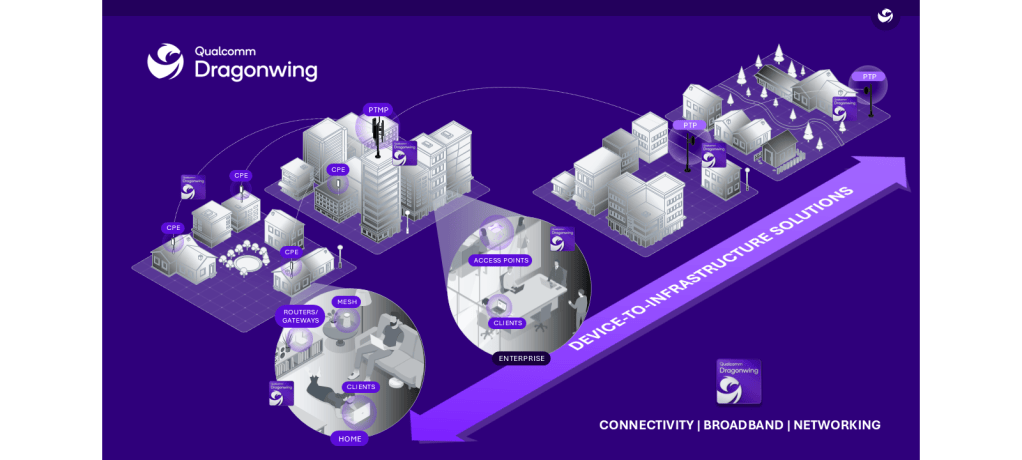
64T64R Massive MIMO radio architecture
Qualcomm’s official November 4 announcement names the Dragonwing QRU100 radio-unit platform and QDU100 distributed-unit processor as central components. Its QRU100 product documentation specifies radio features and compatibility. The proposed network uses Massive MIMO with 64 transmit and 64 receive paths, referred to as 64T64R, to improve how base stations manage capacity and radio resources.
The radio unit handles antenna-side signal processing while the distributed unit performs time-sensitive Layer 1 baseband operations. Qualcomm says the combination is designed to increase spectral efficiency and delivered performance per watt, important constraints when scaling a national network with numerous sites and substantial electrical loads.
The announced architecture does not prove that all future cell sites are already constructed or operational. Qualcomm and SpaceX have not published a final site inventory, coverage map, procurement cost, spectrum-by-market schedule, or independently measured network performance.
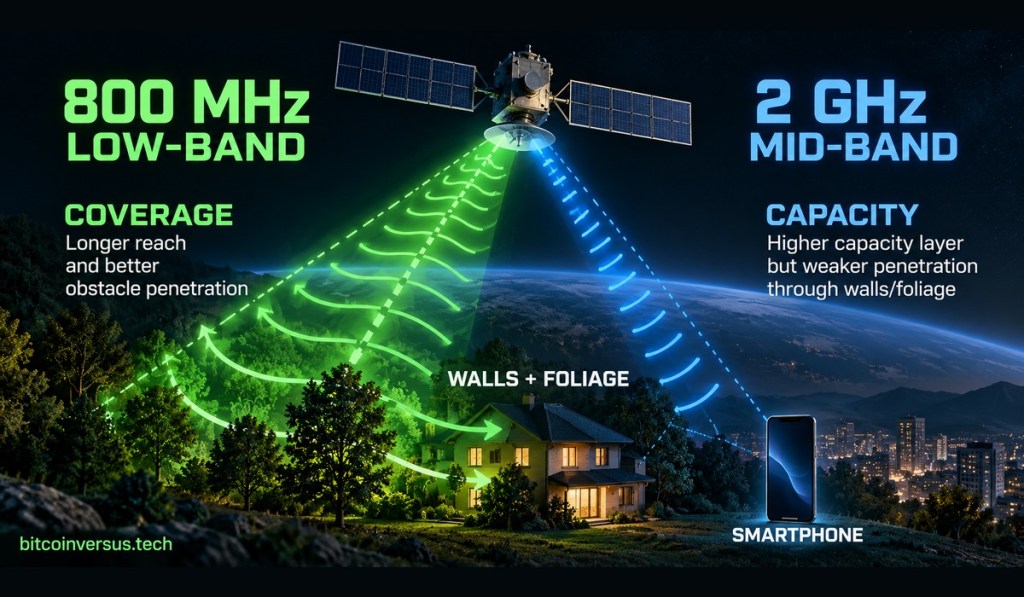
Terrestrial towers and satellites have different jobs
Low-band spectrum helps signals reach farther and penetrate obstacles, but each cell’s capacity depends on channel bandwidth, antenna configuration and interference. Higher-capacity terrestrial radios can serve densely populated areas more efficiently than a satellite-only architecture. The site’s earlier report on Starlink Mobile’s 800 MHz spectrum strategy explored that trade-off.
Deployment scale is a major business challenge. Another BitcoinVersus.Tech report examined a reported 80,000-site wireless strategy tied to SpaceX. That earlier scenario was reporting about a possible broader deployment footprint, not the final contractually established number of Qualcomm-powered sites.
Qualcomm’s new equipment also builds upon its broader interest in fixed wireless access and satellite-connected broadband. An earlier Dragonwing 5G Advanced and Wi-Fi 8 platform announcement illustrates adjacent product categories, but the mobile network deal concerns different cellular base-station components.
For SpaceX, building towers adds permitting, construction, backhaul, power, operating-cost and customer-acquisition challenges associated with traditional national carriers. For Qualcomm, a large deployment could strengthen its infrastructure business, although future revenue and profits cannot be established from an undisclosed contract value.
The first measurable milestones are physical site deployment in 2027, verified radio performance, spectrum availability, subscriber launches and how well satellite handoff works. Qualcomm described the 5G project as a possible foundation for AI-native 6G; the 6G reference is a longer-term technology direction, not a statement that SpaceX is deploying commercial 6G today.
Sources: Qualcomm, November 4, 2026; Reuters, November 4, 2026.
Editor’s Note: The companies announced a multiyear terrestrial 5G infrastructure agreement, with deployment planned to start in 2027. Contract value, live coverage and achieved cell-site performance were not disclosed. In-body infrastructure images are archive illustrations.

We volunteer daily to improve the credibility of the information on this platform. If you would like to support the research, please donate here: 3C9o19EH5HSiwEPyCTmEKzxhNCbo2X6TTb
BitcoinVersus.tech is not a financial advisor. This media platform reports on technical and financial subjects purely for informational purposes.


Leave a Reply