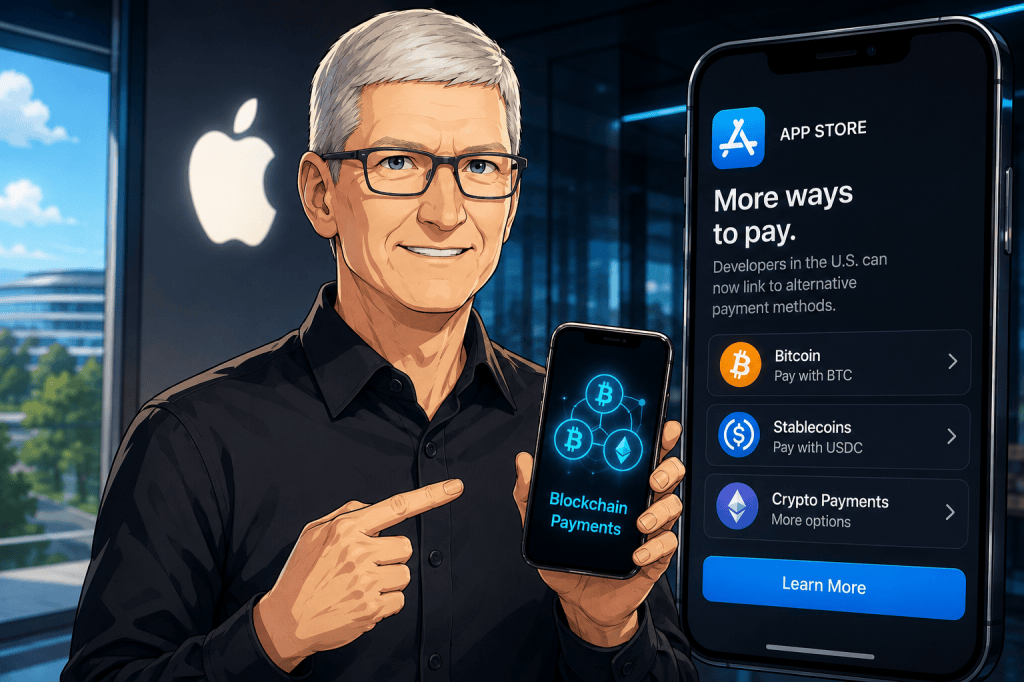
Apple’s evolving App Store payment rules could become an important development for cryptocurrency payments across the iPhone ecosystem. Developers distributing apps through the United States App Store can now include buttons, external links and other calls to action directing users toward alternative payment methods, following changes Apple made to comply with a U.S. court ruling.
For cryptocurrency companies, the change lowers one of the historical barriers between mobile applications and external blockchain-based payment infrastructure. An iOS application could potentially direct users toward a developer-controlled checkout capable of accepting Bitcoin, stablecoins or other supported digital assets, depending on the service, its regulatory status and the transaction being performed. This is different from Apple itself accepting Bitcoin through the App Store or converting Apple’s In-App Purchase system into a cryptocurrency payment processor.
The distinction matters. Apple’s current guidelines still state that apps generally must use In-App Purchase to unlock digital functionality, and specifically identify cryptocurrencies and cryptocurrency wallets as mechanisms that cannot simply replace Apple’s system for those unlocks. Apple separately permits crypto wallets and licensed cryptocurrency exchanges under its cryptocurrency guidelines.
Why the Change Matters for Crypto
The bigger story is the gradual separation of the iOS application layer from Apple-controlled payment rails. Developers in the U.S. have more freedom to direct customers toward purchasing systems outside Apple’s In-App Purchase infrastructure. That potentially gives fintech and Web3 developers more flexibility to integrate blockchain settlement, stablecoin checkout systems and cryptocurrency payment processors into their broader applications.
For stablecoins in particular, this could become significant. Assets such as USDC can function more like internet-native settlement infrastructure than speculative tokens, making them attractive for subscriptions, commerce, cross-border payments and developer platforms. Bitcoin and Lightning-based payment services could potentially benefit from the same broader trend toward alternative payment rails.
Apple already permits cryptocurrency wallet applications to facilitate virtual-currency storage and allows approved, properly licensed exchanges to facilitate crypto transactions. The changing external-payment rules therefore add another layer to an iOS crypto ecosystem that already includes major exchanges and self-custody wallets.
Apple Is Not Abandoning Its Payment Rules
The development should not be interpreted as Apple giving every application unrestricted permission to sell digital content directly for cryptocurrency. Apple continues to maintain detailed App Review requirements governing digital goods, cryptocurrency applications, exchanges, wallets and in-app functionality.
Instead, the shift could be viewed as another step toward a more open mobile payments architecture. If alternative checkout systems continue expanding across iOS, cryptocurrency networks may increasingly compete alongside credit cards, bank transfers, Apple Pay and other payment methods as infrastructure available to application developers.
For crypto adoption, that may ultimately be more important than Apple launching its own token or cryptocurrency service. Putting blockchain payment rails within reach of millions of mainstream iOS applications could gradually make crypto payments less of a standalone product and more of an invisible part of everyday software infrastructure.
BitcoinVersus.Tech Editor’s Note:
We volunteer daily to ensure the credibility of the information on this platform is Verifiably True. If you would like to support to help further secure the integrity of our research initiatives, please donate here: 3C9o19EH5HSiwEPyCTmEKzxhNCbo2X6TTb
BitcoinVersus.tech is not a financial advisor. This media platform reports on financial subjects purely for informational purposes.


Leave a Reply