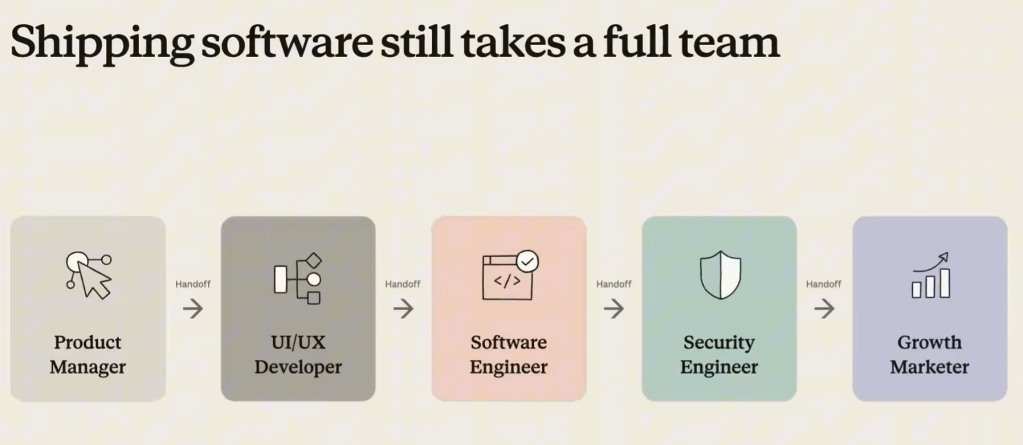
A Google Cloud engineer demonstrated just how dramatically AI-assisted development is compressing the traditional software-development cycle. During Code w/ Claude 2026, Ivan Nardini, Developer Relations Engineer for AI/ML at Google Cloud, walked through the creation and deployment of a working feedback application using Claude Code and Google Cloud. The official session was designed as a build “from zero to deployed” in roughly 30 minutes, while the published recording runs about 26 minutes.
The important part was not simply watching Claude generate code. Nardini used Claude across multiple stages normally associated with different members of a software team. The workflow moved through product planning, UI/UX development, software engineering, security review and data analysis. Claude Code was paired with technologies including Google Cloud, Application Default Credentials (ADC), Model Context Protocol (MCP) servers, custom skills and parallel subagents. Anthropic describes the demonstration as spanning five roles across the software-development lifecycle.
One of the most interesting sections involved Plan Mode, where Claude could first reason through the architecture and implementation before beginning to write code. The workflow then expanded through developer-knowledge tools and parallel AI agents capable of working on separate application components. Later stages included security checks, cloud deployment, BigQuery integration and analytics. Instead of treating an AI coding model as advanced autocomplete, the presentation demonstrated a much broader idea: an AI system operating across an interconnected development workflow.
That distinction helps explain why tools such as Claude Code are attracting so much attention from engineers. Traditional application development can require coordination between product managers, frontend developers, backend developers, security engineers, DevOps teams and analysts. AI does not suddenly eliminate the expertise behind those disciplines, but it can allow one technically capable person to perform portions of several roles from a single development environment. The result is a significant reduction in the distance between idea, prototype and deployed application.
The viral claim that a 26-minute demonstration replaces weeks of engineering should still be kept in perspective. Conference demos are controlled environments, and production applications still require architecture decisions, testing, security, reliability, maintenance and human judgment. But the underlying lesson remains important: AI coding agents are becoming development orchestration tools rather than simple code generators.
Anthropic and Google Cloud are also pushing this workflow further into enterprise environments. Claude Code can operate through Google Cloud infrastructure, while newer integrations provide centralized identity, governance, cost controls and access management for organizations deploying AI-assisted development at scale.
What used to matter most was knowing how to write every component manually. Increasingly, another valuable engineering skill is knowing how to direct AI systems, give them the right context, connect them to tools and infrastructure, review their work and move efficiently from concept to deployment.
The real advantage may not belong to people who simply “use AI.” It may belong to engineers who understand how to turn AI into an effective part of the development stack.
BitcoinVersus.Tech Editor’s Note:
We volunteer daily to ensure the credibility of the information on this platform is Verifiably True. If you would like to support to help further secure the integrity of our research initiatives, please donate here: 3C9o19EH5HSiwEPyCTmEKzxhNCbo2X6TTb
BitcoinVersus.tech is not a financial advisor. This media platform reports on financial subjects purely for informational purposes.


Leave a Reply