
Scientists at the Salk Institute have developed a way to examine where CRISPR gene editing changes DNA and what happens inside each affected cell. Their new laboratory technique, called Superb-seq, identified 36 unintended editing sites while analyzing 10,000 cultured human leukemia cells; the findings were published in Nature Methods on November 16, 2026.
CRISPR uses a guide RNA to steer a cutting protein, usually Cas9, toward a DNA sequence. Researchers can remove or change genetic instructions, but Cas9 sometimes acts at locations resembling the intended target. Detecting an unwanted cut matters because a mutation could affect gene regulation or disrupt cellular functions.
A genomic address and an activity readout
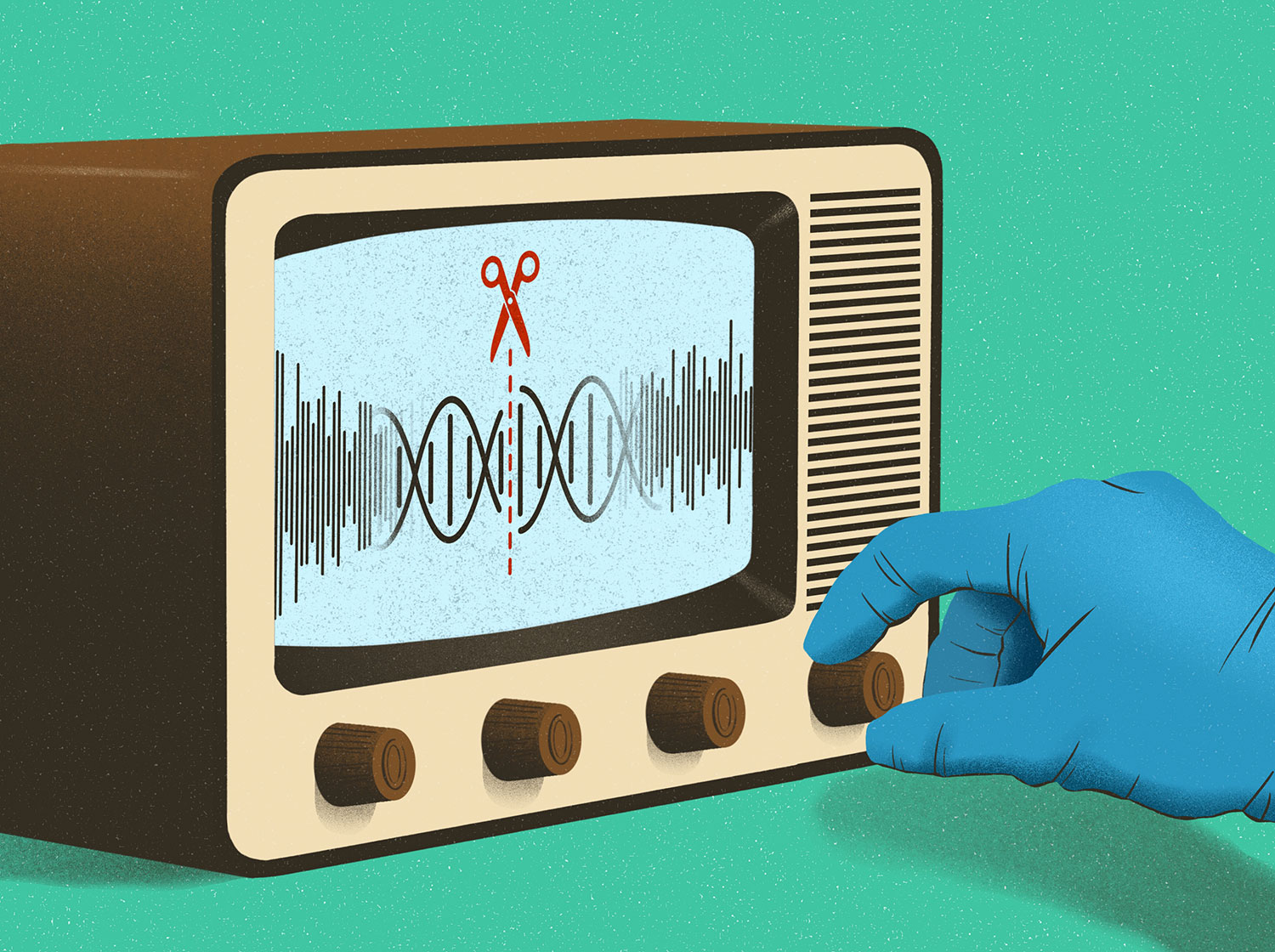
Conventional screening techniques can identify likely editing sites across a collection of cells. However, a bulk result does not reliably tell scientists which individual cells contain a particular change, or whether those cells altered their gene activity. Superb-seq combines an edit-labeling DNA fragment carrying a T7 promoter, transcription of the label inside cells and single-cell RNA sequencing.
After Cas9 makes a cut, cellular repair can insert the T7 label. Sequencing then captures both location-marking RNA and ordinary cellular transcripts. An accompanying analysis tool, Sheriff, links the edit sites to gene expression in the same cells. The result provides more direct evidence than approaches that assume every cell receiving a guide RNA was edited in the intended way.
In the featured experiment, seven guide RNAs targeted four chromatin remodeling genes in K562 cells. The researchers found all seven intended sites, 36 off-target sites and 5,761 cells carrying detected edits. The 36 unintended sites occurred across 18 chromosomes; 30 were inside introns. Those counts describe specific laboratory conditions, not a universal failure rate for CRISPR therapies.
Which unintended edits actually matter?
Across broader experiments involving approximately 35,000 cells from three cell lines, the study linked 19 off-target edits to statistically significant differences in gene expression; nine associations depended on cell type. An off-target change does not automatically mean a cell is damaged, and the experiment did not establish that the changes caused disease. It shows why measuring function, rather than counting DNA cuts alone, improves interpretation.
The team also compared Superb-seq with four bulk off-target detection methods. Depending on the guide, individual approaches identified different subsets of editing sites. Researchers additionally validated a portion of their findings with targeted amplicon sequencing, an important check against experimental artifacts.
Why the finding matters for future therapies
Research teams designing gene editing treatments may eventually use measurements like these to screen candidate guides before human testing. For context, an early CRISPR kidney trial illustrates how therapeutic studies are beginning to evaluate targeted editing in patients; clinical outcomes and laboratory edit maps remain distinct forms of evidence.
Superb-seq is not a treatment, nor has the study demonstrated a clinical safety test ready for routine patient use. The method requires introducing a detectable DNA label, its sensitivity varies with experimental conditions, and uncommon off-target events can still escape detection. Further validation in different primary cells and realistic therapeutic settings will be necessary.
Better observations could also strengthen computational biology. Genomic AI platforms need trustworthy measurements of how sequence changes affect living cells; separating intended effects from unwanted changes could improve model training. Related cross-species DNA experiments underscore how complicated cellular responses become when researchers alter genetic material.
The strongest implication is practical: gene editing experiments can now be audited with a clearer connection between the DNA address and the cellular response. Future tests will determine how broadly and accurately the method performs outside its initial research setting.
Primary sources: Salk Institute announcement, November 16, 2026; Lorenzini and colleagues, Nature Methods, DOI: 10.1038/s41592-026-03319-z.


Leave a Reply