
Shanghai-based YolTech Therapeutics has reported encouraging early results for YOLT-203, an experimental one-time CRISPR treatment for primary hyperoxaluria type 1 (PH1), a rare genetic disorder that can damage the kidneys. In its October 2026 clinical update, the company reported urinary oxalate reductions reaching 61.8% after one year in one treatment cohort. These are preliminary biomarker findings—not proof of a cure.
Key Takeaways
- Eleven patients aged 2–59 received a single treatment in two open-label investigator-led studies.
- Only five participants had completed 52 weeks of follow-up.
- The largest reported one-year cohort mean reduction was 61.8% in three patients.
What Researchers Measured
PH1 results from inherited changes to the AGXT gene that cause the liver to overproduce oxalate. Excess oxalate can form kidney stones and progressively injure the kidneys. The National Kidney Foundation explains the condition and its potential complications.
YOLT-203 uses lipid nanoparticles to deliver a proprietary CRISPR editing system into liver cells. Rather than repairing AGXT directly, it targets HAO1, the gene for glycolate oxidase, to reduce oxalate production.
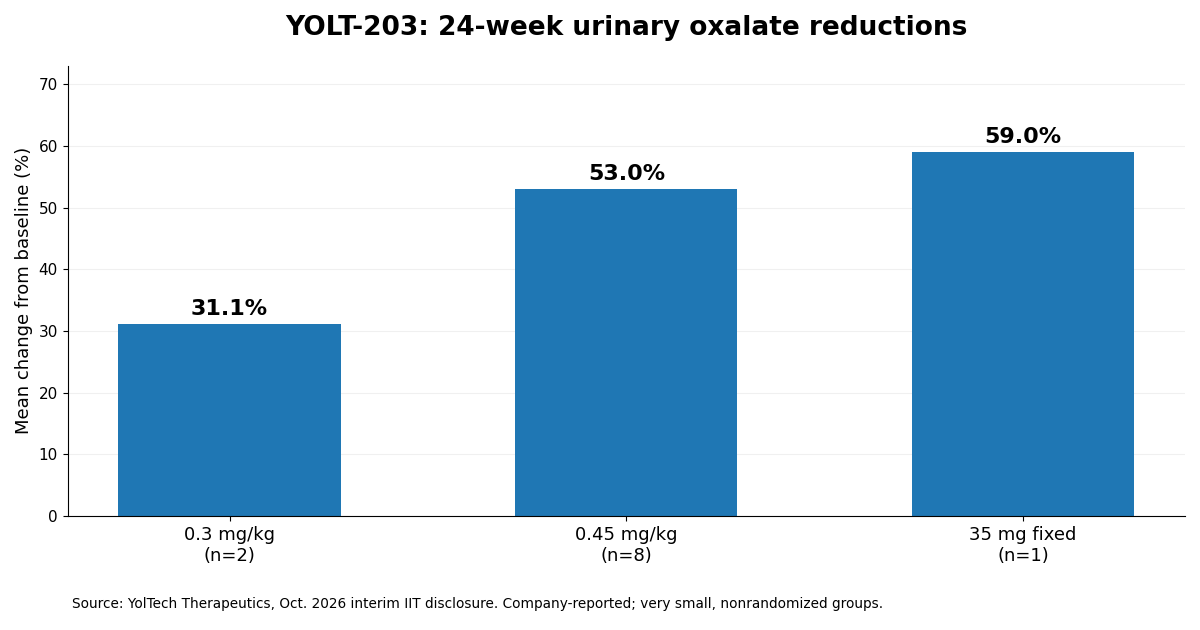
At 24 weeks, average reductions in urinary oxalate were 31.1%, 53.0% and 59.0% for the 0.3 mg/kg, 0.45 mg/kg and fixed 35 mg dose groups, respectively. Those groups contained only two, eight and one participant.
What the One-Year Result Means
Of the five patients assessed at one year, the company reported reductions of 42.9% in the lower-dose cohort and 61.8% in the 0.45 mg/kg cohort. Average estimated kidney filtration remained broadly stable during follow-up. The company has not demonstrated that YOLT-203 prevents dialysis, reverses existing damage or eliminates kidney stones.
These data come from small, uncontrolled trials, and detailed safety findings were not fully presented in the announcement. An independent assessment and longer follow-up will be needed before strong conclusions about benefits and risks are justified.
What Happens Next
YolTech has registered a separate randomized Phase 2 YOLT-203 study intended to assess safety and effectiveness more rigorously. The earlier investigator-led trial record provides additional study background. For context, BitcoinVersus.Tech previously covered how DNA sequencing works and the future potential and limitations of CRISPR gene editing.
Editor’s Note: BitcoinVersus.Tech volunteers to support verifiable technology reporting. If you value this research, you can donate 5,000 sats by scanning the original Bitcoin donation QR below.

Scan the donation code from another device or display if your phone cannot scan its own screen. This story is general information, not medical advice.


Leave a Reply