Anthropic revealed on October 27, 2026, that it is developing experimental medicines with Claude, including its own research targeting rare childhood muscular dystrophies. The AI company also detailed six drug-development partnerships spanning cancer, food allergies, manufacturing, and clinical planning. The findings remain early-stage, not proven treatments for patients.
Key Takeaways
- Anthropic acquired Mithril Medicine, which studies two rare forms of muscular dystrophy.
- Claude supports laboratory coordination, candidate design, and experimental analysis.
- Partner cancer results are preliminary laboratory findings, not approved medicines.
Anthropic Begins Developing Its Own Treatments
In its official research update, Anthropic disclosed the acquisition of Mithril Medicine, founded by Cody Tranbarger. Claude helped coordinate contracts, logistics, and experiments involving 11 outside laboratories. Anthropic says a potential treatment produced promising results in mice within 18 months.
Tranbarger is continuing the research at Anthropic. The company projects that, if development succeeds, one candidate could enter human clinical trials as early as late 2028. This is a proposed timeline, not a clinical approval or evidence of effectiveness in children.
Cancer Research With Six Partners
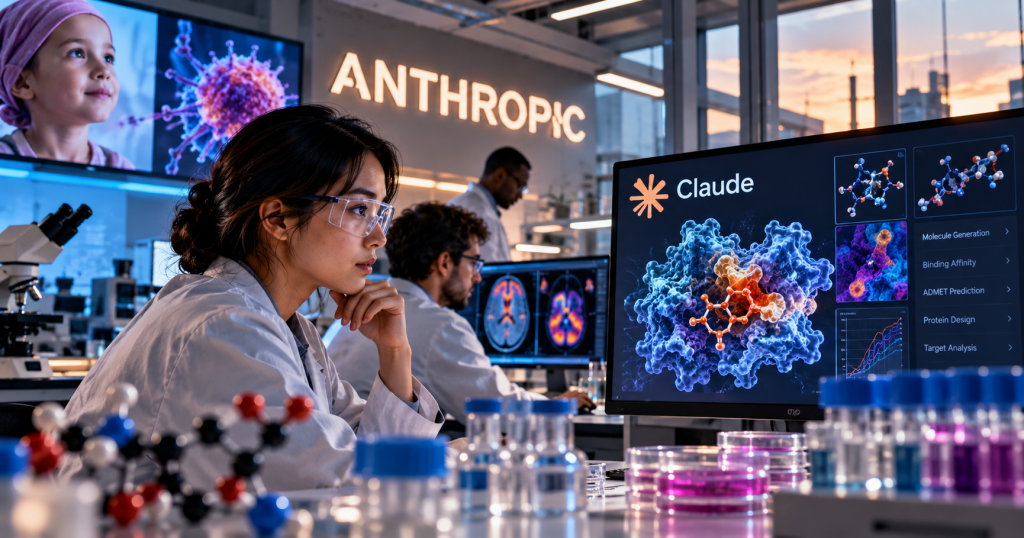
Anthropic named BigHat Biosciences, Bristol Myers Squibb, Divergence Labs, Enveda, Generate Biomedicines, and The Column Group as partners. Generate’s published technical report describes how its scientists used Claude Code to redesign genetic instructions for CAR T-cell research against solid tumors. One candidate was approximately 70% shorter and produced around ten times more receptors in laboratory tests, according to the companies.
At Divergence Labs, Claude generated approximately 35,000 antibody designs for a potential food-allergy treatment. Twenty early designs demonstrated an ability to dislodge IgE from immune cells. These are discovery-stage findings requiring further testing.
Why Clinical Evidence Still Matters
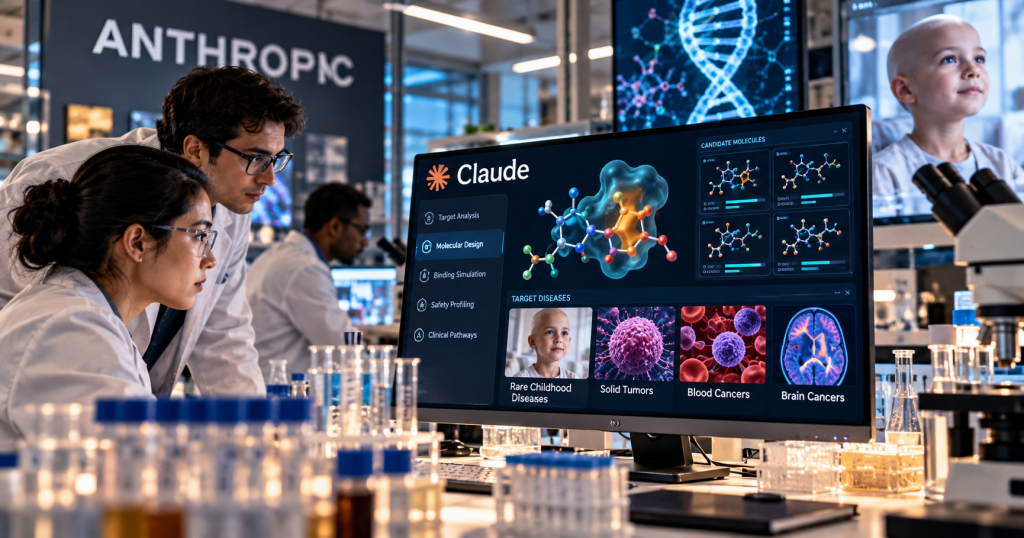
Anthropic acknowledges that its work is predominantly preclinical. Promising molecules or mouse results must still pass safety assessments, human trials, and regulatory review.
BitcoinVersus.Tech previously covered Claude’s CRISPR-like enzyme discovery, AI predictions about pharmaceutical trials, and early CRISPR kidney trial data. Anthropic’s announcement adds a new chapter: an AI developer is participating directly in medicine research, while its clinical promise remains to be established.
BitcoinVersus.Tech Editor’s Note: We volunteer daily to ensure information on this platform is Verifiably True. Support independent research with a donation of 5,000 sats using the QR code below.

Scan the QR code with your Bitcoin wallet from a second screen or desktop for easier camera recognition.


Leave a Reply