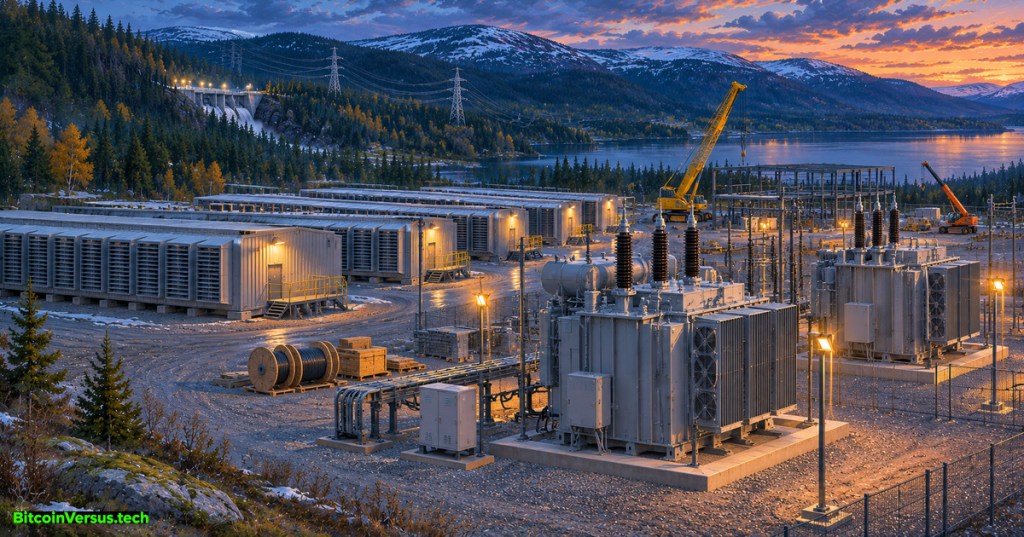
The Norwegian Bitcoin mining operator Bitzero has received two high-voltage transformers for an expansion of its Namsskogan computing campus. In an announcement dated November 9, 2026 and published on its website November 10, the company said the two 60-megavolt-ampere (MVA) units had arrived in Norway. The delivery advances a plan to increase total site capacity from 40 megawatts (MW) in operation toward 110 MW. It does not mean another 70 MW is already energized.
A Bitcoin mine already operating on hydropower
Bitzero’s Namsskogan property is a 50,000-square-meter computing site in Norway’s NO4 electricity region. Its existing facility earns revenue from Bitcoin self-mining using hydroelectric power, according to company disclosures. In a January 27 operating update, Bitzero reported approximately 2.8 exahashes per second (EH/s), up from 1.76 EH/s in September 2025. It also reported a blended electricity price of about 3–3.5 US cents per kilowatt-hour at that time. Those are historical company figures, not independently verified November hashrate or current power invoices.
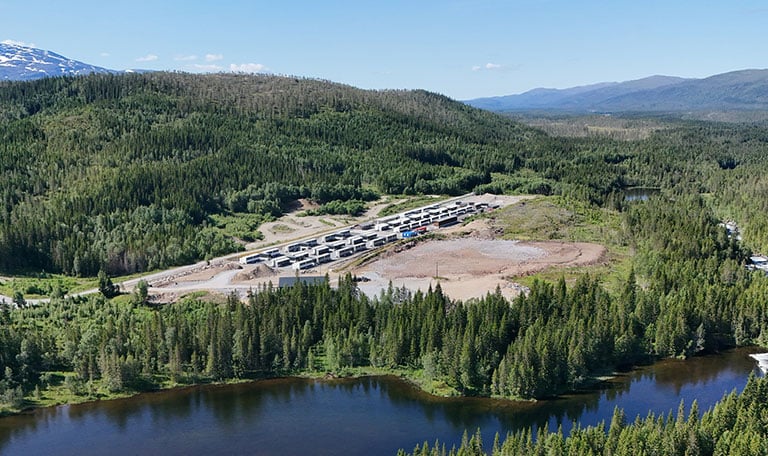
Why two 60 MVA transformers are important
Power transformers change alternating-current voltage while keeping electricity on the same grid frequency. A utility can transmit high-voltage power efficiently, but mining containers, switchgear, and power supplies need appropriately reduced voltages. The newly delivered transformers are long-lead components, often ordered far in advance because manufacturing and logistics can control a project’s schedule.
The rating needs careful interpretation. MVA measures apparent power, while MW measures real power delivered to loads. A 60 MVA transformer at an illustrative 0.95 power factor carries 57 MW of real power; two nameplates do not automatically guarantee 114 MW of usable site load. Transformer arrangement, redundancy, thermal limits, grid contracts, switchgear, and auxiliary consumption determine what can actually operate. Bitzero’s stated 110 MW remains a proposed total site capacity, not a measured output from two energized transformers.
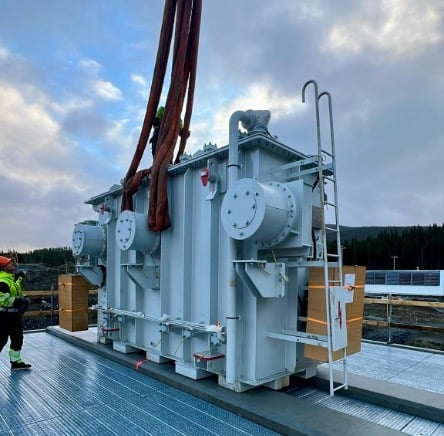
A schedule with unfinished electrical work
A December 2025 Bitzero announcement targeted approximately 110 MW by September 2026. The January 2026 update subsequently referred to Q4 2026. The November statement still identified 40 MW operating and said installation, testing, commissioning, and related grid works remained ahead. The company did not provide a verified date for newly energized capacity. Equipment arrival represents tangible progress, but earlier targets should not be mistaken for completed commissioning.
From Bitcoin hashing toward AI infrastructure
Bitzero has broadened the site plan beyond ASIC mining. In October it signed a project development agreement with Skanska, alongside previously announced cooperation with Vertiv for power, cooling and engineering. Its November shareholder letter discussed prospective artificial-intelligence tenants and future lease agreements. Neither an engineering partnership nor tenant discussions prove that GPU servers have been installed or that 110 MW is under a final lease.
The competitive pressure is familiar: Bitcoin mining companies have announced AI hosting capacity far beyond the power already earning revenue. Our reporting on Bitdeer’s electrical-equipment delay and Fox Creek’s construction schedule shows why a power agreement or construction milestone cannot substitute for an energized data hall.
What the next milestone must prove
Bitzero must install and commission the transformer package, coordinate protection and grid-side work, document safe energization, and disclose the amount of actual compute load commissioned. If mining expands, comparable ASIC efficiency and pool-output figures would make the operating effect measurable. If the site shifts toward AI hosting, contracted IT megawatts and tenant-ready cooling matter more than theoretical transformer capacity. Our Bitcoin mining electricity guide explains how energy charges translate into operating cost. For now, the verified distinction is straightforward: 40 MW operating, equipment delivered, and the additional 70 MW still to be commissioned.
Primary documents and image disclosures
- Bitzero SEC Exhibit 99.1, November 9, 2026: transformer delivery, 40 MW operating, 110 MW goal and development risks.
- Bitzero January 27 operational report: 2.8 EH/s and historical electricity price.
- Bitzero Namsskogan official site page: project location, hydroelectric sourcing and archival images.
- Bitzero/Skanska October 20 announcement: project development scope.
- Bitzero December 9, 2025 release: earlier project schedule.
Media disclosure: The original 1200 × 630 featured illustration is conceptual rather than a site photograph. The pre-existing BitcoinVersus.tech neon-green-on-black tag bitmap was reused once at bottom-left, without re-typesetting. Both in-article photographs are credited company images, and the featured image is not repeated in the body. No video is described as playback-tested.
We volunteer daily to ensure the credibility of the information on this platform is Verifiably True. If you would like to support to help further secure the integrity of our research initiative, please scan the QR code below.



Leave a Reply