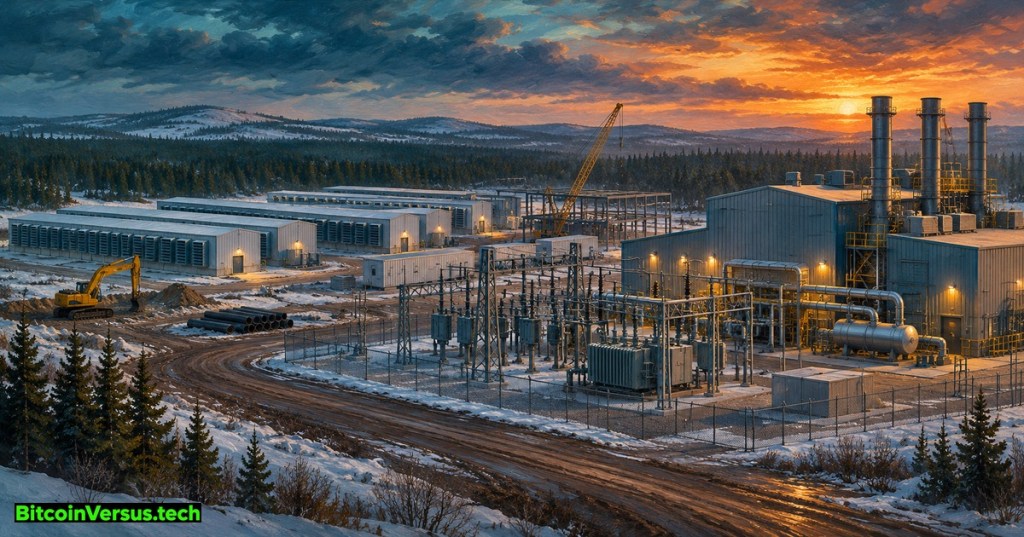
Bitdeer’s planned 101-megawatt Bitcoin mining and power project near Fox Creek, Alberta, now has a late-2027 energization target. In its November 10, 2026 quarterly update, the company listed Q4 2027 for a site combining an on-site natural-gas power plant with approximately 100 MW of computing capacity. The facility broke ground in June but has not begun mining. The revised target is about one year later than the Q4 2026 date announced when Bitdeer acquired the project.
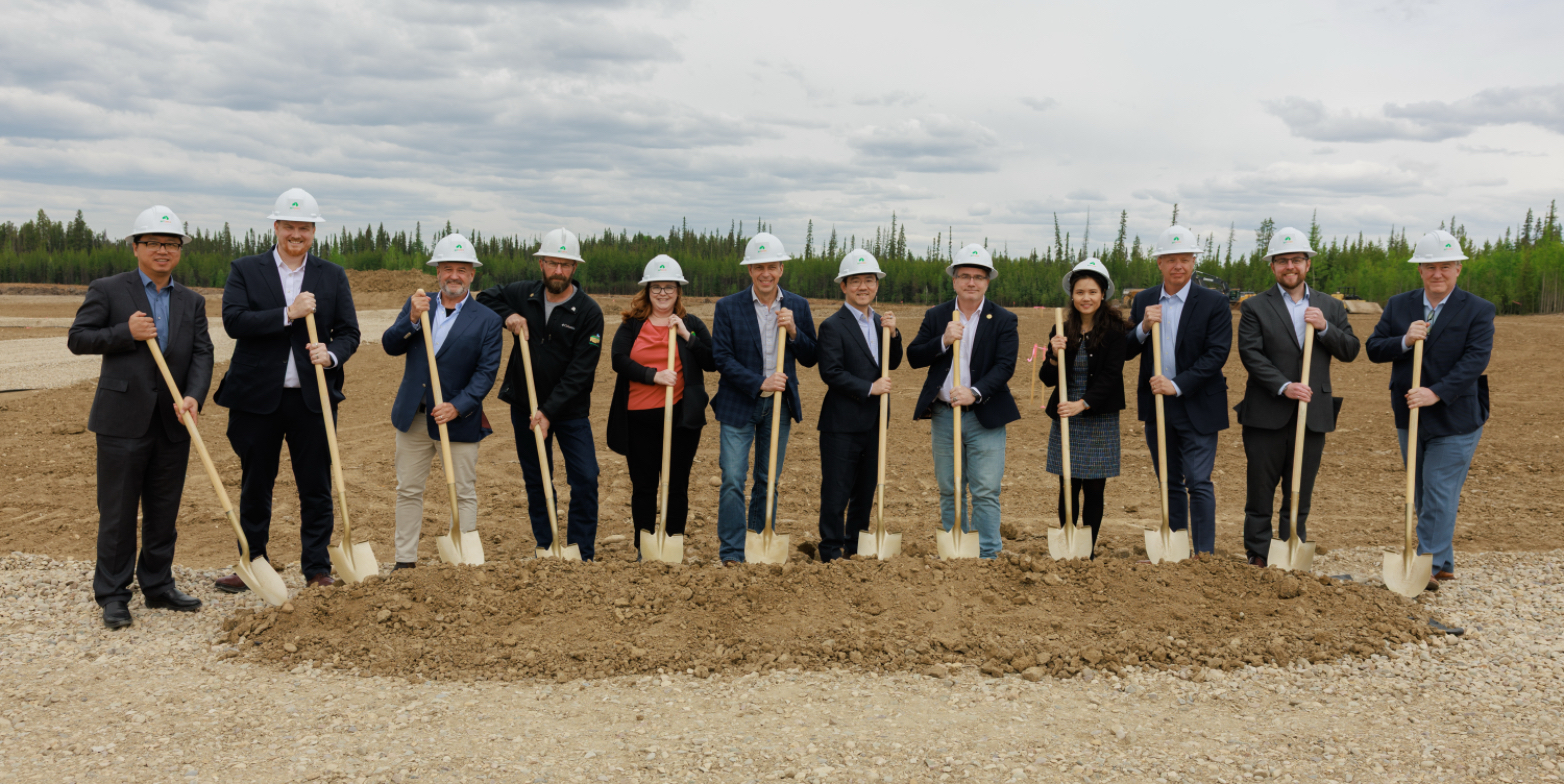
Watch Bitdeer’s official Fox Creek groundbreaking video on YouTube (published June 8, 2026). It documents the ceremony, not the November construction status. Embedded playback was not independently verified, so no YouTube iframe is represented as tested.
A Bitcoin mine with its own power plant
Fox Creek is designed as a vertically integrated energy-and-computing campus. Bitdeer says the 19-acre property includes permits for a 101 MW gas-fired plant and approval for a 99 MW interconnection with Alberta’s electricity network. The intended behind-the-fence arrangement sends electricity directly from the plant to the data center rather than buying its normal operating supply from the grid. The interconnection may also allow mining loads to be curtailed and electricity exported during periods of high demand, subject to actual operating arrangements.
The distinction between 101 MW of generation and roughly 100 MW of computing capacity matters. Power-plant equipment, cooling, conversion losses, and other auxiliary systems consume electricity. Neither figure should be treated as a verified 100 MW of energized ASIC nameplate load. For background on electricity units and mining economics, see our kilowatt-hour calculation guide.
How the schedule moved
Bitdeer bought the originally permitted Kiwetinohk Energy power project for $21.7 million in February 2025 and initially projected energization in Q4 2026. At its June 2026 groundbreaking, the company cited Q2 2027. Its November 10 update moved the target to Q4 2027 and said the data-center design is accommodating both cryptocurrency mining and potential AI infrastructure. The filing does not establish a single confirmed cause for the full schedule change; blaming one particular supplier or permit would be speculative. A separate Bitdeer Knoxville project has its own expressly reported electrical-equipment delays.
Two to two-and-a-half cents per kilowatt-hour?
Bitdeer’s Fox Creek project page projects electricity production costs of $20–$25 per megawatt-hour, equivalent to 2.0–2.5 US cents per kilowatt-hour. That is a company forecast, not a metered operating result. At an illustrative sustained 100 MW draw, the quoted production-cost band would represent $48,000–$60,000 of generation expense per 24 hours. The calculation excludes construction financing, equipment depreciation, staffing, gas-price variation, downtime, carbon obligations, and mining hardware.
Low-cost generation alone does not establish Bitcoin mining profit. Revenue also responds to network difficulty, transaction fees, Bitcoin prices, and machine efficiency in joules per terahash. Our recent hashprice and power-break-even analysis explains why electricity rates must be compared with current hashing revenue rather than treated as profit.
Environmental promises still require operating evidence
According to Bitdeer, the design includes closed-loop dry cooling intended to avoid routine withdrawals from nearby water bodies. The company also plans a system to capture and use some carbon dioxide from gas-fired generation. Both are design or development claims, not verified performance measurements. Gas combustion still produces emissions, and meaningful carbon-reduction claims require capture rates, plant efficiency, methane-leakage accounting, and independently reported operating data.
The estimated $155 million development investment, 300 construction roles, and 30 permanent jobs are company projections, not completed economic outcomes. Similar Bitcoin-to-AI infrastructure projects show how the same electrical site can support different compute tenants, but AI suitability depends on fiber, cooling, redundancy, and contracted workloads. Bitcoin mining remains the stated near-term purpose at Fox Creek.
What to watch before launch
The next verifiable milestones are power-plant construction progress, successful testing of generation and interconnection equipment, building commissioning, and disclosed deployed mining capacity. Until then, 101 MW describes a permitted project under development, not additional operating Bitcoin hashrate. Fox Creek offers a concrete test of whether co-located natural-gas generation can deliver the economics, flexibility, and environmental performance its developer anticipates.
Primary sources and visual verification
- Bitdeer Q3 2026 results, November 10: current Fox Creek status and Q4 2027 target.
- Bitdeer groundbreaking release, June 2: engineering, regulatory background, and official event photograph.
- Bitdeer project page: cost projections, environmental designs, and project timeline.
- Government of Alberta major-project registry: public project listing.
Cover disclosure: Original conceptual oil painting, 1200 × 630, illustrating the planned infrastructure rather than an actual construction photograph. The existing BitcoinVersus.tech neon-green-on-black watermark asset appears once, bottom-left. The only body photograph is the credited official groundbreaking image; the featured cover is not repeated inside the article.
We volunteer daily to ensure the credibility of the information on this platform is Verifiably True. If you would like to support to help further secure the integrity of our research initiative, please scan the QR code below.


Leave a Reply