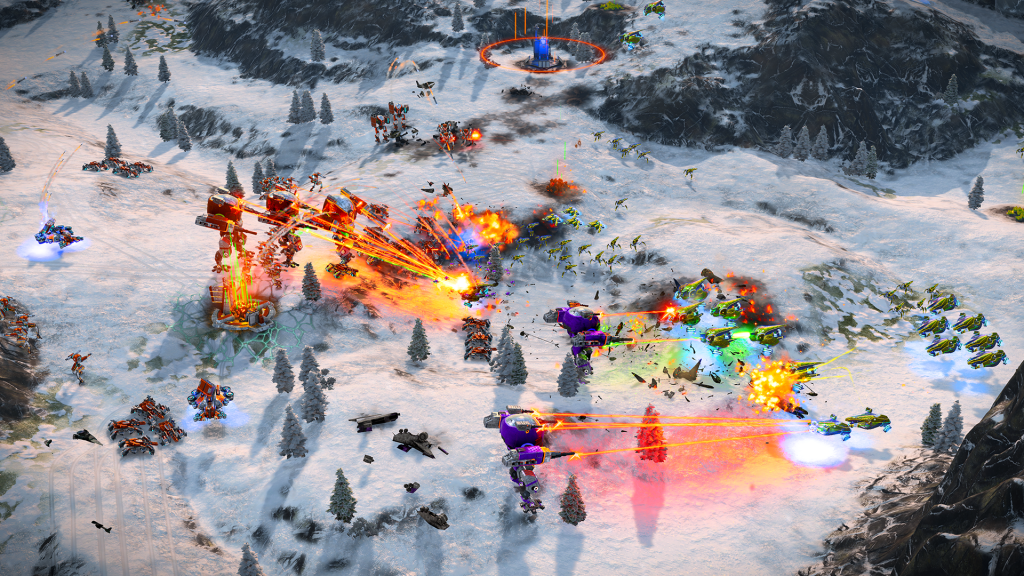
A real-time strategy game can challenge a computer in ways that a visually demanding shooter cannot. Every independent unit must continue moving, finding routes, responding to commands and interacting with the simulated world, even when the player is looking elsewhere. Oxide Games and Stardock released Ashes of the Singularity II on November 10, 2026, with the promise of continent-scale maps and thousands of simultaneously controlled units. A November 24 update revised combat balance and unit movement, offering a timely look at the engineering behind enormous virtual battles.
Three layers of pathfinding
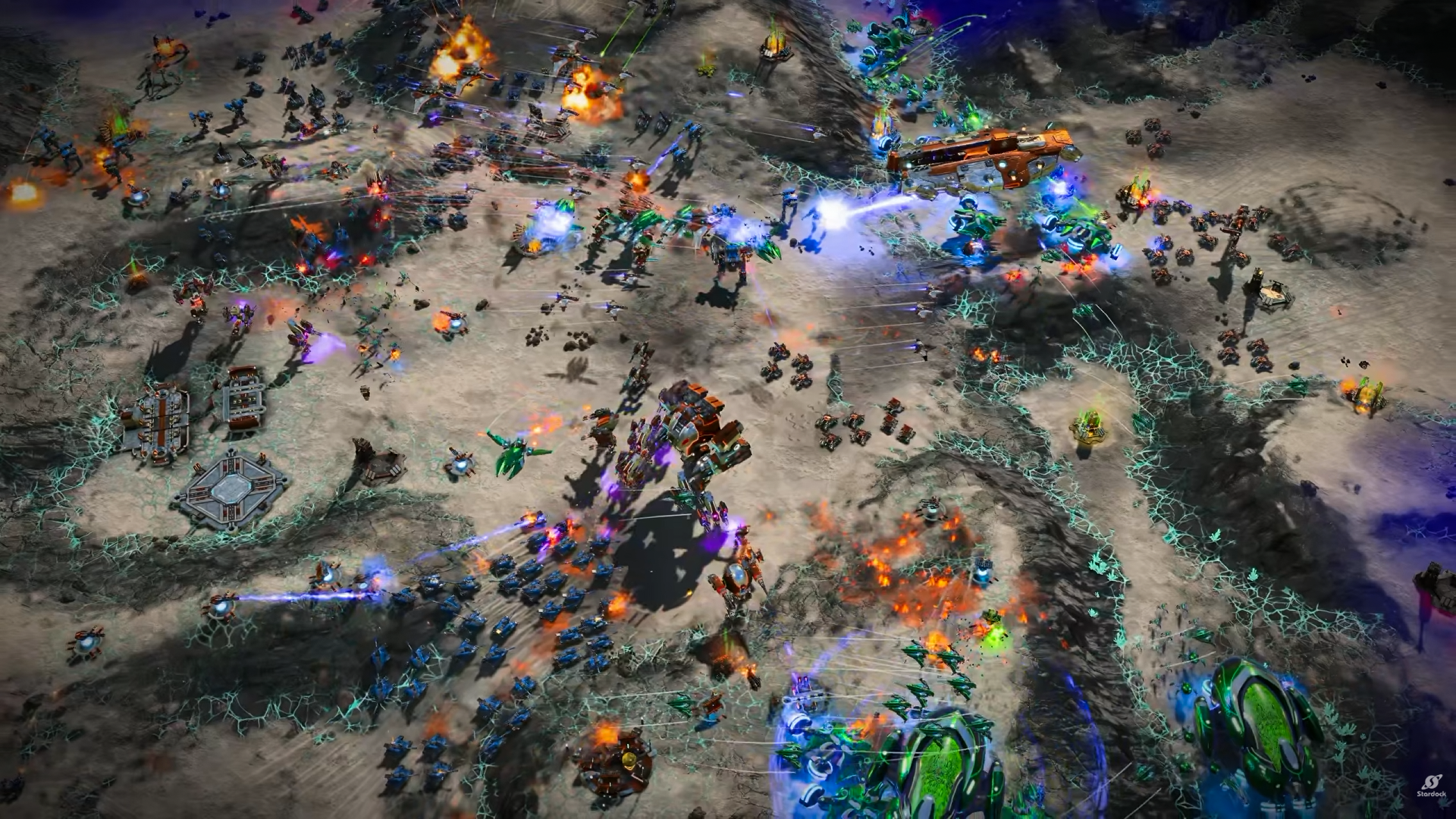
The sequel uses the Nitrous 3 engine, incorporating development work from Ara: History Untold. According to the developer FAQ, navigation operates at three levels: army, unit and element. Different algorithms at each level help the game coordinate movement without requiring every component of a formation to solve the entire navigation problem independently. An army can plan a broad route, while lower-level movement handles more localized decisions.
The underlying problem is computational scale. Imagine 5,000 independently simulated units receiving 20 updates per second. That would imply 100,000 unit updates every second, before counting projectile interactions, collision checks or rendering. The numbers are illustrative rather than disclosed Nitrous 3 implementation parameters. Dividing work among threads and reducing unnecessary interactions can help keep simulation time within a fixed budget.
A deterministic world across eight computers
Oxide describes the sequel as using deterministic simulation: given identical initial state and inputs, the simulation is designed to produce identical results. In multiplayer, deterministic execution can reduce the need to transmit every individual unit position continually. Instead, machines can exchange commands and advance the simulated state consistently. The developer also identifies peer-to-peer networking and an eight-player launch limit; it has not disclosed every synchronization protocol detail. Packet loss, latency or diverging simulation states can still create practical difficulties.
Why the CPU and GPU tell different stories
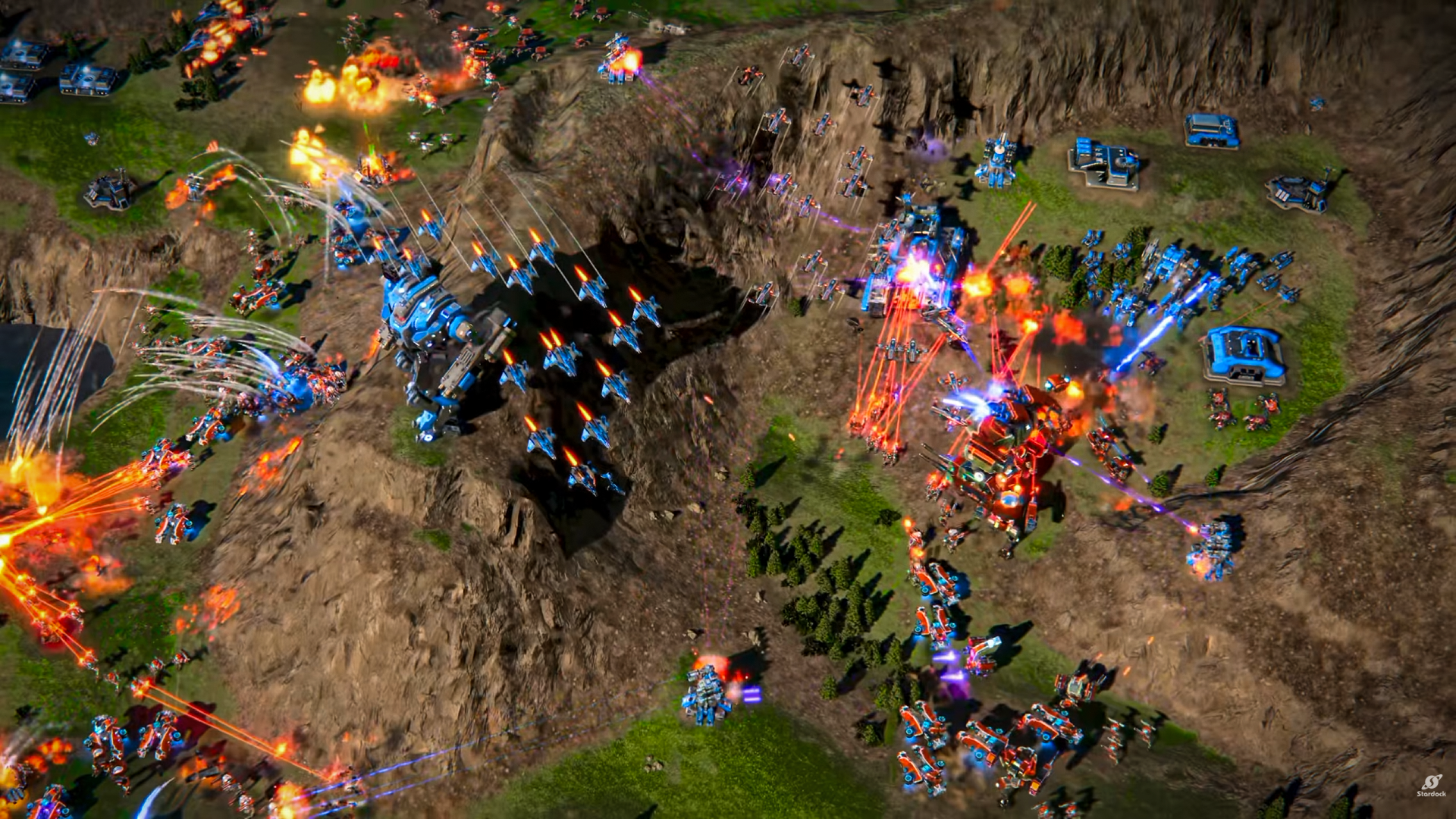
The processor executes simulation logic, while the graphics processor transforms geometry, shades surfaces and produces the displayed frame. Both jobs can constrain performance. An independent OC3D review published November 13 found that an RTX 5080 remained graphics-limited at 1080p Extreme settings in its selected large-battle scene. Reducing the preset to High exposed a CPU limit at more than 130 average frames per second in that configuration. Those results apply to the reviewer’s hardware and scene, not every possible match.
At 60 frames per second, a displayed frame arrives approximately every 16.67 milliseconds; at 130 FPS, the average interval falls to about 7.69 milliseconds. Lower graphics settings can shorten GPU work, but cannot necessarily accelerate the simulation. Comparing frame-time distributions and late-game scenarios provides more insight than relying on a single average. Our coverage of SteamOS graphics support and Valve’s Steam Machine explores related platform and hardware constraints.
What the November update changes
The November 24 version 1.03 notes describe lower health and greater damage for advanced and dreadnought units, shorter orbital cooldowns and revised faction movement. These are primarily gameplay adjustments, not proof that the engine now processes more units per second. The developer also said before release that a built-in benchmark was not planned for launch, although one might arrive in a later free update.
There are reasons to distinguish technical ambition from the quality of the finished game. PC Gamer’s review praised the accessibility of army controls but criticized the campaign and its use of generative AI in cutscenes. Readers interested in simulation design can explore our physics-based games feature and open-source game projects. Nitrous 3 is a useful example of how parallel processing, algorithms and network synchronization jointly shape what a virtual world can accomplish.
We volunteer daily to ensure the credibility of the information on this platform is Verifiably True. If you would like to support to help further secure the integrity of our research initiative, please scan the QR code below.



Leave a Reply