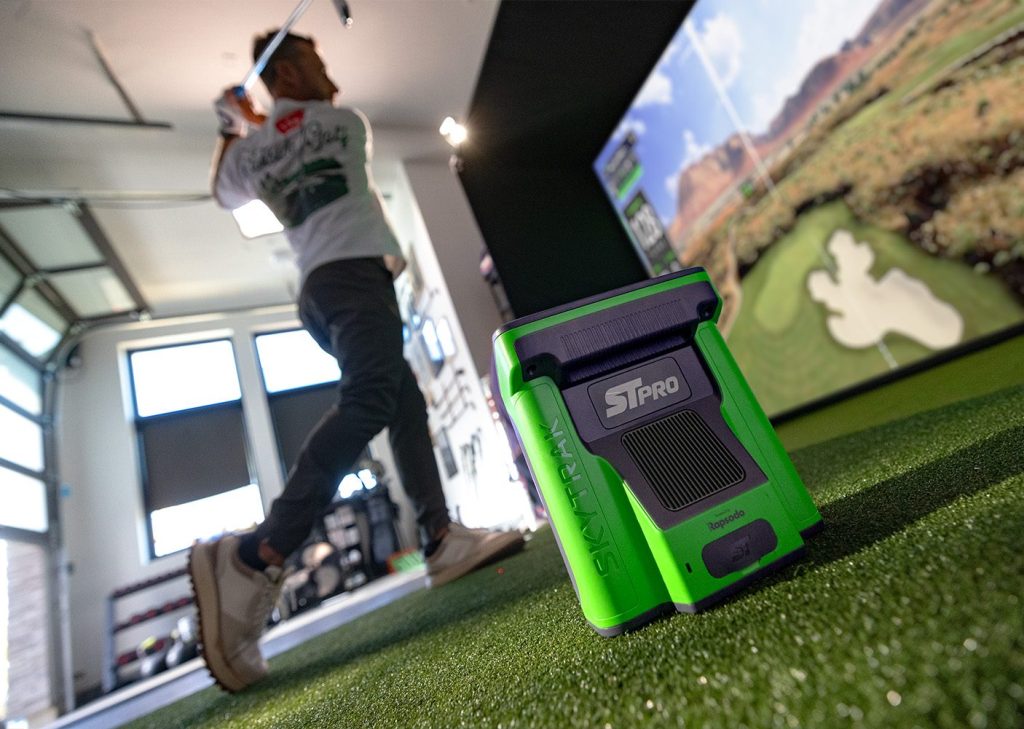
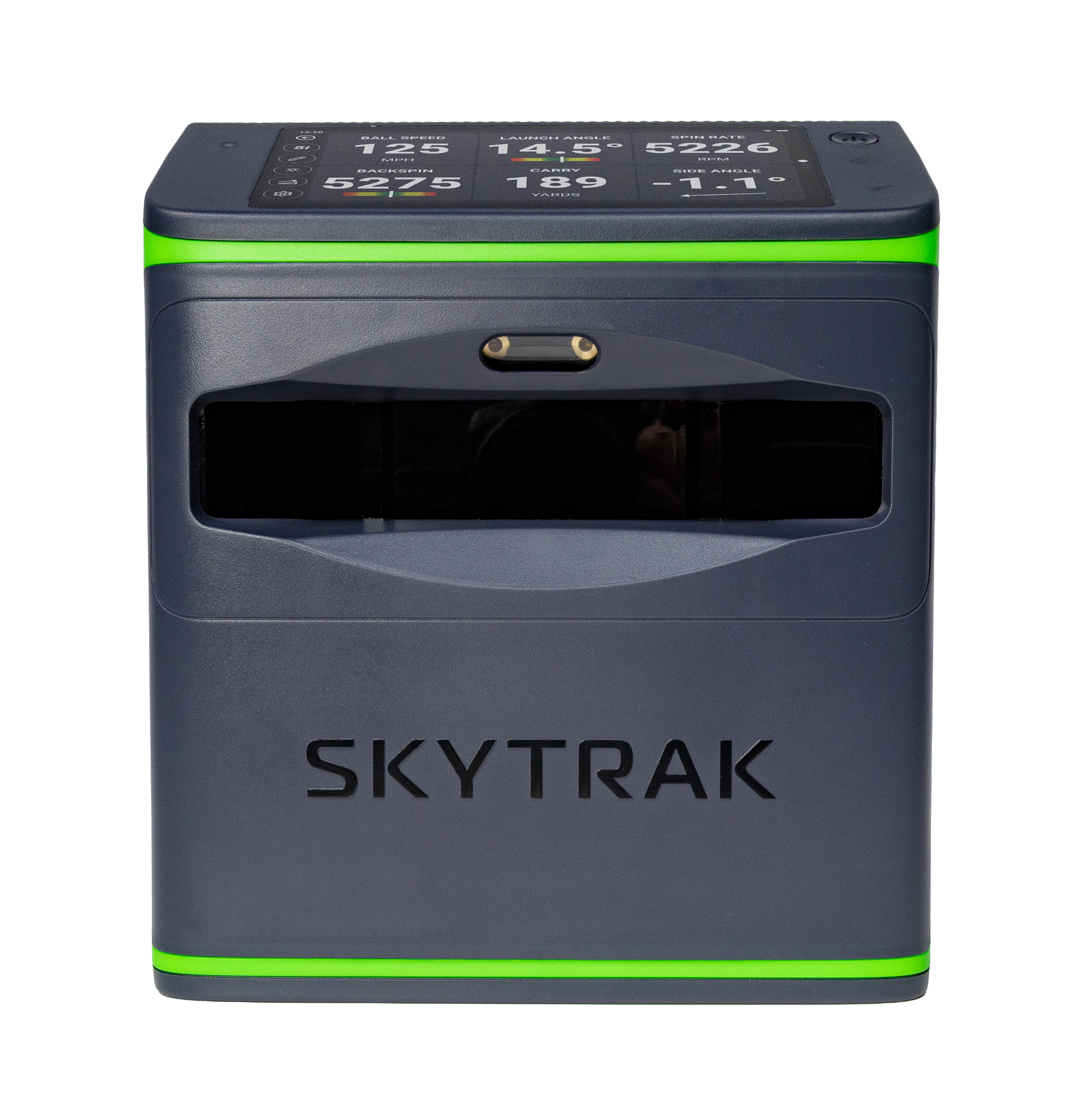
A golf ball traveling at 160 miles per hour covers more than seven centimeters in a millisecond. Capturing the instant when a club strikes the ball therefore presents a demanding measurement problem. On November 23, 2026, SKYTRAK introduced its $4,995 ST PRO launch monitor, combining three high-speed cameras, Doppler radar and an infrared LED array in a portable device intended for indoor simulators and outdoor practice.
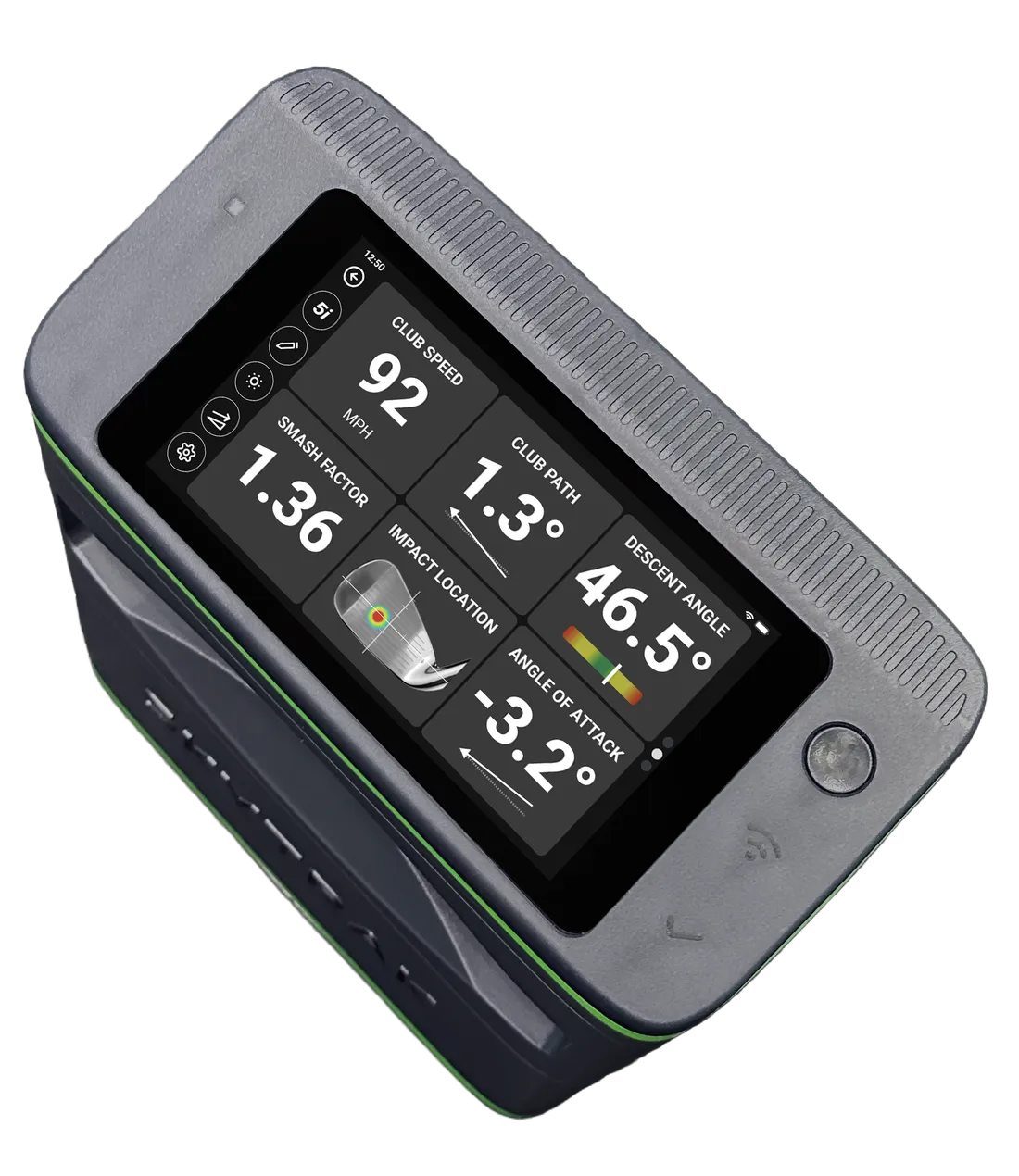
The manufacturer lists more than 20 ball and club measurements, including club speed, launch angle, spin, angle of attack and the point of contact on the clubface. Unlike some optical systems, SKYTRAK says its club measurements do not require reflective stickers. Golf industry publication National Club Golfer reported the launch on November 25. The manufacturer’s performance claims still warrant independent accuracy testing.
Why combine cameras and radar?
A calibrated camera system can reconstruct the movement of an object from images captured at known times. Multiple viewpoints help resolve depth and orientation, provided the system can identify features reliably. Short exposures reduce motion blur; controlled illumination can improve the visibility of fast-moving objects. Radar uses reflected radio signals, with the Doppler frequency shift carrying information about velocity along the radar’s line of sight. Combining optical and radio-frequency observations can provide complementary constraints on the same event.
For a hypothetical ball speed of 160 mph, equivalent to approximately 71.5 meters per second, the ball travels 71.5 millimeters in one millisecond. With an illustrative spin rate of 5,000 revolutions per minute, it also completes one revolution every 12 milliseconds. Those values demonstrate the timing demands of measurement, not the ST PRO’s disclosed camera frame rate or radar sampling frequency. SKYTRAK has not specified either sampling rate in its public product description.
From impact measurements to simulated flight
A launch monitor can estimate the starting conditions of a golf shot: velocity, launch direction and rotation. Simulation software can then integrate a trajectory using gravity, aerodynamic drag and spin-dependent lift. Carry distance in a short indoor hitting bay necessarily depends on a flight model, rather than direct observation of the entire trajectory. Temperature, air density, wind and the chosen ball model can change the projected result.
The point of impact on the clubface and the direction of club movement also help explain why two swings with similar club speed produce different ball flights. Smash factor, defined as ball speed divided by club speed, provides a simple efficiency indicator. A hypothetical 150 mph ball speed divided by 100 mph club speed yields 1.50; it does not mean that 150% of the club’s kinetic energy transferred to the ball.
A portable measurement system
According to the company announcement, the unit can operate independently or connect to supported devices through Wi-Fi, Ethernet or USB. Its battery is rated for up to six hours. The manufacturer also plans to introduce GOLFTEC Anywhere, a three-dimensional swing-analysis tool, through its membership platform in December. The planned software should not be confused with a feature independently demonstrated at launch.
The same movement toward sensor fusion appears in simulator-based golf, NFL tracking infrastructure, Sony’s optical sprint replays and IBM’s tennis biomechanics analysis. All require more than a sensor count: calibration, synchronization, uncertainty and repeatability determine whether the resulting data is useful.
For the ST PRO, a credible comparison would measure errors in speed, spin and impact position against calibrated reference instruments across different lighting conditions, clubs and shot types. Until independent results become available, the new hardware represents an interesting measurement architecture rather than proven equivalence to more expensive professional equipment.
Featured photograph: SKYTRAK’s official indoor simulator demonstration, supplied by the manufacturer.
We volunteer daily to ensure the credibility of the information on this platform is Verifiably True. If you would like to support to help further secure the integrity of our research initiative, please scan the QR code below.



Leave a Reply