
A former coal-fired generating station in northeast Ohio could become a major consumer of electricity rather than a producer. In its November 10, 2026 quarterly results filing, Bitcoin mining and AI infrastructure company Bitdeer maintained its plan for a 300 MW development in Weathersfield, previously identified as Niles. The company lists the project in its electrical-capacity pipeline with a fourth-quarter 2028 energization target and intended AI cloud or colocation use.
The development encompasses 41.8 acres of company-owned land and a transmission-line extension agreement with a local utility. Neither the agreement nor the projected energization date means that 300 MW of servers are installed. The November report identifies the site as future capacity rather than operating AI compute.
A former generator becomes a potential electrical load
The site has an engineering history dating to the 1950s. According to the Niles Historical Society, the original plant generated electricity from coal using two 106 MW units. Its remaining structures were demolished in April 2022. The reuse of industrial property may offer access to existing transportation and transmission corridors, but a power station’s historic output cannot be treated as available modern load capacity.
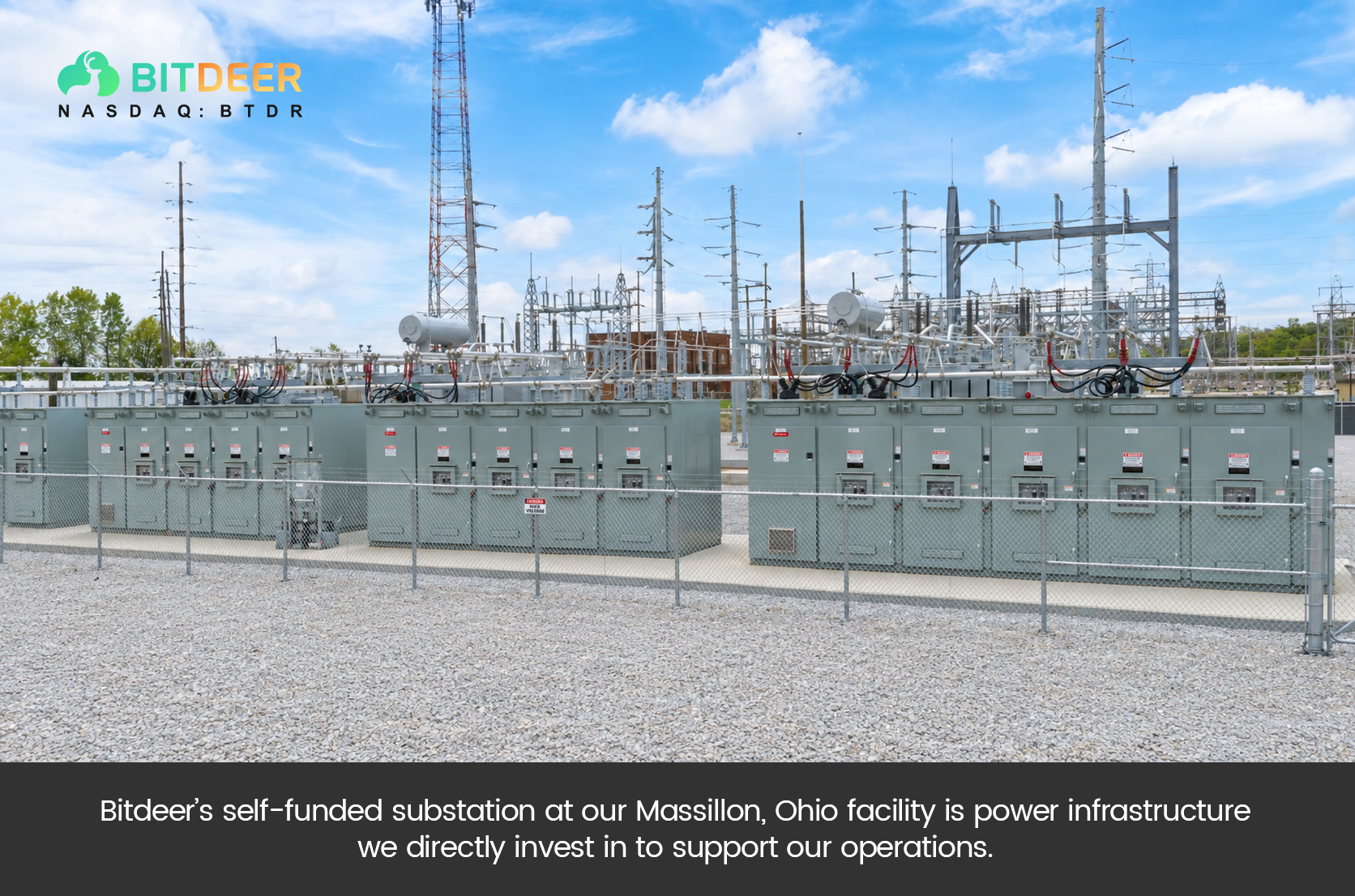
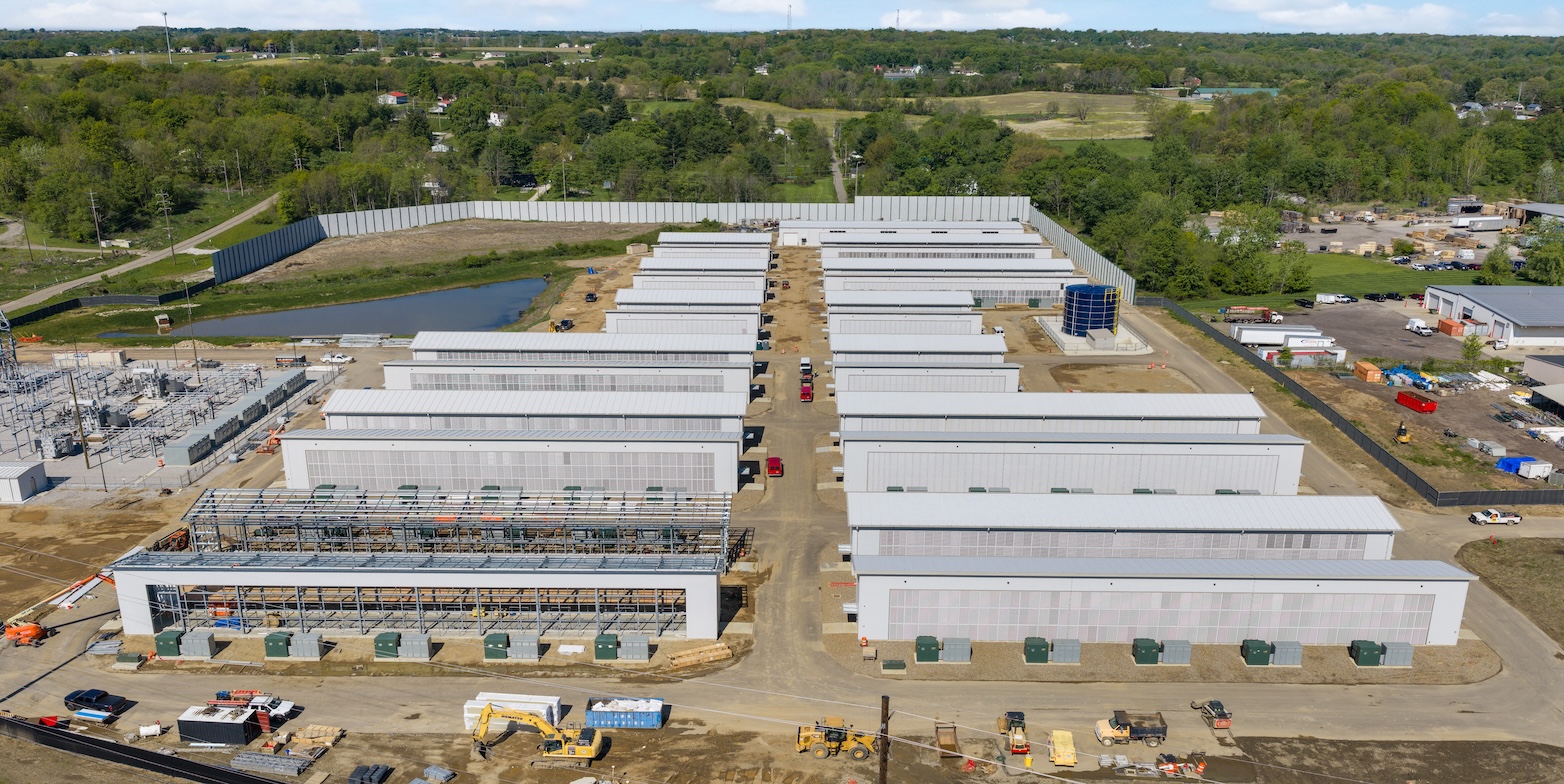
In a data center, utility electricity must travel through high-voltage switching equipment, transformers, distribution gear and ultimately server power supplies. A transmission agreement addresses one part of that sequence. Protection coordination, construction, utility commissioning, redundancy and cooling still determine when useful computing can start. Our Massillon mining campus report provides a contrasting example of 221 MW that Bitdeer has actually reported online.
Why 300 MW is not necessarily 300 MW of GPUs
If a facility drew 300 MW continuously, daily consumption would equal 7,200 MWh and annual consumption would reach 2.628 TWh. Those are theoretical full-load values, not a forecast of the site’s consumption. Assuming a hypothetical facility-level power usage effectiveness (PUE) of 1.20, a 300 MW total electrical budget would leave 250 MW for IT equipment. At an illustrative 120 kW per rack, that budget could support roughly 2,083 rack-equivalents before accounting for other IT loads. Bitdeer has not specified those rack ratings, PUE or a GPU count for Weathersfield.
The distinction matters because Bitcoin ASICs can hash largely independently, whereas many AI training clusters require high-bandwidth communication among accelerators, redundant networking and tight thermal control. The infrastructure lessons from Bitdeer’s Rockdale expansion and its Knoxville conversion delay demonstrate why electrical capacity and compute deployment warrant separate milestones.
Local approval remains a separate constraint
The proposed site also faces land-use questions. Weathersfield trustees imposed a temporary data center approval moratorium in April, subsequently extended by six months in September, according to records compiled from township minutes. The October 26 Mahoning Valley Market Pulse reported the pause extending into April 2027. Local reporting has also documented an annexation proposal involving Niles. Neither the final zoning outcome nor the construction timetable is assured. A company commitment to protect ratepayers is not independent evidence of the project’s final tariff or impacts.
Weathersfield illustrates the difference between acquiring a site and delivering a computing campus. As explored in our Fox Creek development report, power availability, equipment lead times and permitting can each govern a schedule. The next measurable milestones at Weathersfield are land-use authorization, transmission work, electrical commissioning and a confirmed computing deployment.
Featured image: Bitdeer corporate imagery from its September 22 grid-infrastructure statement; not a photograph of the proposed Weathersfield campus. Image source. Local April 15 news report on the proposal is linked directly rather than presented as a tested player.
We volunteer daily to ensure the credibility of the information on this platform is Verifiably True. If you would like to support to help further secure the integrity of our research initiative, please scan the QR code below.



Leave a Reply