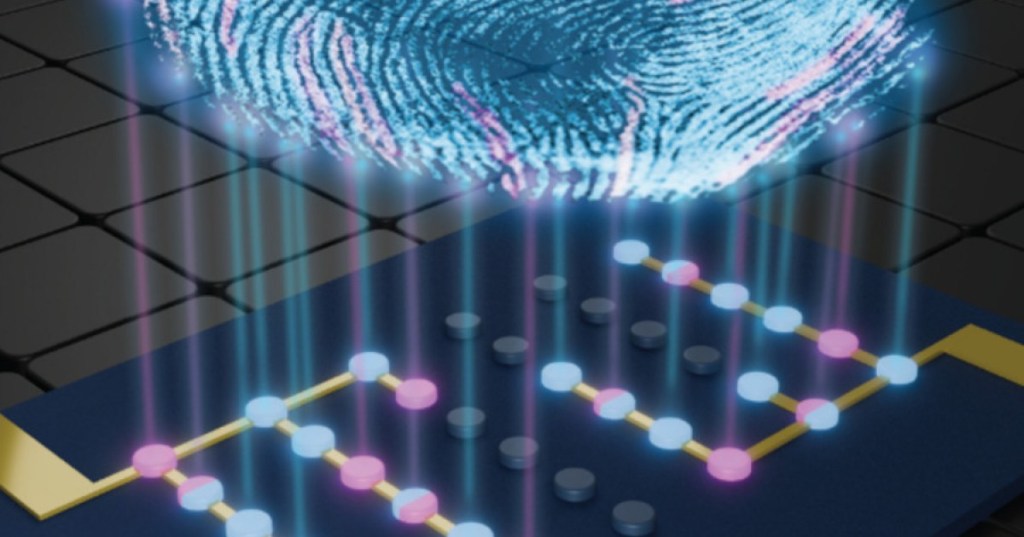
Researchers in Spain and Italy have demonstrated a hardware authentication technique that stores a device’s identifying characteristics in electrically adjustable magnetic materials. The Universitat Autònoma de Barcelona highlighted the work on November 24, 2026, following its appearance in the November 9 issue of Advanced Science. Unlike a conventional fixed physical identifier, the experimental magnetic array can acquire a different statistical fingerprint after fabrication.
Moving ions to control magnetism
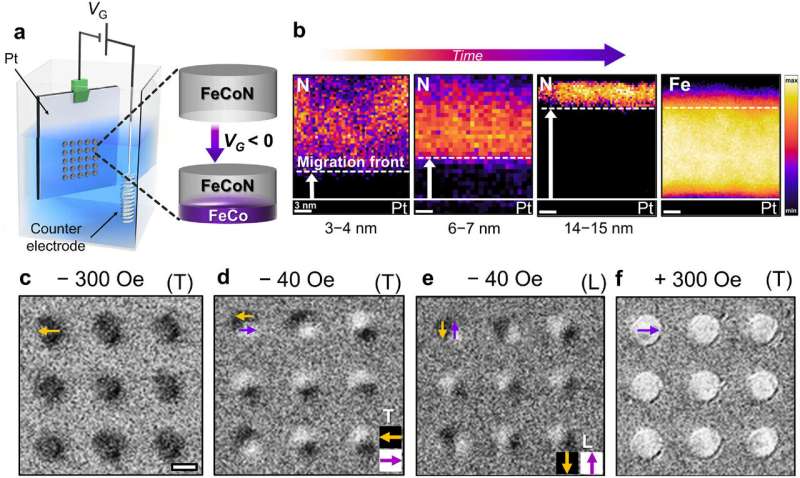
The team fabricated iron cobalt nitride (FeCoN) elements measuring two micrometers across and 20 nanometers thick. Electrical treatment drives nitrogen away from part of each element, leaving a thin magnetic region. By varying treatment duration, the researchers controlled the thickness of that region below approximately 15 nanometers. The magnetic moments may align predominantly in one direction or curl around a central point to form a vortex.
A physical unclonable function (PUF) uses measurable physical differences to distinguish hardware. Authentication typically involves recording characteristic responses during enrollment and comparing later measurements against the stored reference. Related research has examined optical chip fingerprints derived from manufacturing variations. Hardware identification differs from browser fingerprinting, which combines software and device attributes for identification or tracking.
When probability becomes an identifying feature
In one circuit containing 18 magnetic elements, seven could switch between the two classes of configuration, while eleven consistently favored vortices. The researchers calculated 8,568 possible selections of five elements. Accounting for the probabilistic response combinations increased their theoretical challenge-response count to 41,174. More possible responses do not automatically translate into an equivalent increase in cryptographic security, because their probabilities and correlations also matter.
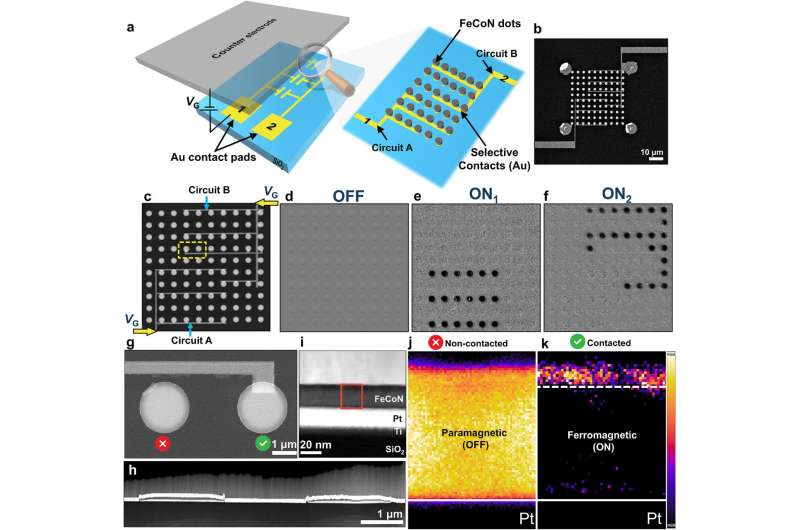
Repeated observations distinguished two experimental samples with approximately 90% confidence after 22–27 iterations in the reported inference procedure. A measurement cycle took about 3.5 seconds, making difficult identifications roughly 1.5 minutes long. The experiment also investigated random-bit generation, reporting an average Shannon entropy near 0.98 bits per bit. Neither result establishes production authentication reliability or certifies a complete cryptographic random-number generator.
Security that can be renewed
A potential benefit of adjustable fingerprints is recovery following exposure of an enrolled identifier. Changing the magnetic probability distribution could allow a device to establish a new reference. Practical systems would need authenticated reconfiguration, secure enrollment, environmental testing and protection against attempts to model or manipulate responses. Such precautions complement other security measures, including cryptographic backup protection and defenses against hardware-assisted isolation failures.
The ICN2 research announcement describes the prospective applications in authentication and anti-counterfeiting. The laboratory system relies on magnetic field cycling and optical microscopy for readout. Integrating faster electronic measurement, demonstrating repeatable performance across large populations and evaluating resistance to adversarial testing remain engineering priorities before commercial adoption.
Cover: magnetic device fingerprint illustration. Credit: Dámaso Torres / ICN2, via UAB.
We volunteer daily to ensure the credibility of the information on this platform is Verifiably True. If you would like to support to help further secure the integrity of our research initiative, please scan the QR code below.

BitcoinVersus.tech is not a financial advisor. This media platform reports on financial subjects purely for informational purposes.


Leave a Reply