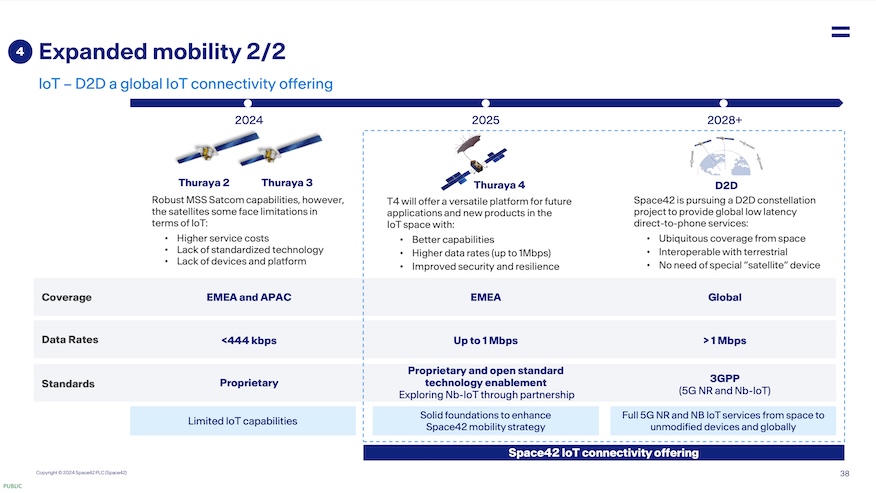
Space42 has announced the start of manufacturing for ThurayaTwo, a smartphone intended to exchange data and carry voice calls through a geostationary satellite when terrestrial connectivity is unavailable. The UAE satellite operator and South Korea’s Asia Pacific Satellite Inc. disclosed the manufacturing milestone on November 16, 2026. The planned UAE market introduction falls in the fourth quarter of 2027, with a maximum advertised satellite data rate of 120 kilobits per second.
What 120 kbps means in practice
A connection operating at 120 kbps carries at most 15,000 bytes per second before network overhead. Transferring a one-megabyte image would therefore take at least 66.7 seconds at the advertised rate. Short text messages, compressed telemetry and low-bitrate voice can require considerably less bandwidth than video or large attachments. Actual application performance will depend on signal conditions, congestion, protocol overhead and the available uplink and downlink rates.
The commercial handset is intended to combine satellite access with terrestrial 4G and 5G through a dual-SIM configuration. Space42 has not disclosed the price, production quantity or precise shipping date, as Tbreak reported. The proposed satellite service extends the calling and messaging capabilities of the preceding Thuraya One device. Related developments include satellite connectivity for IoT chips and software updates for conventional smartphones.
Communicating across nearly 36,000 kilometers
Geostationary satellites orbit approximately 35,786 kilometers above the equator and appear stationary relative to the ground. A signal traveling from a handset to such a spacecraft and onward to a ground gateway covers at least 71,572 kilometers in the idealized vertical geometry. At the speed of light, propagation alone requires about 239 milliseconds in one direction. A corresponding round trip takes about 478 milliseconds, excluding processing, queuing and additional terrestrial routing.
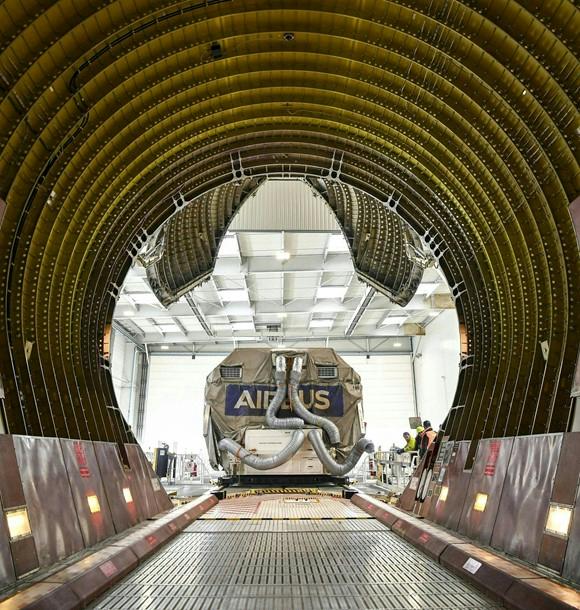
The network supporting the handset is based on Thuraya-4, which entered commercial service in November 2025. Airbus built the spacecraft with a large L-band antenna and flexible spot-beam routing. Satellite communications require careful management of spectrum and link budgets, principles also relevant to direct-to-device spectrum policy and low-Earth-orbit mobile satellite infrastructure.
Hardware for remote operations
The Emirates News Agency reports expected specifications including a removable battery of at least 4,500 mAh, a 6.67-inch AMOLED panel and IP67 ingress protection. A government variant is planned with startup integrity checks and tamper detection. Those specifications do not establish independently tested security, environmental durability or satellite battery endurance.
For field personnel working beyond reliable cellular coverage, the relevant performance measures will include successful call completion, signal acquisition, usable data rates and operating time. Satellite access can provide an alternative communications path, but buildings, terrain and other obstructions can limit connectivity. Manufacturing represents progress toward commercial deployment; field measurements and published service terms will determine the handset’s practical value.
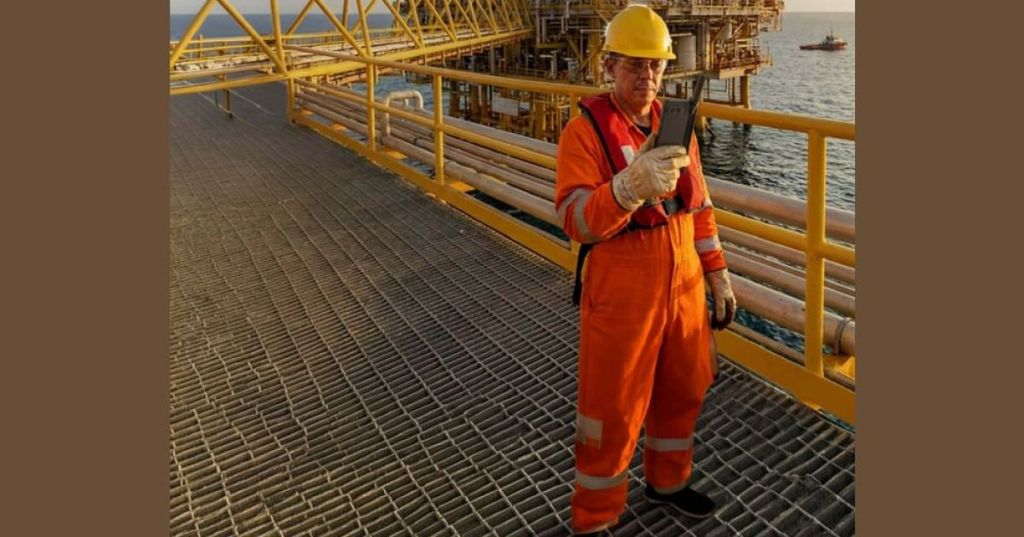
Cover photograph: offshore worker using a satellite handset. Credit: Emirates News Agency. Handset model not confirmed.
We volunteer daily to ensure the credibility of the information on this platform is Verifiably True. If you would like to support to help further secure the integrity of our research initiative, please scan the QR code below.

BitcoinVersus.tech is not a financial advisor. This media platform reports on financial subjects purely for informational purposes.


Leave a Reply