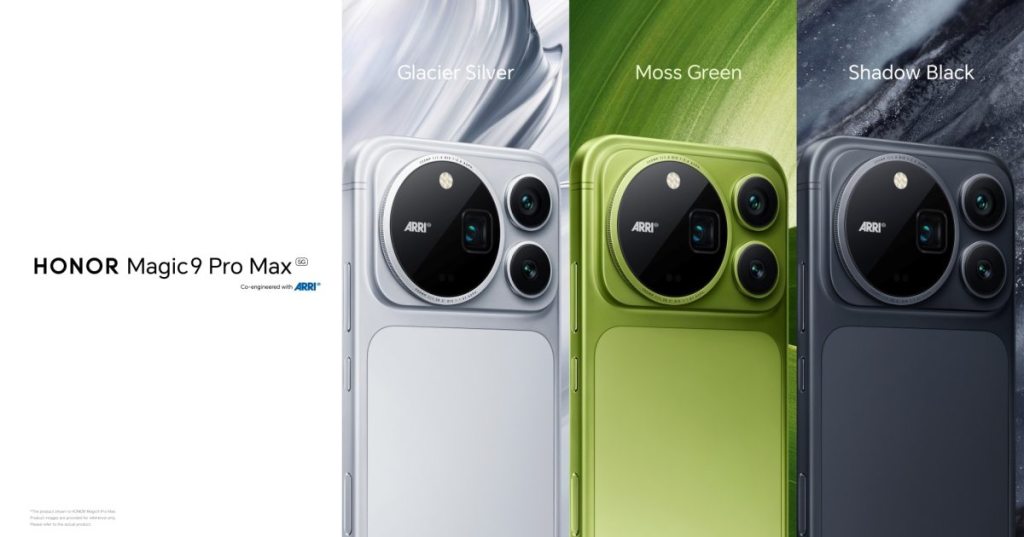
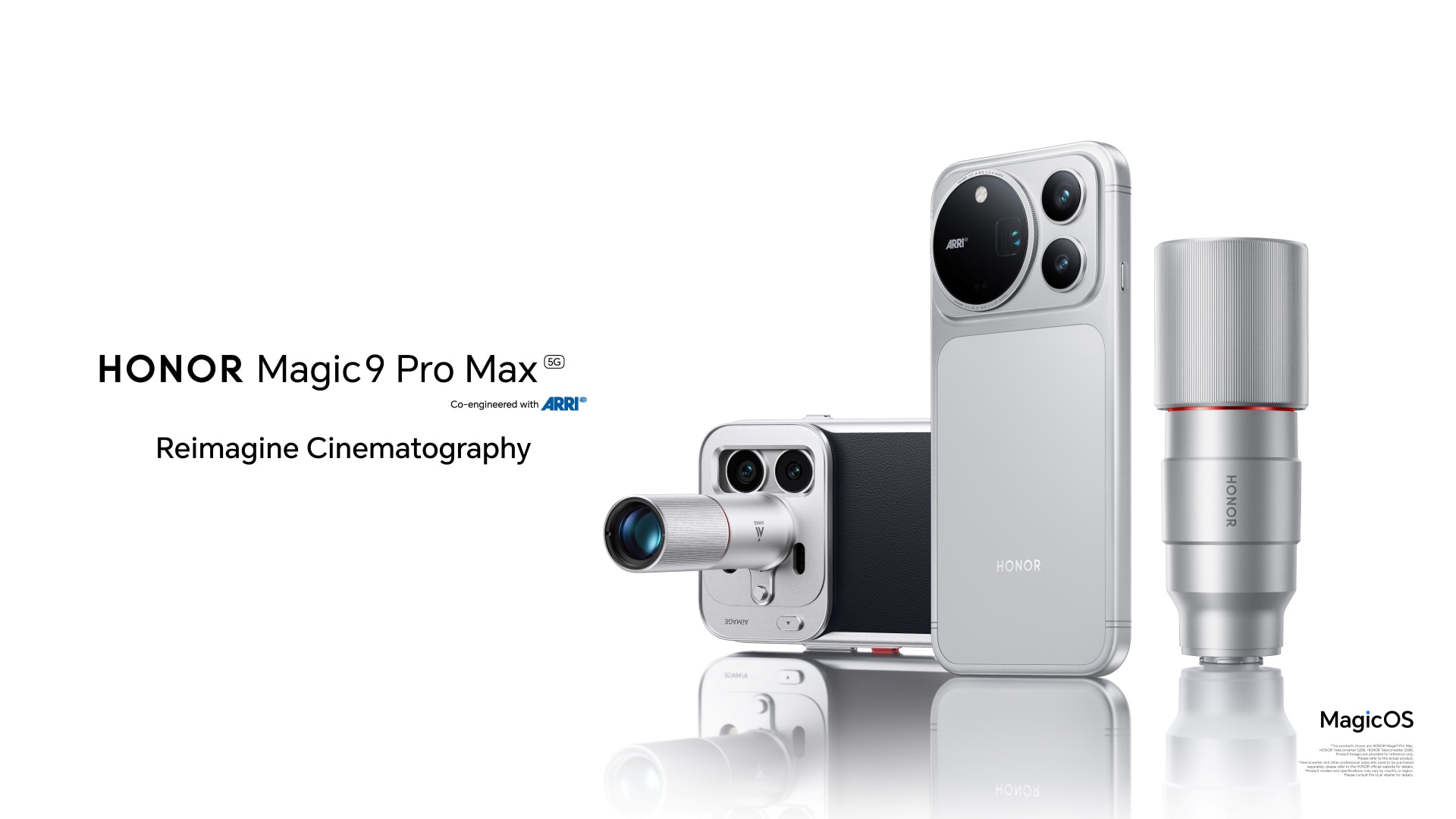
HONOR began the international rollout of its Magic9 Pro Max smartphone in Malaysia on November 24, 2026, following its September debut in China. The manufacturer announcement describes a mobile filmmaking platform integrating color-management technology from German cinema camera specialist ARRI. Rather than merely adding another portrait filter, the partnership targets the path from image capture to professional editing and grading. The approach complements the production-oriented hardware described in our Panasonic LUMIX SHX1 report.
Cinema color science inside a phone
The dedicated cinema mode records 4K footage at up to 60 frames per second using ARRI LogC3, a logarithmic encoding curve, and ARRI Wide Gamut 3, a color space. Log encoding allocates code values to accommodate a broad range of scene brightness; a compatible display transform then converts the recording to an appropriate viewing format. The color space defines the relationship between encoded color values and physical colors. Matching those conventions can reduce workflow friction for editors already using ARRI-compatible tools, but cannot make the phone’s sensor and optics equivalent to a large cinema camera.
Two 200-megapixel rear sensors serve the main and telephoto cameras. Pixel count alone does not establish image quality, as our Xiaomi overflow-capacitor sensor analysis explains. Lens quality, sensor readout, noise reduction, exposure and thermal constraints all affect the final recording. HONOR supplies the imaging hardware; ARRI’s own September announcement describes its contribution to the image pipeline.
The economics of recording
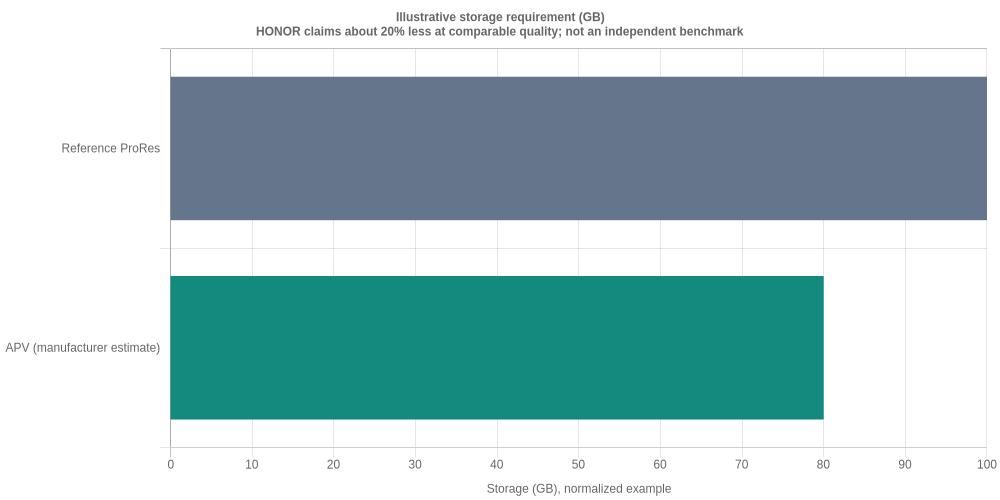
The supported APV recording format uses 10-bit color and 4:2:2 chroma sampling. Ten-bit encoding provides 1,024 possible code values per component before accounting for the applicable signal range. Chroma sampling retains more horizontal color information than 4:2:0, which can help with grading and compositing. HONOR estimates approximately 20% lower storage consumption than ProRes for comparable image quality under its test conditions. A normalized 100 GB ProRes project would therefore occupy approximately 80 GB under the stated assumption, saving 20 GB. The comparison is arithmetic, not an independent codec benchmark. Actual file sizes depend on settings and content.
As our coverage of Metalenz color and depth imaging demonstrates, image acquisition and downstream processing are distinct engineering problems. The codec cannot restore information already lost through clipping, noise or optical limitations.
Practical limitations and availability
Independent hands-on reporting from CineD identifies missing manual audio-level controls and camera restrictions in the cinema mode. Recording at 120 fps is available in other supported modes, not the dedicated ARRI mode. Coordinated capture settings remain essential, as illustrated by our multi-camera motion measurement report. The Malaysian configuration is priced at RM5,999, with store availability scheduled for December 4. Its advertised 24 GB memory figure includes 12 GB of virtual expansion rather than 24 GB of physical RAM. The international rollout offers mobile filmmakers a more compatible color workflow, while independent measurements of sustained recording, dynamic range and codec quality remain necessary.
We volunteer daily to ensure the credibility of the information on this platform is Verifiably True. If you would like to support to help further secure the integrity of our research initiative, please scan the QR code below.

BitcoinVersus.tech is not a financial advisor. The media platform reports on financial subjects purely for informational purposes.


Leave a Reply